📺 Today’s recommended deep-dive video: https://www.youtube.com/watch?v=29_1c4a2A-M
Guardians of the Truth: Inside the New York Times Legal Battles
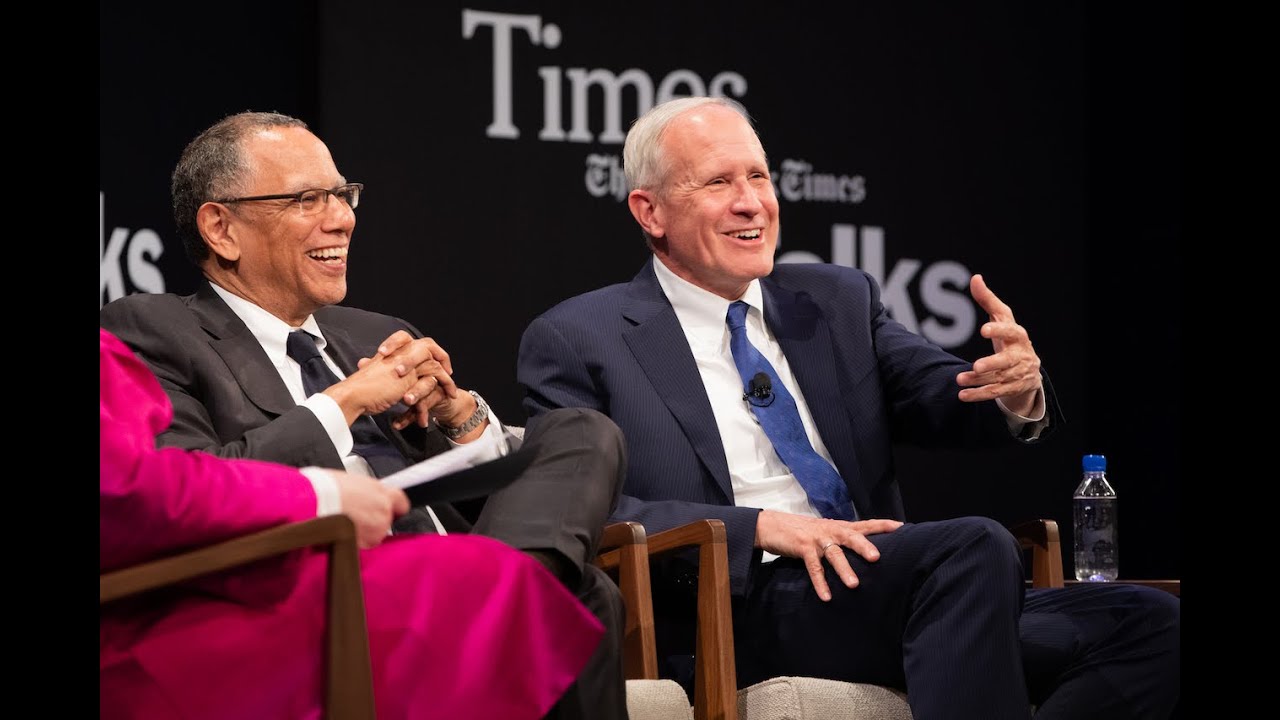
As the “newsroom’s lawyer,” David McCraw spent years defending the First Amendment against some of the most powerful figures in modern history. This dialogue with Executive Editor Dean Baquet pulls back the curtain on the high-stakes decisions that define the relationship between the presidency, the public, and the press.
Core Question: How does a global news organization maintain its integrity and protect its journalists while facing unprecedented legal threats and a cultural war on facts?
Highlights
- The admission that past media “arrogance” and lack of transparency contributed to current public skepticism.
- The psychological roots of Donald Trump’s obsession with being accepted by the New York establishment.
- The tactical shift in investigative reporting that prioritized finding financial settlements to expose serial predators.
- The harrowing logistical reality of managing a reporter’s kidnapping and escape from the Taliban.
⏱️ Reading time: approx. 10 minutes · Saves you about 66 minutes vs. watching.
Want to take notes while watching? Click the image below and let AI Notebook capture the key points for you 👇

The Disconnect Between the Press and the Public
The Roots of Modern Distrust
The American press was historically too arrogant and distant from the people it claimed to serve.
During his time as the editor of the Los Angeles Times, Dean Baquet discovered that many readers didn’t even understand how reporting worked, assuming a “Kabul dateline” meant a reporter was simply making phone calls from home rather than risking their life on the ground in a war zone. This lack of transparency created a massive void where mystery turned into suspicion, making the industry incredibly vulnerable to populist attacks that labeled journalists as out-of-touch elites who didn’t care about the average citizen’s concerns or reality.
The press has struggled to replicate the unifying “triumphs” of the past, such as the coverage of Watergate or the Civil Rights Movement.

💡 Digging Deeper
Q: Why do people reflexively say the media “sucks”?
A: It is often a social performance of independence; however, people’s actual behavior—reading, sharing, and acting on the news—suggests they still rely on it fundamentally.
Q: How did the loss of advertising impact this relationship?
A: It forced newsrooms to be more accountable to their readers, leading to a “humbling” of the industry that has actually improved the quality of journalism.
Q: Is the “both sides” approach still valid?
A: Not if it means quoting people who deny climate change; the goal is open-minded inquiry and fairness, not giving a platform to objectively false claims.
Litigating the President and the Powerful
The Fixation of Donald Trump
Donald Trump’s relationship with The New York Times is deeply rooted in his history as a local developer seeking validation.
Coming from a background where his father made a fortune outside of Manhattan, Trump viewed the Times as the ultimate arbiter of social status, desiring the acceptance of the New York establishment more than the tabloid fame he easily acquired. This led to a jarring transition when he became President; he expected the “tough love” of a local institution but instead faced the rigorous scrutiny of a global press corps, a shift that he took as a personal betrayal rather than a civic necessity.
McCraw’s viral legal response to Trump’s lawyers during the 2016 campaign became a defining moment for the newsroom’s defense strategy.

💡 Digging Deeper
Q: What was the significance of the “Access Hollywood” tape in the legal battle?
A: It provided the factual evidence needed to defend the stories of women coming forward, essentially proving that the paper could not defame a man who had already bragged about such actions.
Q: How does the Times handle threats from figures like Harvey Weinstein?
A: By ignoring the “off the record” requests of lawyers and focusing on the impeccable reporting of settlements, which provide a paper trail that is harder to dispute than memory alone.
Q: What is the “bedside manner” Trump mentioned?
A: Trump once joked that McCraw’s calm demeanor lulled his own lawyers into a false sense of complacency before the Times published damaging stories.
The Shadow of Secrecy and Global Threats
Post-9/11 Realities
The events of September 11th fundamentally transformed the relationship between the government, the press, and the concept of national secrecy.
In the years following the attacks, the U.S. government became increasingly secretive, conducting “shadow wars” via drones and classified operations that made traditional reporting nearly impossible without aggressive legal intervention. This era saw a significant rise in leak investigations, which McCraw and Baquet argue are rarely about protecting national security and are almost always about silencing journalists who expose critical information that the administration finds embarrassing or politically inconvenient.
The physical safety of journalists has also become a logistical nightmare that falls under the legal department’s “crisis management” umbrella.

💡 Digging Deeper
Q: How did the Obama administration compare to Bush regarding transparency?
A: Surprisingly, the Obama administration was often more difficult to deal with, frequently fighting FOIA requests for years even on basic legal memos regarding drone strikes.
Q: What was the “checkers strategy” in the David Rohde kidnapping?
A: Rohde and his colleagues escaped the Taliban by playing endless games of checkers with their guards to fatigue them before sneaking over a wall in the middle of the night.
Q: Are physical threats to journalists increasing domestically?
A: Yes, the building now requires 24/7 security and hotlines because social media has made it too easy for individuals to send credible threats to staff members.
Key Takeaways
Despite the constant barrage of “fake news” labels and physical threats, journalism is arguably in a better state today than it was decades ago. Technology has empowered a new generation of readers to access high-quality information instantly, and the shift toward subscription models has made newsrooms more responsive to their audiences.
The battle for the First Amendment is not just fought in the courtroom but in the daily persistence of reporters who refuse to be intimidated by powerful interests. From exposing serial predators to challenging the legal basis of government secrecy, the role of the newsroom lawyer has evolved into a vital pillar of the journalistic process itself.
Ultimately, the survival of a free press depends on its ability to be transparent about its methods and humble in its errors. By connecting more deeply with readers and standing firm against litigation meant to chill speech, the press can maintain its role as a necessary check on power in a democratic society.
Q&A
Q1: How do you handle the “both sides” criticism?
A: We avoid “both-sidesism” when it becomes a stalking horse for false balance. We focus on open-minded inquiry rather than quoting objectively false information for the sake of symmetry.
Q2: Was the Obama administration really worse for transparency?
A: In some ways, yes. They often used a “trust us” approach that made it difficult to extract legal memos, such as the one justifying the killing of an American citizen via a drone strike in Yemen.
Q3: How has the #MeToo movement changed your legal strategy?
A: We learned to look for settlements. Instead of just relying on “he-said, she-said” accounts, finding the paper trail of financial settlements turned these investigations into undeniable accounts of systemic abuse.
Q4: Do you ever worry about the financial impact of losing big advertisers like Harvey Weinstein?
A: No. In the modern Times newsroom, the business side and the editorial side are strictly separated. The fact that Weinstein was an advertiser never even entered the conversation during the investigation.
Q5: What was the most difficult part of the David Rohde kidnapping?
A: The realization that the government is not always the “operation” that will save you. Sometimes, as a lawyer, you are in a taxi on the West Side of New York trying to coordinate an escape via a cell phone.
Q6: What advice do you give to law students interested in media?
A: You must learn intellectual property, internet law, and international law. The world of media has shifted, and hard work and curiosity are the only ways to navigate the complexity of the digital age.
Q7: Is the “enemy of the people” rhetoric having a lasting impact?
A: Yes, it is damaging and may be used as a winning strategy by future candidates. Polls showing that a quarter of Americans think the President should be able to close newsrooms are deeply concerning.