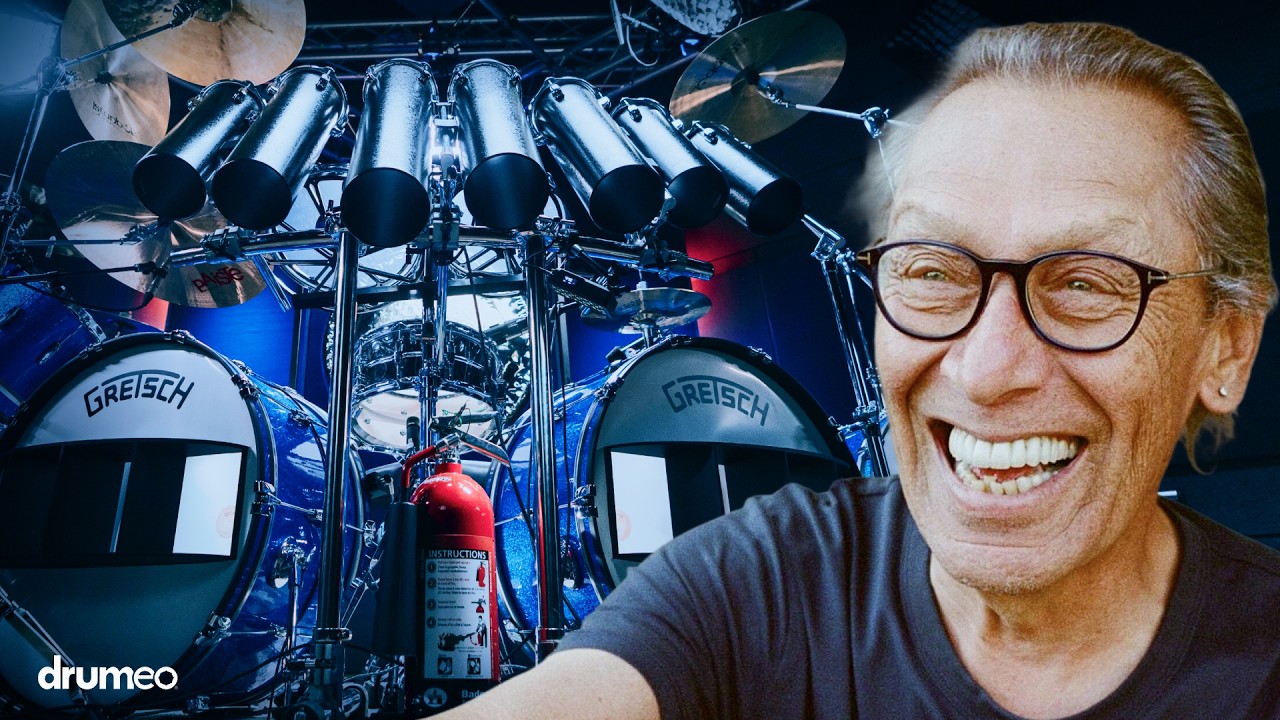
📺 Today’s recommended deep-dive video: https://www.youtube.com/watch?v=Rcmcf4kdMn4
Decoding the Holy Grail: How Alex Van Halen Built the “Hot for Teacher” Intro
For over four decades, drummers have debated whether the machine-gun opening of “Hot for Teacher” was a studio loop, a luxury car engine, or a human achievement. By blending jazz phrasing with emerging electronic tech, Alex Van Halen created a rhythmic puzzle that still stumps professionals today.
Core Question: How did Alex Van Halen synthesize electronic Simmons pads, jazz-influenced double-bass shuffles, and raw physical power to record one of rock’s most debated drum intros?
Highlights
- The debunking of the Lamborghini engine myth vs. the reality of the Simmons electronic kit.
- Identifying the “stick click” that proves the intro was a physical performance, not a loop.
- The lineage of the double-bass shuffle tracing back to jazz-fusion icons like Billy Cobham.
- Alex’s unique ride cymbal bell technique that gave the shuffle its signature “pinging” drive.
⏱️ Reading time: approx. 5 minutes · Saves you about 21 minutes vs. watching.
Want to take notes while watching? Click the image below and let AI Notebook capture the key points for you 👇

The Tech Behind the Chaos
Solving the 5150 Space Problem
The legend of the “Hot for Teacher” intro is often clouded by rumors of revving Lamborghini engines or complex studio overdubs intended to mask human limitations.
In reality, the sound was born from necessity when Eddie Van Halen built the 5150 studio in a converted racquetball court. Because the room was tiny and acoustic drums bled into every microphone, Alex opted for a Simmons electronic kit. This technology allowed him to trigger clean, punchy sounds directly into the console, creating the hyper-consistent, mechanical attack that led many listeners to believe they were hearing a machine rather than a man.
While producer Ted Templeman famously claimed the intro used a car engine, Alex and Eddie maintained that the Simmons pads provided that distinctive “dragster” quality. The electronic module offered a level of sonic clarity and repetition that acoustic kits of the early eighties simply could not achieve in small spaces.

💡 Digging Deeper
Q: Why use Simmons pads instead of acoustic drums?
A: The 5150 studio was a converted racquetball court with massive sound bleed issues, making electronic pads a cleaner recording option.
Q: Was the Lamborghini engine sound real?
A: Producer Ted Templeman claimed it was, but the Van Halen brothers insisted it was simply the Simmons kit sound.
Q: Are all the sounds electronic?
A: No; the snare and cymbals remained acoustic, creating a hybrid setup that blended electronic attack with natural resonance.
Dissecting the “Impossible” Performance
The Smoking Gun of the Stick Click
The first six bars of the song are notoriously difficult to track because they lack a traditional backbeat or a clear rhythmic grid. Many drummers feel the part is “impossible” because the initial double-bass pattern starts on a pickup offbeat, immediately throwing off a player’s internal metronome. However, hidden within the first second of the track is a faint stick click—a smoking gun that confirms Alex was actively playing the pads.
This tiny acoustic artifact proves the section wasn’t a programmed loop but a physical performance captured by a microphone near the drummer’s hands.
Once the shuffle begins, Alex integrates his acoustic RotoToms with the Simmons pads to create a hybrid texture. He varies his right-hand rhythms between the two surfaces, simulating the complexity of a jazz big band lead-in while maintaining the relentless forward momentum of a high-speed rock and roll anthem.

💡 Digging Deeper
Q: How do we know it’s not a programmed loop?
A: A faint stick click can be heard about four seconds into the track, indicating live stick-to-pad contact.
Q: What makes the timing so difficult to learn?
A: The double-bass part starts on a pickup beat rather than the “one,” making the entry feel unstable for most drummers.
Q: Where are the RotoToms in this recording?
A: Alex switches between the Simmons pads and RotoToms to vary the texture in the bars leading up to the main ride cymbal entry.
The Jazz Roots of a Rock Masterpiece
Big Band Swing at 256 BPM
Despite its metal-adjacent speed, the intro’s soul is rooted in jazz history and the “swing” of the big band era. Alex frequently cited legends like Gene Krupa and Buddy Rich as primary influences, specifically the tribal, syncopated floor tom patterns found in classic standards.
The foundation of the main groove is a double-bass shuffle, a technique previously pioneered by jazz-fusion greats like Billy Cobham and refined by Simon Phillips.
What truly separated Alex from his predecessors was the inclusion of the ride cymbal bell. By bouncing the stick to create rapid-fire triplets on the bell, he added a “pinging” texture that complemented the low-end roar of the kick drums. This combination of “swing” feel and industrial-strength speed defined the “Brown Sound” he and Eddie spent their careers chasing—a specific, earthy heaviness that sounded more like wood and sweat than digital perfection.

💡 Digging Deeper
Q: Who invented the double-bass shuffle?
A: While Alex popularized it in rock, the technique traces back to Billy Cobham’s work on “Quadrant 4” in 1973.
Q: What did Alex add to the shuffle?
A: He introduced a unique ride cymbal bell pattern with quick doubles that give the groove its signature melodic quality.
Q: What is the “Brown Sound”?
A: It refers to an earthy, warm, and organic heaviness that the Van Halen brothers prioritized over the “metallic” sounds common in 80s rock.
Key Takeaways
Alex Van Halen’s work on “Hot for Teacher” represents a perfect storm of technological experimentation and deep musical heritage. By utilizing the Simmons electronic pads, he wasn’t trying to cheat the performance; he was trying to capture a specific, aggressive clarity that helped define the sound of the 1984 album. The “industrial” sound of the intro was a byproduct of the tiny racquetball court studio, proving that creative limitations often lead to the most iconic musical moments.
Beyond the gear, the track is a masterclass in jazz-fusion applied to arena rock. Alex took the foundational double-bass work of his predecessors and injected it with a swing feel that most rock drummers of the era lacked. His ability to maintain a breakneck shuffle tempo of 256 BPM while keeping the “pocket” remains one of the most significant technical feats in rock history, ensuring his place on the Mount Rushmore of drumming.
Q&A
Q1: Was the intro to “Hot for Teacher” overdubbed?
A1: While there was speculation about layering, evidence like the stick click and live bootlegs suggest Alex played the part in one continuous flow, albeit using a hybrid of electronic and acoustic drums.
Q2: Did Alex really use four bass drums?
A2: No; while his live kits were massive and often featured four bass drums for visual impact, the recording was achieved using a double-bass setup and Simmons electronic triggers.
Q3: What specific jazz drummers influenced this track?
A3: Alex has cited Gene Krupa, Buddy Rich, and Louie Bellson, and specifically thanked them in his recent book, Brothers.
Q4: Is the Simmons kit purely electronic?
A4: The pads are electronic triggers, but in this track, they were mixed with acoustic cymbals and RotoToms to maintain a natural feel.
Q5: Why is the ride cymbal part so famous?
A5: Alex played rapid-fire doubles/triplets on the bell of the ride cymbal, which added a high-frequency rhythmic layer that cuts through the dense double-bass shuffle.
Q6: How long does it take an average professional to learn this intro?
A6: Many professional drummers spend weeks or months building the specific foot speed and coordination required to hit the 256 BPM album tempo.
Q7: What is the significance of the “Animal Farm” title?
A7: It was the original working title for the 1984 album, referencing the creative tension and fighting that occurred between the band members during production.