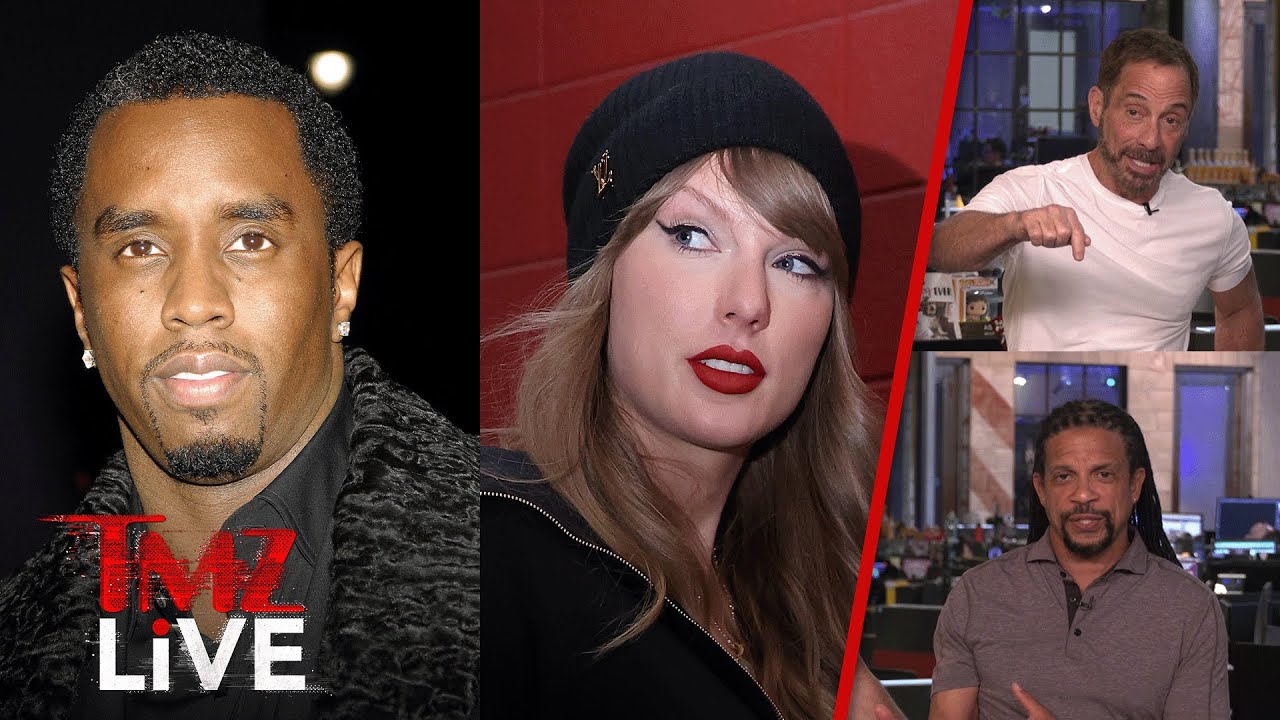
📺 Today’s recommended deep-dive video: https://www.youtube.com/watch?v=kuuVnzgreBk
Diddy’s Courtroom Battles, Taylor’s Master Move, and the AI Job Crisis
From the high-stakes testimony in the Sean “Diddy” Combs trial to Taylor Swift finally reclaiming her musical legacy, pop culture and legal drama are currently colliding in unprecedented ways. This breakdown explores the legal strategies behind high-profile defense, the toxic fallout of celebrity divorces, and a sobering warning about the future of the American workforce.
Core Question: How are major celebrity legal disputes and technological shifts reshaping our understanding of justice, ownership, and job security?
Highlights
- Defense attorneys in the Diddy trial are leveraging past civil settlements to create “reasonable doubt” regarding victim credibility.
- Taylor Swift has officially purchased her entire music catalog from Shamrock Capital, ending a five-year battle for her masters.
- Cardi B issued a scathing response to Offset’s request for spousal support, escalating their divorce into a public feud.
- Shark Tank’s Damon John warns that AI could lead to 35% unemployment within five years, urging workers to pivot to “human-centric” trades.
⏱️ Reading time: approx. 6 minutes · Saves you about 37 minutes vs. watching.
Want to take notes while watching? Click the image below and let AI Notebook capture the key points for you 👇

The Strategy of Reasonable Doubt
Settlements and Omissions in the Diddy Trial
Witness “Mia,” a former employee of Diddy’s, recently faced intense cross-examination regarding a previous civil settlement. The defense highlighted that during her initial mediation—where she sought $10 million and settled for a fraction of that—she never explicitly raised the allegations of sexual assault she is now testifying about in a criminal context.
Attorney Jose Baez argues that such omissions weigh heavily on a jury’s perception of credibility, regardless of the trauma involved. He posits that in cases involving “deep pockets,” the defense must aggressively pursue the “money grab” narrative to plant seeds of doubt. It isn’t about proving a witness is lying, but rather showing that their motivations might be financial rather than purely a pursuit of justice.
The prosecution attempted to blunt this attack by bringing up the settlement themselves. By acknowledging the discrepancy early, they hope to frame it as the hesitation of a traumatized victim rather than a calculated tactical omission.

💡 Digging Deeper
Q: Why did Witness 4 receive only $200,000 if she asked for $10 million?
A: Settlements are often the result of compromise; she claimed she didn’t want to “use her bullets” regarding the assault during a private employment mediation.
Q: Is a RICO case usually based on domestic violence?
A: It is unusual, but the prosecution is tying individual acts of violence into a broader pattern of racketeering and forced labor (the “freak-offs”).
Q: Can the defense attack a victim without looking like they are “victim-shaming”?
A: Jose Baez suggests there is no “nice” way to do it; a lawyer must fight fire with fire and focus on the evidence of financial motivation rather than the assault itself.
Ownership and Outrage in the Industry
Taylor Swift Reclaims Her Legacy
After half a decade of public feuding and re-recording her “Taylor’s Version” albums, Swift has finally purchased her original masters from Shamrock Capital. She described the moment as a “carrot dangled and then yanked away” for twenty years, finally resulting in total ownership of her creative output.
This move effectively ends her saga with Scooter Braun, though sources disagree on whether he facilitated the deal or if it happened in spite of him. Regardless of the behind-the-scenes friction, Swift’s strategy of re-recording her work decimated the value of the original assets for the investment firm, likely forcing their hand in the sale.

Cardi B vs. Offset: The Spousal Support War
The divorce between Cardi B and Offset has taken a dark turn following his request for spousal support. Cardi, worth significantly more than Offset, reacted with a vitriolic social media rant, even suggesting she wishes her ex-husband a “slow” end.
Legal experts suggest that while the breadwinner usually pays support, Offset’s $30 million net worth makes his request feel like a tactical maneuver rather than a financial necessity. The battle is likely to shift toward child support and custody, especially given Cardi’s claims that Offset “stands up” his children.
💡 Digging Deeper
Q: Why did Taylor Swift refuse to sign the original NDA with Scooter Braun?
A: She felt the NDA was a “silencing clause” that would prevent her from ever speaking negatively about him again, even if he mistreated her.
Q: Will fans buy the “original” albums now that Taylor owns them?
A: Likely yes; many fans expect “Remastered Originals” to be released, allowing Taylor to profit from the same music for a third time.
The AI Tsunami and The Chrisley Return
Preparing for a Jobless Future
Damon John issued a stark warning that AI is not a distant threat but an immediate economic disruptor. He projects that unemployment could hit 35%, driven not by “evil bosses,” but by consumers choosing autonomous services like Waymo over human-driven ones.
To survive, John suggests a two-pronged strategy: twenty-year-olds should look toward skilled trades and “human experiences” that machines can’t replicate, while older workers must treat AI as a collaborator rather than an enemy. He emphasizes that within six months of consistent exposure to AI tools, anyone can become an “AI expert” relative to the current market.

Todd Chrisley’s Post-Prison Defiance
Todd Chrisley wasted no time returning to the spotlight following his release from prison. In a press conference that many compared to the “Trump playbook,” Chrisley claimed his conviction was the result of Department of Justice corruption.
He refused to show remorse, asserting that defendants are often forced to “kiss the ass” of the government to avoid longer sentences. This defiant return is seen by many as a calculated marketing push for a new reality show centered on his life post-incarceration.
💡 Digging Deeper
Q: How fast is AI actually moving?
A: Exponentially; experts believe that within four to five years, human-robot relationships will move from niche experiments to the mainstream.
Q: What was Todd Chrisley’s specific legal complaint?
A: He alleged Fourth Amendment violations regarding unreasonable search and seizure of documents during the investigation.
Key Takeaways
The intersection of law and celebrity continues to reveal a consistent pattern: the fight for public perception is often as important as the legal battle itself. Whether it is Diddy’s defense team aiming for reasonable doubt through financial narratives or Taylor Swift using her fan base to devalue her own stolen assets, the strategy is always about leverage. Ownership of one’s narrative—and one’s masters—remains the ultimate goal in the entertainment industry.
Technologically, the shift toward AI-driven automation represents a looming “Great Displacement” that requires a total rethinking of career longevity. The advice from industry veterans like Damon John is clear: the only way to avoid being replaced by a machine is to master the machine or provide a service that is fundamentally human. As the job market evolves, the “sass” and defiance seen in figures like Todd Chrisley or Cardi B reminds us that personal brand and public “versions” of the truth are increasingly becoming a form of currency.
Q&A
Q1: What is the main argument Diddy’s lawyers are using against the fourth witness?
A1: They are arguing that her failure to mention sexual assault during a prior $400,000 civil settlement suggests her current criminal testimony is financially motivated and lacks credibility.
Q2: How did Taylor Swift eventually get her masters back?
A2: She purchased them from Shamrock Capital, the investment firm that originally bought them from Scooter Braun, after effectively tanking the value of the originals by releasing “Taylor’s Versions.”
Q3: Why is Cardi B so angry about Offset’s legal filings?
A3: Offset requested spousal support despite having a reported $30 million net worth, which Cardi views as a “con artist” move, especially given her claims that he is not consistently present for their children.
Q4: What specific job sectors does Damon John think are most at risk from AI?
A4: He highlighted factory work, long-distance trucking, delivery services, Uber driving, and traditional retail as the sectors most likely to see massive automation.
Q5: Did Todd Chrisley apologize for the crimes that sent him to prison?
A5: No, he claimed he has no remorse because he maintains he did nothing wrong and that the Department of Justice is corrupt.
Q6: What is the surprise news regarding the Hadid family?
A6: It was revealed that Gigi and Bella have a secret 23-year-old half-sister named Aiden Nicks, who discovered her parentage through a DNA test.
Q7: What did James Blunt reveal about his hit song “You’re Beautiful”?
A7: He admitted the song isn’t actually romantic; it’s about a man who is high on drugs stalking someone else’s girlfriend on the subway.