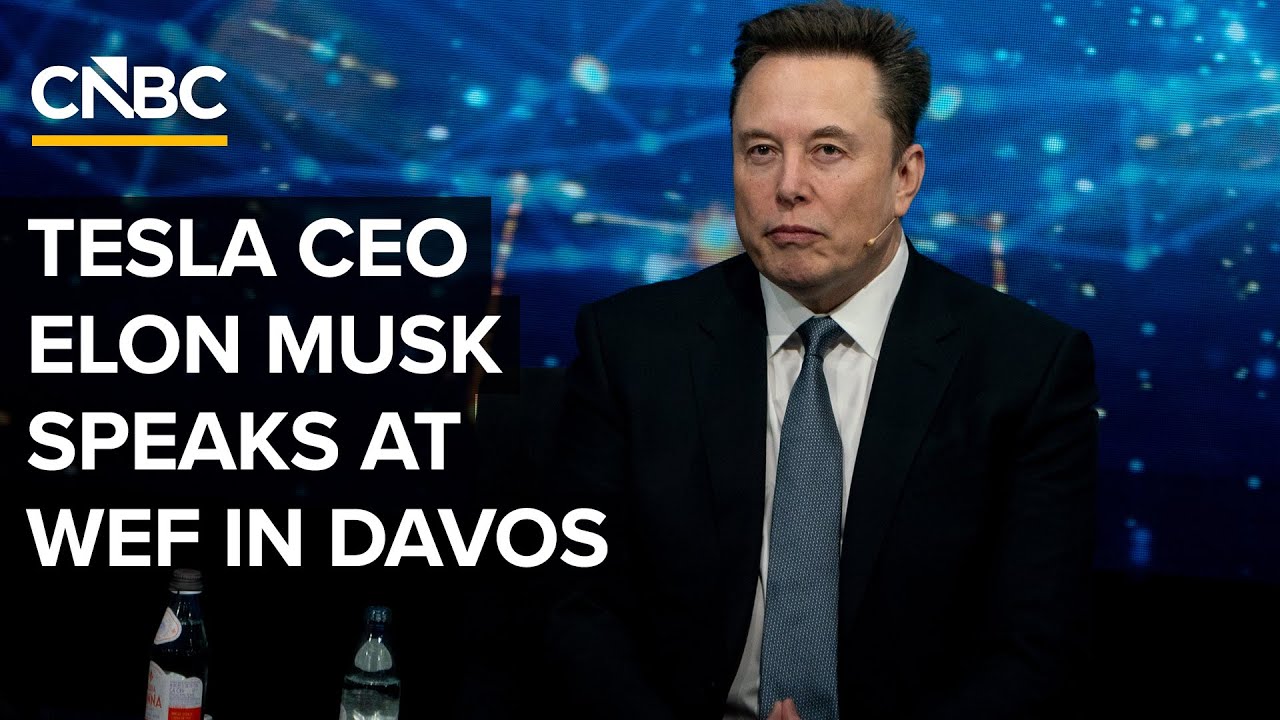
📺 Today’s recommended deep-dive video: https://www.youtube.com/watch?v=UrB2tQDVLLo
Engineering the Future: Abundance, Consciousness, and the Great Filter
Elon Musk outlines a transformative vision where humanoid robotics and space-based solar energy solve the bottlenecks of terrestrial existence. This discussion explores the intersection of engineering discipline and the philosophical necessity of making life multi-planetary.
Core Question: How can humanity leverage robotics, AI, and sustainable energy to transition from a world of scarcity to a future of “sustainable abundance”?
Highlights
- AI is predicted to surpass individual human intelligence by 2025 and collective human intelligence by 2030.
- A single 100-mile by 100-mile solar array could generate enough electricity to power the entire United States.
- Starship’s full reusability is expected to reduce the cost of space access by a factor of 100, making Mars colonization feasible.
- Humanoid robots (Optimus) may be available for public purchase as early as the end of next year.
⏱️ Reading time: approx. 6 minutes · Saves you about 26 minutes vs. watching.
Want to take notes while watching? Click the image below and let AI Notebook capture the key points for you 👇

The Path to Sustainable Abundance
Robotics and the End of Scarcity
Robotics and artificial intelligence represent the definitive path to solving global poverty and creating a high standard of living for every person on Earth.
When humanoid robots become ubiquitous, the global economy will undergo an expansion beyond any historical precedent. This shift occurs because economic output is no longer tied to a finite human labor force, but rather to the total number of robots multiplied by their average productivity. We are moving toward a reality where the cost of labor effectively drops to zero, fundamentally altering how we value goods and services.
Musk predicts a benign future where the volume of goods and services produced by these machines actually saturates all human needs, leading to a state of “sustainable abundance.” While this raises questions about human purpose in a world without required labor, the trade-off is a society where elderly care, childcare, and dangerous industrial tasks are handled by safe, reliable, and eventually low-cost autonomous systems. This transition ensures that the basic requirements for a high quality of life are no longer narrow or exclusive, but broad and accessible to the entire global population.
The deployment of these systems must be handled with extreme care to avoid “Terminator” scenarios, prioritizing safety and reliability above all else.

💡 Digging Deeper
Q: How soon can we expect to see humanoid robots in daily life?
A: Industrial deployment is happening now; Musk expects high-functionality robots to be sold to the public by the end of next year.
Q: Will this technology only benefit the wealthy?
A: No, the “natural thing” is for AI companies to seek the broadest possible customer base, which will rapidly plummet the costs of these services.
Q: What happens to human purpose if robots do all the work?
A: It is a difficult trade-off, but removing the necessity of work allows for a future where labor is a choice rather than a requirement for survival.
Solving the Energy and Compute Bottleneck
Solar Power and Space-Based Data Centers
The primary limiting factor for the immediate deployment of AI is not the production of chips, but the availability of electrical power.
While the production of AI hardware is increasing exponentially, the terrestrial power grid is only growing at a rate of 3% to 4% annually. China is currently leading this transition by deploying over 1,000 gigawatts of solar capacity per year, which is roughly double the total average electricity usage of the United States. To meet the coming demand, the West must overcome artificial tariff barriers that make solar deployment unnecessarily expensive and slow.
Space offers a unique solution to this energy crisis because solar panels in orbit are five times more effective than those on the ground. Without the interference of the atmosphere, weather, or the day-night cycle, a satellite can receive constant, high-intensity radiation from the sun. Musk suggests that within two to three years, the lowest-cost place to operate a massive AI data center will be in space, utilizing direct solar power and the natural vacuum for efficient cooling.
This shift toward orbital infrastructure could decouple the growth of intelligence from the physical constraints and land-use issues of Earth.

💡 Digging Deeper
Q: How much land is needed to power the US with solar?
A: Roughly a 100-mile by 100-mile area, which is a small corner of a state like Utah, Nevada, or New Mexico.
Q: Why is space solar so much better?
A: It avoids atmospheric attenuation and the 24-hour day/night cycle, providing a constant load of clean energy.
Q: Why aren’t we doing this already?
A: High launch costs have been the barrier, but Starship’s reusability is designed to specifically solve that economic hurdle.
Expanding the Light of Consciousness
Reusability and the Multi-Planetary Goal
SpaceX is founded on the principle that life and consciousness are incredibly rare—a “tiny candle in a vast darkness” that must be protected.
The core engineering breakthrough required to preserve this candle is the full reusability of the Starship rocket. Currently, even with the successful landing of Falcon 9 boosters, the upper stages are discarded, which Musk compares to throwing away a medium-sized jet after every flight. By achieving full reusability, the cost of reaching orbit will drop by a factor of 100, bringing the price of freight in space below the cost of air freight on Earth.
This radical cost reduction is the prerequisite for building a self-sustaining city on Mars and exploring other star systems. Musk views this not just as an adventure, but as a survival strategy against natural or man-made disasters that could extinguish life on Earth. If we can extend the reach of consciousness beyond our home planet, we ensure that the light of human understanding continues even if the “cradle” faces a catastrophe.
We must assume we are alone in the universe until proven otherwise, making our responsibility to survive even more profound.

💡 Digging Deeper
Q: Has SpaceX encountered any aliens?
A: No. With 9,000 satellites in orbit, they have never had to maneuver around an alien spaceship.
Q: How long does a trip to Mars take?
A: It is roughly a six-month journey, though the planets only align every two years for the most efficient transit.
Q: What is Musk’s “Philosophy of Curiosity”?
A: A drive to understand the meaning of life, the correctness of physics, and the questions we don’t yet know how to ask.
Key Takeaways
The transition to a future of abundance is predicated on overcoming massive engineering hurdles in energy production and robotics. By shifting the economic engine from human labor to automated intelligence, humanity can potentially solve age-old problems like poverty and elder care. However, this progress is throttled by a lagging electrical grid, necessitating a move toward massive solar adoption—both on the ground and in orbit.
Ultimately, the drive toward Mars and the development of AI are parts of a larger philosophical mission to safeguard consciousness. Whether it is through reversing biological aging or becoming a multi-planetary species, the goal remains the same: to prevent the “light of consciousness” from being extinguished. Musk’s outlook remains firmly optimistic, suggesting that it is better to be an optimist and wrong than a pessimist and right.
Q&A
Q1: What is the specific timeline for AI to surpass human intelligence?
A1: Musk believes AI will be smarter than any individual human by the end of this year or early next year, and smarter than all of humanity combined by 2030.
Q2: Is aging a solvable problem?
A2: Musk views it as highly likely we will find ways to extend life and reverse aging, noting that the body likely has a synchronizing biological clock that can be hacked.
Q3: Why is China currently leading in energy production?
A3: China is deploying solar and batteries at a massive scale—over 1,000 gigawatts annually—while Western countries face high tariff barriers on low-cost solar components.
Q4: How does Starship compare to previous rockets?
A4: It is the largest flying machine ever made and is designed for 100% reusability, which is the “fundamental breakthrough” for cheap space travel.
Q5: What is the primary use case for robots in the home?
A5: Beyond simple tasks, they will be essential for taking care of elderly parents and pets, especially in societies where the birth rate is declining.
Q6: Why build data centers in space instead of on Earth?
A6: Space provides five times more solar energy efficiency and superior cooling capabilities in the vacuum, making it the most cost-effective location for heavy compute.
Q7: Does Elon Musk want to go to Mars personally?
A7: Yes, he has famously joked that he would like to die on Mars, “just not on impact.”