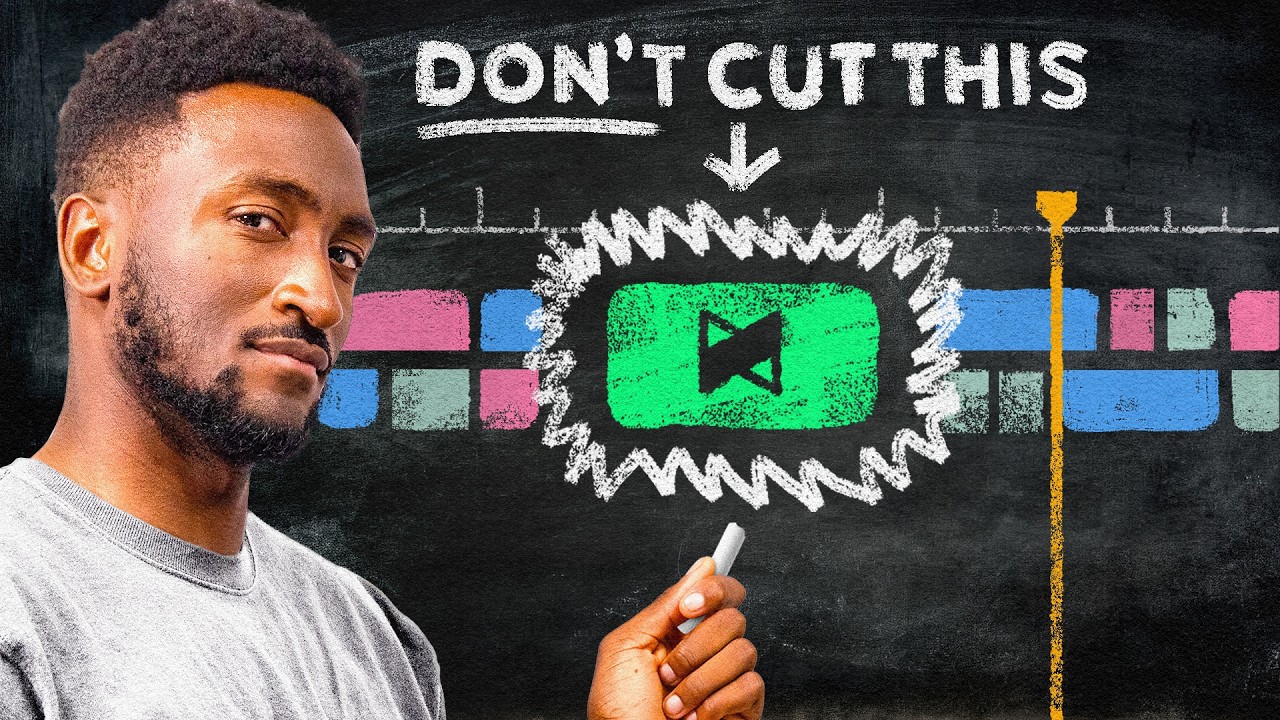
📺 Today’s recommended deep-dive video: https://www.youtube.com/watch?v=eNgD1kg3U14
The MKBHD Blueprint: Mastering the Art of Creative Decision-Making
Editing is not merely a technical exercise involving software and plugins; it is a relentless stack of micro-decisions that define a project’s soul. By understanding the principles of focus, pacing, and audience awareness, creators can transform raw footage into a cohesive, professional narrative that resonates deeply.
Core Question: How does the MKBHD team integrate editorial structure, color science, motion design, and audio precision to create high-quality content?
Highlights
- Decision-Driven Editing: Great videos are built on intentional choices, prioritizing narrative clarity over flashy effects.
- Subtractive Storytelling: Knowing what to cut is as important as what to keep to maintain audience engagement.
- Technical Fundamentals: Success in post-production relies on 10-bit color data and precise microphone placement during production.
- Invisible Design: Motion graphics and sound design should feel natural and effortless rather than distracting the viewer from the core message.
⏱️ Reading time: approx. 7 minutes · Saves you about 36 minutes vs. watching.
Want to take notes while watching? Click the image below and let AI Notebook capture the key points for you 👇

The Subtractive Art of Narrative Structure
Managing Footage Excess and Scarcity
Lead editor Mariah emphasizes that editing is primarily a problem-solving discipline where the volume of footage dictates the creative approach. When faced with hours of multi-cam footage—as seen in the “Robo-Taxi” project—the first task is syncing and color-coding clips to prevent overusing certain shots while ignoring valuable B-roll.
Effective editing requires the courage to delete scenes that, while entertaining, distract from the video’s core informational goal. For instance, a humorous segment about a lost phone was cut from the Robo-Taxi video to maintain a tight focus on autonomous technology. This process of subtraction ensures that the final product delivers maximum value to the audience without unnecessary detours that dilute the message.
Conversely, when footage is scarce, editors must rely on montages and archival clips to maintain visual momentum. In a recent video about content strategy, the team used a sequence of historic clips to set clear expectations and hook the viewer early. By combining these visual elements with transitional music that segues between ideas, the editor can guide the viewer’s brain through a structural journey that feels both intentional and exciting.

💡 Digging Deeper
Q: Why is color-coding the timeline so important?
A: It provides a visual heat map of the edit, allowing the editor to see if they are relying too heavily on one camera angle or neglecting important B-roll.
Q: How does music function in an MKBHD video?
A: It acts as a transitional tool to signal a shift in topic or tone, typically running for 20-30 seconds to avoid making the content feel like a continuous advertisement.
Precision in Post: Color and Light
Grading for Narrative Impact
Art Director Vin defines color grading as the intentional use of emphasis and de-emphasis to tell a specific story. While many beginners attempt to “fix it in post,” the team adheres to the 80/20 rule: 80% of the visual quality should be captured in-camera through proper lighting, leaving only the final 20% for grading.
Shooting in 10-bit log format is non-negotiable for professional results. This high-data codec provides the dynamic range necessary to push and pull colors without the image falling apart, a flexibility that 8-bit footage simply cannot offer. Without this foundation, even the most expensive plugins will fail to produce a cinematic result.
Lookup Tables (LUTs) serve as a starting point, but the team often bypasses stock manufacturer LUTs in favor of custom conversions that better replicate film-like color spaces. Using tools like Dehancer, they add subtle stylistic touches such as halation and bloom. These effects, when applied with restraint, add a sense of retro warmth and organic texture that makes modern digital footage feel more lifelike and premium.

💡 Digging Deeper
Q: Can you fix bad lighting in DaVinci Resolve?
A: No; you can adjust exposure and hue, but you cannot recreate the directionality or quality of light that was missing during the shoot.
Q: What is the difference between Bloom and Halation?
A: Bloom mimics light diffusion, softening highlights, while halation adds a reddish glow to the edges of high-contrast areas, replicating a film-stock characteristic.
Motion Graphics: Injecting Life into Pixels
The Principles of “Invisible” Design
Michael, the head of motion design, argues that the worst mistake a creator can make is copying another channel’s style without understanding the underlying purpose. He begins every project in Adobe Illustrator, simplifying complex interfaces like Final Cut Pro into vectorized shapes. This “oversimplification” allows the viewer to focus on the abstract concept being explained rather than getting bogged down in software details.
Animation quality is defined by the three principles of easing, timing, and staging. By applying easing, the animator ensures that movements start slow, accelerate, and end slow, mimicking the physics of the real world. Timing is equally critical; graphics must align perfectly with the narrator’s voice to avoid cognitive load, where the viewer struggles to process the audio and visuals simultaneously.
To prevent graphics from looking too “perfect” or robotic, the team uses turbulence displacement and wiggle expressions. These tools add a slight, hand-drawn wobble to clean vector shapes, giving them a tactile, stop-motion aesthetic. This subtle texture makes the information feel more approachable and integrates the digital graphics more naturally into the live-action world of the studio.

💡 Digging Deeper
Q: Why build graphics in Illustrator before After Effects?
A: Illustrator allows for the creation of vectorized paths that can be resized indefinitely without losing quality, and plugins like Overlord make porting them to animation software seamless.
Q: What is the “12 Principles of Animation” reference?
A: These are foundational rules developed by Disney animators to make characters and objects move in a way that feels believable and appealing to the human eye.
The Invisible Layer: Sound and Atmosphere
Engineering Believability
Sound recording is 90% microphone placement and 10% technical settings. Rufus explains that microphones do not possess the human brain’s ability to filter out background noise, meaning the mic must be positioned to avoid air conditioners, lights, and desk reflections. By pointing the “cone” of a shotgun microphone directly at the source and away from noise, you save hours of cleanup in the edit.
In the sound design phase, Ellis follows the rule that anything moving on screen must have an associated sound. For the MKBHD channel, this often involves using big, low-pitched “whooshes” to give digital objects a sense of physical mass. Interestingly, even silence is a sound; true digital silence feels “painful” to the ear, so sound designers use ambient tracks or reverb tails to fill the gaps and maintain the “limitless space” of the video.
Psychology plays a massive role in sound selection. The team often uses sounds that trigger nostalgic or emotional responses, such as a “flare and bell tree” combination that mimics the classic Disney Channel tracing sound. When these techniques are used correctly, the viewer doesn’t even notice the work—they simply feel that the environment is real and the information is credible.

💡 Digging Deeper
Q: What are the ideal recording levels for dialogue?
A: You should aim for an average of -20dB, with the loudest peaks hitting no higher than -12dB to avoid digital clipping.
Q: Why use “whooshes” for phone animations?
A: Since there is no physical machine turning the phone in a graphic, the sound of “moving air” provides a logical, satisfying auditory cue for the motion.
Key Takeaways
Editing is the final stage of storytelling where the pace, tone, and clarity of a video are solidified. The MKBHD team demonstrates that high production value isn’t about expensive gear alone; it’s about the discipline of syncing footage, the science of 10-bit color, and the art of lifelike animation. Every department—from color to sound—works to ensure the technical aspects remain “invisible” so the audience can focus entirely on the message.
Ultimately, the goal is to respect the viewer’s time. Whether it’s cutting a funny but irrelevant story or spending hours on the easing of a single graphic, every decision is made to reduce friction. By focusing on quality “in” (planning and recording) and refining the “out” (post-production), creators can build a brand that is synonymous with excellence and reliability.
Q&A
Q1: What is the most important principle of high-quality video?
A: “Good in, good out.” You cannot edit your way around poor planning or bad execution during the filming stage.
Q2: How does the team handle “dry” or non-visual segments?
A: They use montages, transitional music, and archival footage to create visual interest and maintain momentum when the primary footage is lacking.
Q3: Why is 8-bit footage problematic for color grading?
A: It lacks the necessary data points, which causes the image to “break” or pixelate when you try to adjust colors or exposure significantly.
Q4: What is “easing” in motion design?
A: It is the practice of making digital movements start and end slowly to mimic real-world physics, preventing the animation from looking robotic.
Q5: How do you record sound in a room with a loud air conditioner?
A: Use a directional shotgun microphone and position it so the noise source is behind the microphone’s pickup pattern (the “null” point).
Q6: Why does the team use Epidemic Sound?
A: It provides access to a massive library of high-quality tracks and stems, allowing the team to find music that resonates emotionally with their specific audience.
Q7: What is the goal of a good intro?
A: A good intro shouldn’t just hook the audience; it should set the correct expectations for the tone and structure of the rest of the video.