📺 Today’s recommended deep-dive video: https://www.youtube.com/watch?v=h8REOHfdVZQ
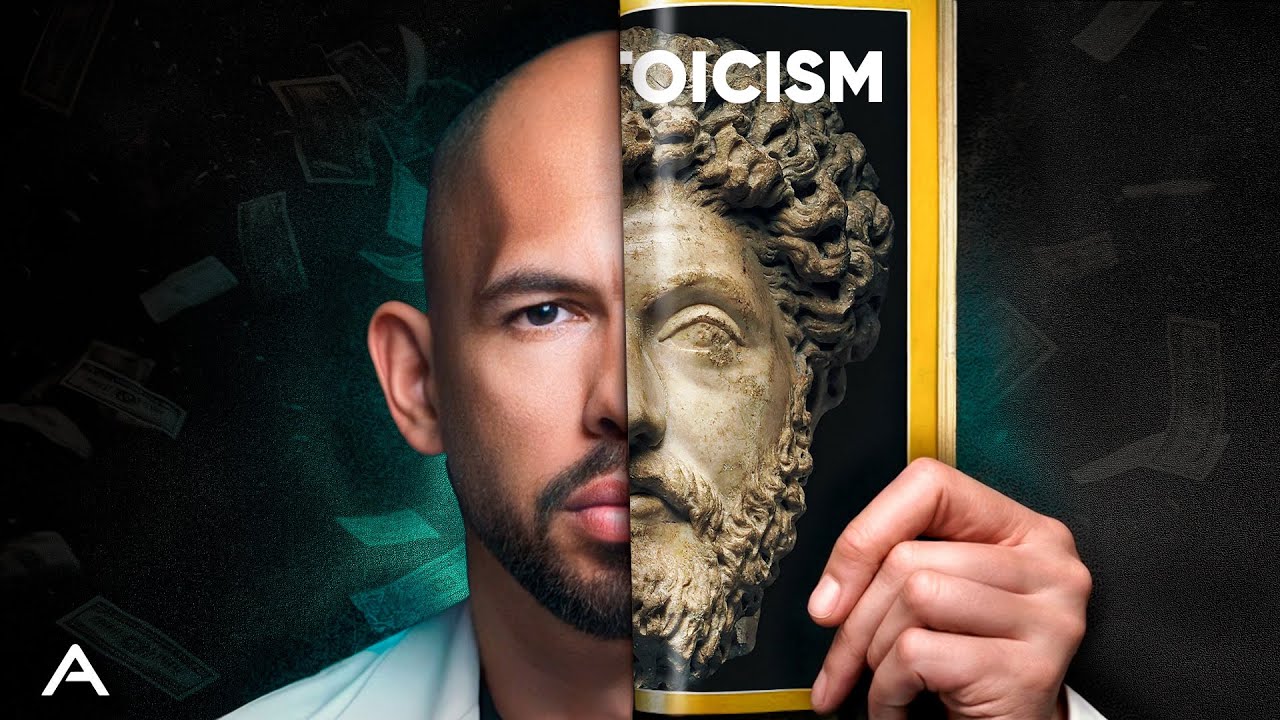
The Billion-Dollar Stoic Scam: How “Broism” Hijacked an Ancient Philosophy
Stoicism was once a profound tool for surviving the collapse of empires and the shackles of slavery. Today, it has been sanitized and repackaged as a “sigma male” lifestyle brand for influencers seeking fame, fortune, and emotional numbness.
Core Question: Has the modern “manosphere” completely hollowed out the actual ethics of Stoicism to sell a hollow version of success?
Highlights
- The shift from Stoicism as a pursuit of virtue to “broism” as a pursuit of status, wealth, and “alpha” dominance.
- How Cognitive Behavioral Therapy (CBT) validated Stoic techniques in the 1950s before they were co-opted by Silicon Valley.
- The vital distinction between “little s” stoicism (repressing emotions) and “Capital S” Stoicism (the philosophy of character).
- Why the most valuable Stoic resources are actually free in the public domain, despite influencers selling $50 email courses.
⏱️ Reading time: approx. 11 minutes · Saves you about 42 minutes vs. watching.
Want to take notes while watching? Click the image below and let AI Notebook capture the key points for you 👇

From Shipwrecks to Silicon Valley
The Birth of the Dichotomy of Control
Stoicism began with a disaster. In 300 BC, a wealthy Phoenician merchant named Zeno was shipwrecked off the coast of Athens, losing his entire cargo and fortune in an instant. This catastrophe led him to a realization that remains the bedrock of the philosophy: we have almost no control over external events, yet we have absolute control over our internal response to them. This shift from victimhood to agency allowed Stoicism to flourish across every social strata, from Epictetus, a man born into slavery, to Marcus Aurelius, the most powerful Emperor in the known world.
“He realized that while he couldn’t control the weather or the waves, he could transform his loss into a school of thought that would survive for millennia.”
For centuries after the fall of Rome, Stoicism was largely dismissed by the rising Christian tide as “pagan nonsense.” It wasn’t until the mid-20th century that it found an unlikely savior in the world of clinical psychology. Pioneers like Albert Ellis and Aaron Beck realized that the Stoic insight—that people are disturbed not by things, but by the view they take of them—was the perfect foundation for what would become Cognitive Behavioral Therapy (CBT), the most evidence-based form of psychotherapy today.

💡 Digging Deeper
Q: Is Stoicism just another word for “stiff upper lip”?
A: No. Ancient Stoics actually talked about their emotions more than almost any other school; they sought to understand and transform emotions, not just suppress them.
Q: Why did Silicon Valley adopt Stoicism?
A: Tech leaders viewed their minds as “operating systems” and saw Stoicism as a “life hack” or a “brain patch” to optimize performance under stress.
Q: Who is the most famous modern Stoic?
A: Admiral James Stockdale is often cited. He survived seven years as a POW in Vietnam by applying the teachings of Epictetus to endure torture without breaking.
The Rise of the “Broism” Industry
Marketing Virtue as a Lifestyle Brand
The 21st-century Stoic revival was spearheaded by marketers like Ryan Holiday, whose book The Obstacle Is the Way turned ancient maxims into best-selling self-help. While Holiday’s work serves as an accessible entry point for many, it also signaled a shift where philosophy became a product. Today, you can buy plastic skulls, “Memento Mori” coins, and expensive temper-taming courses. This commercialization paved the way for more radical influencers to strip the ethics out of the philosophy entirely, leaving behind only the “hustle culture” shell.
The problem isn’t necessarily the books; it’s the transition of a moral framework into a “get-rich-quick” aesthetic.
As Stoicism entered the “manosphere,” it mutated into what experts call “broism.” This version of the philosophy ignores the Stoic pillars of justice and cosmopolitanism in favor of “alpha” status. Influencers now use Stoic quotes to justify misogyny or the pursuit of “indifferents”—wealth, fame, and physical dominance—which the original Stoics explicitly warned were meaningless compared to the quality of one’s character.

💡 Digging Deeper
Q: What is the “Barnum Effect” in modern Stoic content?
A: It’s the use of vague, general statements (like “stay strong”) that people feel are personally tailored to them, much like a horoscope or a charlatan’s advice.
Q: How do influencers manipulate the term “Virtue”?
A: They claim the Latin root vir (man) means virtue is only for “manly men,” ignoring the original Greek word Arete, which is gender-neutral and means “Excellence.”
Q: Does “Broism” actually help people?
A: While it may provide a temporary sense of control, the “little s” stoicism of repressing feelings is psychologically damaging and can lead to increased stress and isolation.
The Search for Genuine Stoicism
Why the “Alpha” Interpretation Fails
If Marcus Aurelius were alive today, he would likely be horrified by the muscular, autocratic version of himself portrayed in manosphere thumbnails. The real Aurelius was a man who wrote his Meditations as a way to remind himself to be humble, to serve his community, and to accept that his fame would eventually be forgotten. Broism attempts to use Stoicism to build a bigger ego, whereas actual Stoicism is a practice in dissolving the ego to better serve the “Cosmopolis”—the universal city of all human beings.
Real Stoicism isn’t about being a lone wolf; it’s about recognizing that you are one small part of a massive, interconnected human family.
The experiment conducted by the Aperture team revealed a stark reality: expensive Stoic “coaching” and email courses are often shallow or even predatory. One Fiverr “coach” spent the session insulting the student and suggesting that a “true Stoic” could witness a crime without reacting. This is the opposite of the Stoic duty to act with justice. Meanwhile, the team members who simply read the free, public-domain translations of the classics found deeper insights than any paid service could provide.

💡 Digging Deeper
Q: Why are Roman aesthetics so popular in the manosphere?
A: Rome is often fetishized as a militaristic, autocratic society, which appeals to those who feel insecure in modern “therapy culture.”
Q: Is it wrong to want to be successful?
A: No, but Stoics classify it as a “preferred indifferent.” It’s nice to have, but it doesn’t make you a better person, and it shouldn’t be the goal of your life.
Q: How can I tell if an influencer is a “Broic” or a Stoic?
A: Check their focus. If they are selling you a way to get rich or get “revenge,” they aren’t teaching Stoicism; they’re teaching narcissism.
Key Takeaways
Modern “Broism” is essentially Stoicism with the ethics removed. By focusing only on the “stiff upper lip” and the pursuit of power, it creates a distorted version of masculinity that is both socially isolating and psychologically fragile. True Stoicism is not a tool for building a business empire; it is a tool for building a soul that is resilient to the whims of fortune.
The irony of the Stoic industry is that the most powerful books in the world—the works of Seneca, Epictetus, and Marcus Aurelius—are entirely free. You don’t need a $50 medallion or a high-priced coach to learn that your character is your only true possession. The “way” isn’t through an obstacle to reach a paycheck; the “way” is the refinement of your own mind.
True strength, according to Zeno and his successors, is found in cosmopolitanism and the rejection of ego. We were given two ears and one mouth for a reason: to listen more than we speak, and to serve more than we sell.
Q&A
Q1: What is the main difference between Stoicism and “Broism”?
A1: Stoicism focuses on developing inner virtue and serving the common good. Broism focuses on using Stoic “hacks” to achieve external status, wealth, and dominance over others.
Q2: Is repressing your emotions a Stoic trait?
A2: No. This is a common misconception (“little s” stoicism). Capital-S Stoicism involves acknowledging emotions and using reason to decide if they are based on a correct judgment of reality.
Q3: Why is Marcus Aurelius so popular among these influencers?
A3: Because he was a powerful Emperor. Influencers use his image to suggest that Stoicism is a “philosophy for winners,” often ignoring that Aurelius struggled with his role and wrote his journals to maintain humility, not to brag.
Q4: Do the Stoic “life hacks” sold online actually work?
A4: They might help with productivity in the short term, but they are often just basic psychological techniques (like those in CBT) separated from the moral framework that makes Stoicism a life-changing philosophy.
Q5: What did Zeno think about money?
A5: Zeno was once a wealthy merchant but chose to live an ascetic, simple life after his shipwreck. He refused to charge for his teaching, believing that virtue cannot be sold.
Q6: What is the “Stockdale Paradox”?
A6: It is the idea that you must maintain faith that you will prevail in the end, regardless of the difficulties, while simultaneously confronting the most brutal facts of your current reality, without false hope.
Q7: Where should I start if I want to learn real Stoicism?
A7: Skip the paid courses. Read the Meditations by Marcus Aurelius, the Letters from a Stoic by Seneca, and the Enchiridion by Epictetus. Most are available for free online as they are in the public domain.