📺 Today’s recommended deep-dive video: https://www.youtube.com/watch?v=ffUnNaQTfZE
Infinite Frosting and Finite Time: The Paradox of Supertasks
Imagine a cake you can eat in a single bite but can never fully frost, no matter how much icing you have at your disposal. This is the mind-bending reality of supertasks, where the laws of mathematics collide head-on with the limits of physical reality and human perception. By exploring the infinite, we uncover the strange boundaries of the universe we inhabit and the logical frameworks we use to describe it.
Core Question: Can a sequence involving an infinite number of distinct actions ever be completed within a finite period of duration?
Highlights
- The geometry of Gabriel’s Cake: How an object can possess finite volume but infinite surface area.
- Zeno’s Paradox revisited: Why Achilles can finish a race despite having an infinite number of halfway points to cross.
- The Thomson Lamp dilemma: Exploring why some infinite sequences refuse to provide a logical end-state.
- The Ross-Littlewood Paradox: A mathematical demonstration of how infinite additions can result in a total of zero.
⏱️ Reading time: approx. 6 minutes · Saves you about 15 minutes vs. watching.
Want to take notes while watching? Click the image below and let AI Notebook capture the key points for you 👇

The Geometry of the Infinite Dessert
Slicing Toward Infinity
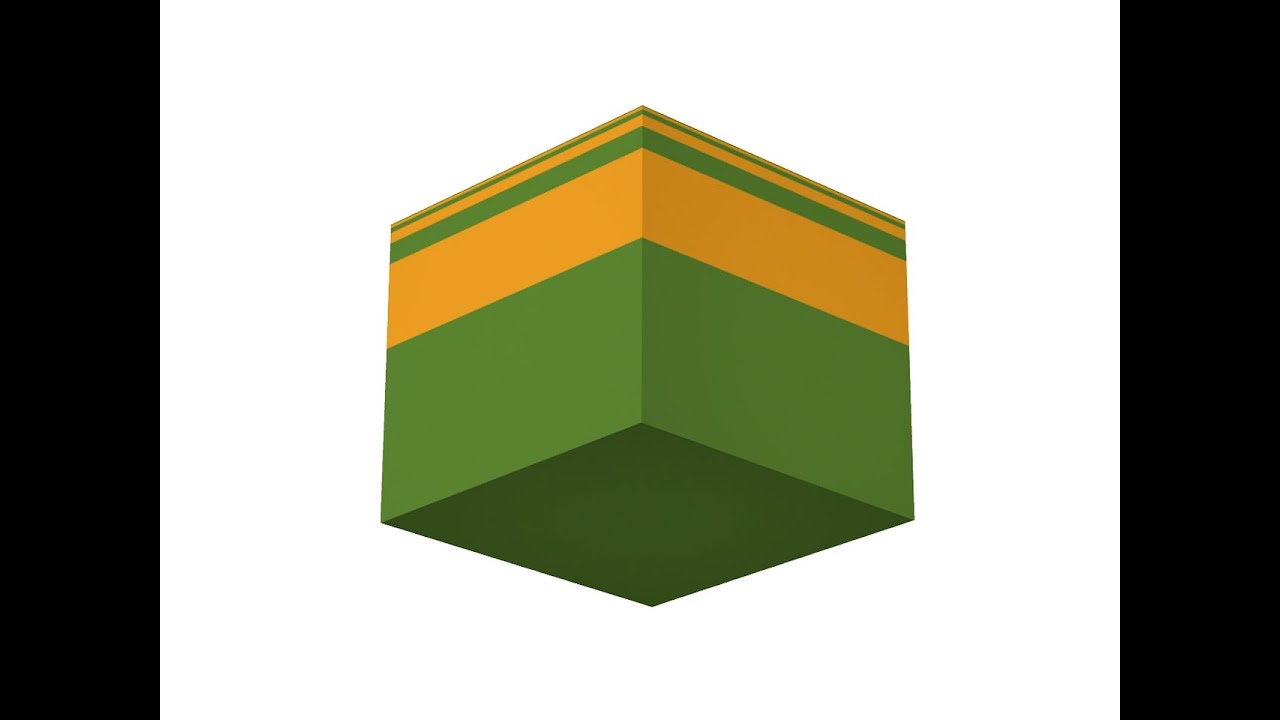
One of the most delicious ways to visualize the infinite is through Gabriel’s Horn, or in this case, Gabriel’s Cake. If you take a standard cake and repeatedly cut it in half, then stack those halves, you aren’t adding any new cake, yet you are radically changing its properties. The volume remains identical to the original sponge, but the surface area begins to climb toward infinity as you create more internal faces with every single cut.
It is a cake you can eat, but you can never frost.
Because the surface area is infinite, a uniform coat of frosting would require an infinite volume of sugar and cream, even though the cake itself fits on a small plate. This “super solid” defies our intuition by being bounded in three-dimensional space while remaining unbounded in its two-dimensional shell. It serves as a perfect physical metaphor for the mathematical concept of a limit.

💡 Digging Deeper
Q: Why doesn’t the volume increase when the surface area does?
A: Volume is the measure of 3D space occupied, which is conserved during cutting. Surface area measures the “skin,” and every cut exposes new skin that was previously hidden inside.
Q: Can a super solid exist in the real world?
A: Not truly. Eventually, you would reach the atomic level where “slicing” the cake would require splitting atoms, changing the chemical nature of the dessert entirely.
The Logic of the Supertask
Running Zeno’s Race
A supertask is defined as performing an infinite number of operations within a finite amount of time. This concept stems from Zeno’s Paradox of the dichotomy, which suggests that to move from point A to point B, you must first cover half the distance, then half of what remains, and so on. If there is always a “halfway point” left to reach, how does anyone ever actually arrive at their destination?
Achilles finishes the race because he supertasks.
By accelerating his actions—spending half as much time on each subsequent halfway point—he completes the infinite series of steps in a finite window. If he takes one minute for the first half, thirty seconds for the next, and fifteen for the one after that, he will reach the finish line exactly at the two-minute mark. Mathematics allows for this “convergence,” where an infinite sum equals a clean, finite number.

💡 Digging Deeper
Q: Does the Planck length prevent supertasks?
A: Many physicists argue that the Planck length—the smallest meaningful unit of distance—means space isn’t infinitely divisible, effectively “solving” Zeno’s paradox by putting a floor on the subdivisions.
Q: Is a supertask just a mathematical trick?
A: Logically, they are consistent. Physically, they clash with our understanding of discrete space-time, but they remain a vital tool for testing the limits of logic.
When Logic Breaks: Lamps and Urns
The Flickering Paradox
Not every supertask ends with a neat conclusion like Zeno’s race; some tasks are “divergent” or oscillating, leaving us with no clear answer. Consider Thomson’s Lamp, a switch toggled on and off at an accelerating Zenoian pace. At the end of two minutes, is the lamp on or off? Since there is no “last” toggle in an infinite sequence, logic dictates it can’t be on (because it was immediately turned off) and it can’t be off (because it was immediately turned on).
This lack of information makes the final state undecidable.
Philosopher Paul Benacerraf argued that these paradoxes arise because the description of the task is incomplete. Without a rule defining what happens at the exact limit of the sequence, we are left guessing. It is like asking if a lamp in a locked room is on—without looking or having a final state defined, the question is effectively unanswerable within the system.

💡 Digging Deeper
Q: What is the Ross-Littlewood paradox?
A: It involves adding 10 balls to an urn and removing 1 at each Zenoian step. While the number of balls grows to infinity during the task, every specific numbered ball is eventually removed, leaving the urn empty at the end.
Q: How can the urn be empty if we added infinite balls?
A: It is a matter of set theory. Because every ball labeled “n” is removed at step “n,” and there are infinite steps, no specific ball can remain in the urn at the limit.
Key Takeaways
Supertasks represent a fascinating “handshake” between the abstract world of mathematics and the concrete reality of physics. While we may never build a Thomson Lamp or bake an infinite Gabriel’s Cake, these thought experiments force us to define the boundaries of our logic. They reveal that infinity isn’t just a “very large number,” but a different category of existence that behaves by its own set of rules, often defying our common sense.
The human drive to ponder these impossible problems is what separates us from our evolutionary ancestors. Like the Homo sapiens who sailed into the unknown Pacific without knowing if land existed, our obsession with the “madness” of infinity allows us to solve the problems of today by reaching for the impossibilities of tomorrow. We don’t just solve the tasks assigned to us; we long for the endless immensity of the sea.
Q&A
Q1: What exactly is a supertask?
A: A supertask is the performance of an infinite number of distinct actions or operations within a finite period of time, usually achieved by halving the time taken for each subsequent step.
Q2: Why is Gabriel’s Horn significant?
A: It is a mathematical paradox demonstrating that an object can have a finite, measurable volume (you can fill it with paint) but an infinite surface area (you can never finish painting the inside).
Q3: Does Zeno’s Paradox prove motion is impossible?
A: No, it was intended to challenge our understanding of space and time. In modern calculus, we resolve it by showing that an infinite series of numbers can sum to a finite total.
Q4: What is the Planck length?
A: It is the smallest scale at which the current laws of physics hold. It suggests that space may not be infinitely divisible, which would make physical supertasks impossible.
Q5: Is the Thomson Lamp on or off at the end?
A: Within the strict rules of the supertask, the state is undefined. There is no final step in the sequence to determine the outcome, making it a logical stalemate.
Q6: How can adding balls to an urn result in zero balls?
A: In the Ross-Littlewood paradox, if you remove ball #1 at step 1, ball #2 at step 2, and so on, every individual ball has a specific time at which it is removed. At infinity, no ball is left that hasn’t been assigned a removal step.
Q7: Why do we study these if they aren’t “real”?
A: Studying supertasks helps mathematicians and philosophers refine the definitions of limits, continuity, and the nature of infinity, which are foundational to science and engineering.