📺 Today’s recommended deep-dive video: https://www.youtube.com/watch?v=1nU5h3duiYI
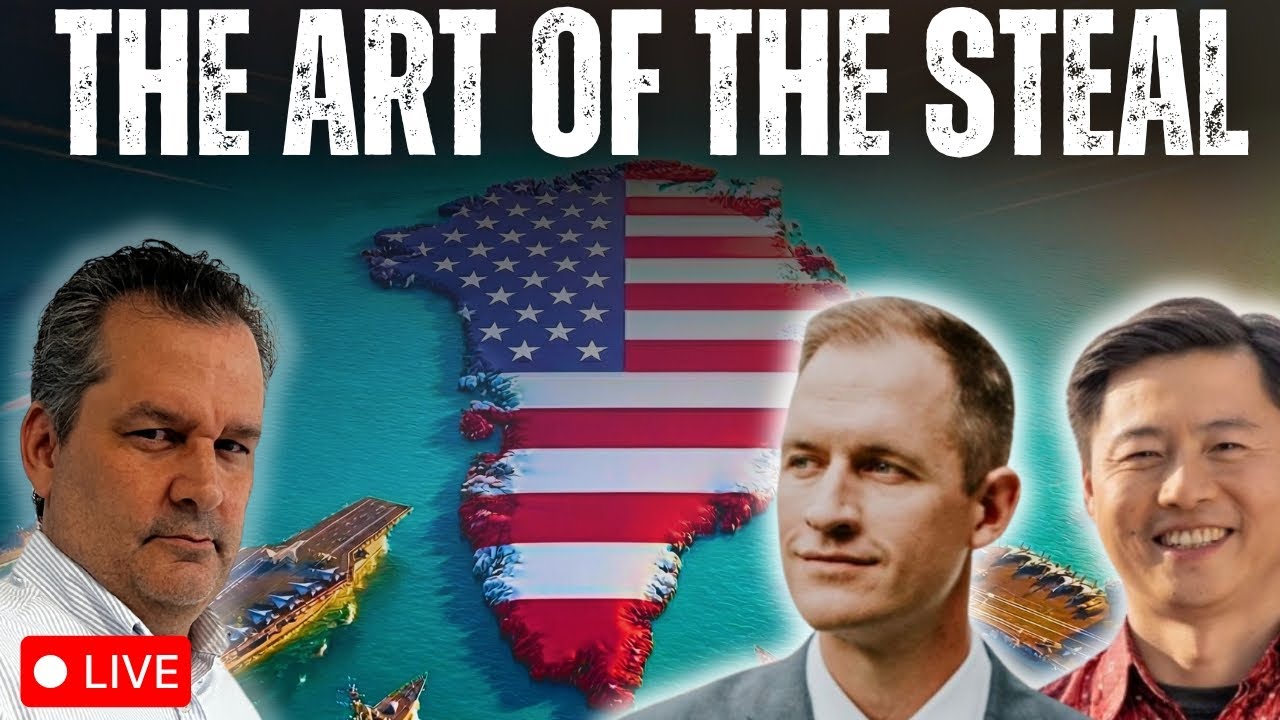
2026 Geopolitics: The Venezuela Invasion, the Greenland Ultimatum, and the Fracture of NATO
As 2026 opens with an unprecedented U.S. invasion of Venezuela and direct military threats against Denmark over Greenland, the global geopolitical order has entered a state of terminal volatility. While the White House frames these moves as essential for resource security and national defense, the reality reveals a desperate consolidation of power and a total breakdown of Western alliances.
Core Question: Can the established international rules-based order survive a U.S. administration that prioritizes territorial seizure and domestic distraction over traditional diplomacy?
Highlights
- The economic impossibility of the Venezuelan oil grab due to crumbling infrastructure and massive reinvestment requirements.
- The catastrophic implications for NATO’s Article 5 as the U.S. threatens a “hard way” takeover of Greenland.
- Canada’s historic pivot toward China as a strategy to mitigate the instability of its southern neighbor.
- The rise of a domestic police state in America, characterized by ICE agents operating with total legal immunity.
⏱️ Reading time: approx. 8 minutes · Saves you about 82 minutes vs. watching.
Want to take notes while watching? Click the image below and let AI Notebook capture the key points for you 👇

The Illusion of the Venezuelan Oil Prize
The $186 Billion Reinvestment Trap
The invasion of Venezuela on January 3rd, 2026, was sold to the American public as a swift move to seize the world’s largest oil reserves and bankrupt China’s energy supply. However, the raw data suggests this is a fantasy; Venezuelan heavy crude accounts for a mere four percent of China’s energy imports, and the country’s oil industry is in such disrepair that it would require nearly $200 billion in investment just to return to 2010 production levels.
No corporate executive is willing to bet on a sixteen-year recovery timeline in a nation defined by military occupation.
While the administration fixates on fossil fuels, China has pivoted toward a renewable energy dominance that U.S. tariffs cannot stop. By adding more solar capacity in 2025 than the rest of the world combined, Beijing has effectively insulated itself from the very energy shock that the Trump administration hoped to trigger through the Caracas invasion.

💡 Digging Deeper
Q: Why did oil executives leave Venezuela originally?
A: They were forced out by U.S.-led sanctions in 2019, creating a vacuum that the U.S. is now trying to fill through military force.
Q: Is Venezuela a genuine threat to U.S. security?
A: There is no data to support this; the country has zero capability to militarily invade the U.S., and the claims regarding drug trafficking are largely fabricated for political leverage.
The Greenland Ultimatum and the End of NATO
Article 5 in the Crosshairs
The threat to take Greenland from Denmark—a founding NATO ally—represents the single greatest rupture in transatlantic relations since the end of World War II. By telling a sovereign European nation that the U.S. will take their territory “the easy way or the hard way,” the White House has effectively declared that NATO protection does not apply if the aggressor is the United States itself.
This is a geopolitical gift to Vladimir Putin, as it proves the alliance is a hollow shell.
The administration’s stated fear of Russia or China occupying Greenland ignores the fact that the U.S. already maintains significant military basing rights on the island through existing treaties. Forcing an annexation isn’t about security; it is a “spectacle” designed for domestic television consumption and a distraction from the redacted Epstein files that continue to haunt the presidency.

💡 Digging Deeper
Q: Do the people of Greenland want to become Americans?
A: No; recent polling shows that 85% of Greenlanders prefer to remain under Danish sovereignty, fearing the high poverty rates seen in other U.S. colonies like Puerto Rico and American Samoa.
Q: What is the geographical reality of the “Russian neighbor” claim?
A: The claim is hollow; the U.S. and Russia are already neighbors, separated by only 2.4 kilometers in the Bering Strait between Alaska and Russian territory.
The North American Fracture: Canada’s Pivot
Mark Carney’s Mission to Beijing
For the first time in history, a Canadian Prime Minister is visiting Beijing with the explicit goal of reducing economic reliance on the United States. This move, led by Mark Carney, is a direct response to the “geopolitical insanity” emanating from Washington, including threats to target Canada next for territorial expansion or crippling tariffs.
The brotherly bond between the two nations, once symbolized by the Peace Arch, has been replaced by a wall of economic protectionism.
Canadian consumers are increasingly eyeing Chinese electric vehicles (EVs) as a solution to the hyper-inflated prices of American-made cars. If Canada drops its EV tariffs, it could signal the total collapse of the U.S. automotive industry’s influence in the North, as affordable, high-tech Chinese brands like BYD offer value that Detroit simply cannot match under current tariff regimes.

💡 Digging Deeper
Q: Why is silver skyrocketing in price?
A: Financial markets are reacting to the instability of the U.S. dollar, with silver up 140% as investors seek hedges against a volatile presidency and shifting global trade routes.
Q: Will Canada defend its sovereignty?
A: Yes; despite not being a traditionally “militaristic” culture, there is a surging sense of nationalism in Canada as citizens react to being bullied by the U.S. administration.
Domestic Crisis: The Rise of the ICE State
Immunity and the End of Due Process
Internally, the United States is grappling with the emergence of a domestic police force—ICE agents—who have been granted total legal immunity for their actions. This has resulted in the tragic shooting of U.S. citizens and a climate of fear that extends beyond undocumented immigrants to anyone with brown skin or a foreign accent, creating a fracture in the American social fabric that Rogan and other commentators call “unprecedented.”
This is the art of distraction: creating chaos at home so the public ignores the consolidation of power in the executive branch.
The administration is already signaling a desire to bypass the Constitution to run for a third term in 2028, claiming that “legal channels” exist to circumvent the 22nd Amendment. By pardoning major financial criminals and crypto-launderers while brutalizing local communities, the government is signaling that loyalty to the leader is the only law that remains.
💡 Digging Deeper
Q: What happened in the viral ICE shooting incident?
A: An agent shot a woman three times for fleeing, an act that is traditionally illegal for law enforcement, but the agent now faces no charges due to new immunity rules.
Q: Is the MAGA movement fracturing?
A: Yes; many supporters are beginning to question the “Israel First” policy and the administration’s obsession with power over the economic promises made in 2016.
Key Takeaways
The geopolitical landscape of 2026 is defined by a United States that has turned inward and aggressive, treating both allies and enemies as obstacles to be overcome. The invasion of Venezuela and the bullying of Denmark are not signs of strength, but indicators of a system that is no longer interested in the stability of the global order.
China, conversely, is positioning itself as the rational actor, doubling down on infrastructure and renewable energy while the U.S. burns its diplomatic bridges. As Canada and Europe look toward Beijing for a semblance of predictability, the “American Century” is meeting a chaotic and self-inflicted end.
Q&A
Q1: How does the “Silencer” missile change the Ukraine conflict?
A: Russia’s recent use of a hypersonic warhead that cannot be intercepted is a “statement of power” intended to warn the U.S. that bullying tactics will not work against nuclear-armed states.
Q2: Is the U.S. economy actually benefiting from the Venezuelan oil?
A: No. Because of the high processing costs of heavy crude and the destruction of the refineries, the U.S. is spending more on the military occupation than it is recouping in energy value.
Q3: What is the significance of the 2028 election talk?
A: It signals an attempt to move toward a permanent presidency, mirroring the actions of authoritarian regimes where constitutional term limits are ignored or rewritten.
Q4: Why are Chinese EVs so popular at CES in Las Vegas?
A: They offer superior technology and range at a fraction of the cost of American EVs, which are currently inflated by tariffs and inefficient domestic manufacturing.
Q5: What is the “Epstein File” connection to current events?
A: Analysts believe Trump is creating maximum geopolitical chaos (Greenland, Venezuela) specifically to drown out media coverage of the redacted files that could link him to illegal activities.
Q6: Can Denmark actually stop a U.S. invasion?
A: Militarily, no. Denmark and Greenland have no means to repel an amphibious U.S. assault, making the threat a form of “unilateral bullying” that relies on the lack of a European nuclear deterrent.
Q7: How is the Canadian dollar performing?
A: It is volatile but stabilizing as the country seeks to move toward parity by anchoring its trade to the Yuan and increasing commodity exports to Asia.