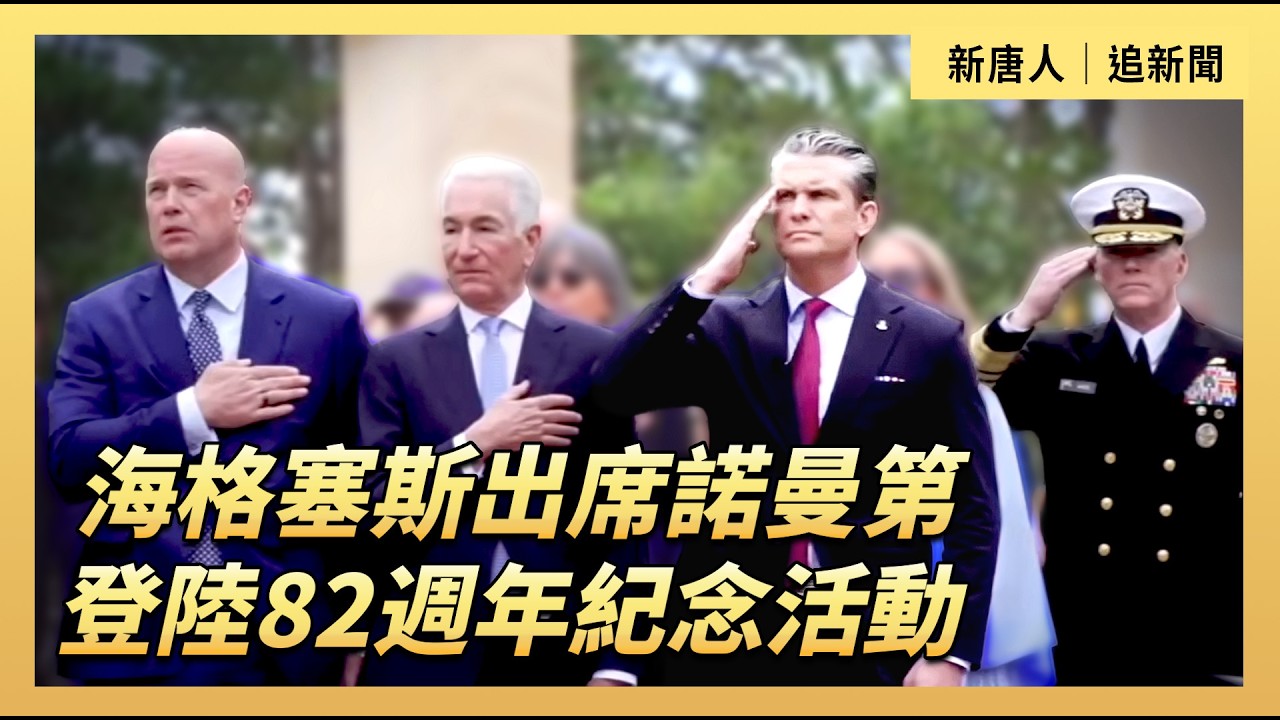
📺 Today’s recommended deep-dive video: https://www.youtube.com/watch?v=VJKbEYv1r2A
Echoes of Omaha: Honoring the Spirit of American Youth at Normandy’s 82nd Anniversary
Standing before the endless rows of white crosses and stars, we are reminded that liberty was never a gift, but a hard-won victory. The 82nd anniversary of D-Day at the Normandy American Cemetery served as a solemn bridge between the heroism of 1944 and the complex geopolitical challenges of today.
Core Question: How does the legacy of the Allied landings continue to define the American warrior ethos and the necessity of global alliances?
Highlights
- Veteran Arthur Rose’s firsthand 1944 letter recounting the “funny feeling of expectancy” before sailing into the storm.
- The logistical marvel of the D-Day invasion, fueled by Higgins boats and the industrial grit of 20,000 American workers.
- A call for modern allies to move beyond “empty slogans” toward real, shared military readiness and political will.
- The symbolic importance of the “Spirit of American Youth Rising from the Waves” sculpture as a representation of national resolve.
⏱️ Reading time: approx. 7 minutes · Saves you about 81 minutes vs. watching.
Want to take notes while watching? Click the image below and let AI Notebook capture the key points for you 👇

The Sacred Ground of Memory
The Spirit of American Youth
The Normandy American Cemetery stands as a silent sentinel over the beaches where the fate of Western civilization was once decided.
General Michael Xar, Chairman of the American Battle Monuments Commission, opened the ceremony by noting that visitors are immediately drawn to the endless rows of crosses and stars of David. These markers represent more than just military strength; they represent a conviction that liberty, though fragile, is worth defending at any cost. This ground is made sacred not just by the blood spilled in 1944, but by the enduring spirit of the men who answered a call larger than their own fear.
Behind the speakers stood the bronze sculpture, The Spirit of American Youth Rising from the Waves.
It serves as a permanent reminder that the force brought to these shores was not just a collection of ships and guns, but the unyielding will of a nation. The men who landed here came from every corner of the United States, crossing the Atlantic toward an uncertain fate, yet remaining steadfast and unyielding through the chaos and bloodshed.

💡 Digging Deeper
Q: What does the sculpture behind the podium represent?
A: It represents the “Spirit of American Youth Rising from the Waves,” symbolizing that military strength was secondary to the enduring spirit of fighting for liberty.
Q: How many names are listed on the walls of the missing?
A: There are 1,557 names etched on the walls of the missing at the cemetery.
A Sailor’s Perspective and the Weight of Sacrifice
The Letter from June 1944
Veteran Arthur Rose, a young lieutenant in the United States Navy during the invasion, shared a poignant letter he wrote to his parents just days after the landings.
He described the “rough, windy, and miserable” sea and the unexpected duty of “pulling engines and changing injectors” in the heat of battle. His account captured the strange mix of mundane mechanical work and the terrifying expectancy of a “holocaust” that everyone feared was coming as they approached the French coast.
His words bridged the tactical history of the war with the lived, human reality of those who survived the crossing.
Extraordinary Deeds by Ordinary Men
General Dan “Raisin” Kane, Chairman of the Joint Chiefs of Staff, followed by highlighting specific acts of valor that defined the day. He pointed to the crew of the USS Corey, which provided fire support just 1,000 yards from the beach before being struck by mines, and the sacrifice of Lieutenant Jimmy Monteith. Monteith’s disregard for his own safety—walking through active minefields to guide tanks—epitomizes the transition from ordinary citizen to extraordinary hero.
These men fought for a continent they had never seen and saved a people they did not know.

💡 Digging Deeper
Q: Who was Jimmy Monteith?
A: A first lieutenant in the 1st Infantry Division who won the Medal of Honor for rallying troops on Omaha Beach and guiding tanks through minefields on foot.
Q: What happened to the USS Corey?
A: She provided covering fire at Utah Beach but sank after hitting a mine and taking German artillery hits, resulting in the loss of 24 crew members.
The Price of Peace and the Modern Alliance
The Industrial Base of Freedom
Secretary of War Peter B. Hixon delivered a blunt assessment of the “war machine” required to liberate Europe.
He noted that the Higgins boats, the essential vessels for the amphibious assault, were the product of 20,000 blue-collar workers in New Orleans. This industrial grit allowed American paratroopers to “walk to France on top of the boats” because the scale of the fleet was so immense. Hixon argued that this triumph of ingenuity and initiative remains a core American advantage that must be maintained today.
A Warning for the Next Generation
Secretary Hixon warned that freedom is never more than one generation away from extinction and requires active vigilance rather than mere reflection.
He emphasized that real alliances are forged in the breach, not through empty slogans or “lavish summits.” He called for a revival of the warrior ethos and a commitment to strength on both sides of the Atlantic to ensure the sacrifices at Normandy were not temporary. Hixon also touched on modern geopolitical concerns, urging European capitals to show the same resolve in defending their borders as the liberators did in 1944.
💡 Digging Deeper
Q: What was the “fatal miscalculation” of the Axis powers?
A: They underestimated the unbreakable will of the American fighting man and the industrial scale of the U.S. war machine.
Q: How does Secretary Hixon define a “real ally”?
A: As a partner that brings a full measure of industry, courage, and sacrifice, rather than relying on diplomatic communiqués.
Key Takeaways
The 82nd anniversary was not just a history lesson; it was a stark call to action for the present day. The speakers collectively highlighted that while technical superiority was vital, it was the individual initiative of soldiers who adapted when plans failed that ultimately shattered the Nazi war machine. The legacy of D-Day is one of selflessness—men dying for strangers to ensure that tyranny could not hold the world in its grip.
The enduring bond between the U.S. and France remains a cornerstone of Western security, sealed in the soil of Normandy. By remembering the “Spirit of American Youth,” the ceremony underscored that the defense of liberty is a continuous duty. Each generation must prove themselves worthy of the crosses and stars at Normandy by standing ready to defend freedom whenever and wherever it is threatened, moving beyond comfort to maintain the peace bought so dearly in 1944.
Q&A
Q1: What was the primary focus of General Michael Xar’s opening remarks?
A: He focused on the conviction of the soldiers, noting that their belief in something larger than fear is what made the ground of Normandy sacred.
Q2: What did Veteran Arthur Rose feel as the invasion began?
A: He described it as a “funny feeling of expectancy” rather than pure fear or excitement, wondering what would happen next as the sea grew rough and miserable.
Q3: How did Secretary Hixon describe the contribution of American workers?
A: He credited the “blue-collar grit” of 20,000 workers in New Orleans for manufacturing the Higgins boats, which he called a “master stroke of American engineering.”
Q4: What specific example of airborne bravery was mentioned?
A: Sergeant William Ashbrook of the 101st Airborne noted that there were so many boats in the channel, it looked like one could walk from the plane to France on top of them.
Q5: What is the significance of the 82nd anniversary according to the Ambassador?
A: Ambassador Charles Kushner emphasized that the bond between the U.S. and France is not merely diplomatic but is “written in sacrifice and sealed in friendship.”
Q6: What modern security concern did Secretary Hixon address?
A: He addressed the threat of “dangerous ideologies” storming European beaches today and called for European leaders to show political will in defending their borders.
Q7: How did the ceremony conclude?
A: The ceremony concluded with the laying of wreaths by various officials, the playing of “Taps,” a moment of silence, and a final benediction by the Chaplain.