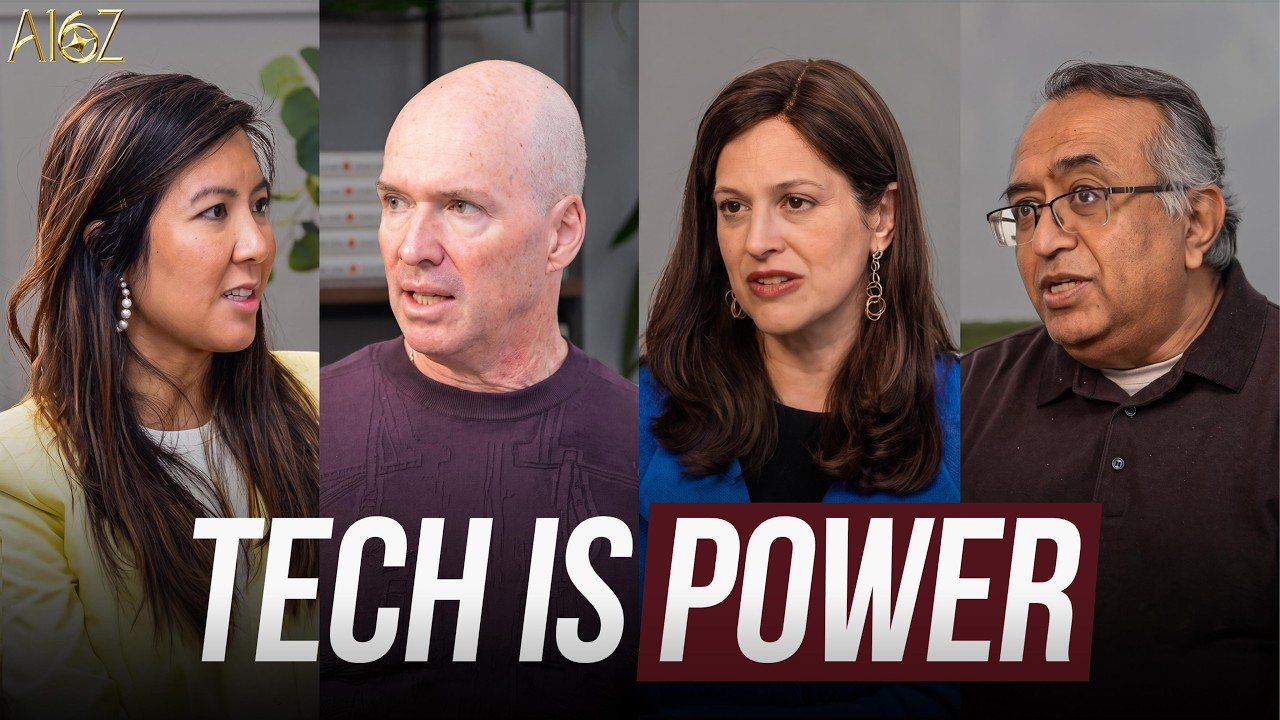
📺 Today’s recommended deep-dive video: https://www.youtube.com/watch?v=XwfUzW32cIA
The Geopolitics of AI: Bridging Silicon Valley with Global Allies
As artificial intelligence transitions from a specialized tool to the primary interface for human interaction, the stakes for global innovation have never been higher. The battle for technological supremacy is no longer just about capital; it is about which values—and whose history—are embedded into the models that govern our daily lives.
Core Question: How can venture capital bridge the gap between American innovation and the sovereign needs of global allies in the age of AI?
Highlights
- AI models are not objective; they carry the cultural and political opinions of their creators.
- Technological deterrence now relies on the pace of private-sector innovation rather than just the size of a military.
- Modern startups must go international much earlier because software updates travel faster than traditional corporate structures.
- Recreating Silicon Valley requires a specific, fragile combination of technical talent, permissive policy, and high-status cultural reward.
⏱️ Reading time: approx. 7 minutes · Saves you about 35 minutes vs. watching.
Want to take notes while watching? Click the image below and let AI Notebook capture the key points for you 👇

The New Arena of National Power
Technology as Diplomacy
The landscape of global influence has shifted significantly, moving from traditional diplomatic cables to the underlying supply chains of chips and software. In the current era, a software vulnerability is no longer just an IT headache; it is a primary source of leverage that can be used to disrupt power systems, water supplies, or entire national economies.
Technology has moved from being a tool of national power to the central arena of economic growth and stability.
Because the private sector now builds the most advanced AI and autonomous systems, the relationship between government and venture-backed firms has become a foundational pillar of national security. Our allies are no longer just looking to purchase American products; they are looking to build their own resilient ecosystems so they are not left behind in the rapid transition to a software-defined world.

💡 Digging Deeper
Q: Why is deterrence changing?
A: It is no longer just about the number of ships or tanks; it is about how fast a country can innovate and react to cheap, software-built technology used by adversaries.
Q: What is the risk of a “cyber-backdoor”?
A: Using untrusted models allows foreign entities to potentially inject political will or surveillance directly into the infrastructure of an ally’s digital life.
Q: How does Mexico fit into this strategy?
A: Mexico is a vital neighbor; creating a Western Hemisphere supply chain ecosystem is as much a national security priority as it is an economic opportunity for startups.
The Values Embedded in the Machine
Avoiding “Cyberspace Colonization”
When AI becomes the interface for everything—from your car and refrigerator to your local education system—the lack of objectivity in these models becomes a critical concern. These systems are trained on specific data that contains strong opinions on history, culture, and ethics, which vary wildly depending on whether the model was built in San Francisco, Beijing, or Riyadh.
If the world runs on American and Western technology, it runs on values like the rule of law and human opportunity.
We must recognize that no country wants to be “colonized” in cyberspace by having a foreign culture’s values forced upon their domestic systems. By providing open-source models and transparent partnerships, we ensure that a Mexican media company can use AI to dub content without fearing that the model will censor or alter the underlying message to fit a specific political agenda.
💡 Digging Deeper
Q: Are AI models objective?
A: No, they have strong opinions on history and ethics based on their training data and the intent of their developers.
Q: Why is open source important here?
A: It allows countries to verify that the models aren’t injecting foreign political will or hidden backdoors into their local applications.
Q: How did 11 Labs help a Mexican media firm?
A: They used AI to dub Spanish content into dozens of languages while maintaining the actors’ original intonations, turning a local product into a global Netflix success.
Accelerating Global Go-To-Market
The Top-Heavy Global Economy
In the “olden days,” a startup wouldn’t dream of going international until they were clearing hundreds of millions in revenue, but the API economy has changed those rules forever. Today, a great product is discovered globally the moment it launches, forcing founders to navigate international markets much earlier in their lifecycle than previously expected.
Success in these regions is rarely transactional; it is deeply rooted in long-term relationships with a handful of key players.
Most international markets are incredibly top-heavy, where a small group of five to ten massive companies and the national government act as the primary gatekeepers for the entire economy. By facilitating direct introductions to these “power brokers” in countries like Japan or Saudi Arabia, we can save a startup the $10 million expense of setting up a local entity before they even have their first deal.

💡 Digging Deeper
Q: Why should a startup go to Saudi Arabia?
A: The country is modernizing at an incredible pace and actively seeking American expertise to build their new innovation-based economy.
Q: How does AI help localization?
A: AI makes it exponentially easier to adapt software interfaces and content for local languages and cultural nuances without a massive manual effort.
Q: What is the main barrier to international expansion?
A: The high cost of setting up legal entities and hiring local teams before proving there is a significant market opportunity.
The Ingredients of Silicon Valley
Talent, Policy, and Culture
Every country asks how they can recreate Silicon Valley locally, but very few are willing to implement the specific, sometimes painful, policy mix required to make it function. You need a top-tier technical university to produce builders, but that talent will immediately leave if the legal and tax environment is too onerous for risk-taking.
A culture that views a billionaire as a thief rather than a value-creator will eventually starve its own innovation ecosystem.
The most difficult ingredient to replicate is a culture where the most capable young people receive high social status for starting or joining a new company. In many parts of the world, success is met with “sour grapes” or suspicion, which destroys the incentive for people to take the extreme personal and financial risks necessary to build something from nothing.

Key Takeaways
The shift toward a global, AI-driven economy requires a move away from “investment-driven” international strategies toward “portfolio-driven” expansion. Traditional venture capital firms often treat international offices as separate profit centers, but the modern era demands a unified network that helps founders plug directly into the decision-makers of allied nations. This approach ensures that American innovation doesn’t just stay in a six-block radius of San Francisco but instead serves as the backbone for the global democratic order.
We must remain vigilant in protecting the unique cultural features that made America a tech leader in the first place. The ambition to win, the belief that one can change the world, and a legal system that rewards success are not universal traits—they are competitive advantages. By exporting these values alongside our software, we offer our allies a path toward modernization that respects their sovereignty while strengthening our collective security.
Q&A
Q1: Why is the private sector more important than the government in modern defense?
A1: The pace of innovation in software, AI, and autonomous systems is moving so fast that governments cannot keep up internally; they must partner with the private sector to maintain a “pace of innovation” advantage.
Q2: What happened to the tech ecosystem in Norway?
A2: The introduction of an unrealized capital gains tax effectively ended the startup ecosystem, as founders could not afford to hold illiquid assets that were being taxed as if they were cash.
Q3: Does the internet make Silicon Valley location-independent?
A3: No; laws, taxes, and local cultures remain vastly different. Physical hubs still matter because policy and social status are tied to specific geographies.
Q4: How does AI help with cyber defense?
A4: It allows defenders to find and patch vulnerabilities in massive codebases at a scale and speed that was previously impossible, though it also gives attackers similar tools to find “digital doorknobs” to jiggle.
Q5: What is a “top-heavy” economy?
A5: An economy where a few massive corporations and the government control the majority of the market, meaning a startup only needs a few key relationships to achieve massive scale.
Q6: Why is the “little engine that could” mentality a feature of American tech?
A6: The cultural belief that success is possible and desirable—rather than something to be viewed with suspicion—is the primary driver of high-risk entrepreneurial behavior.