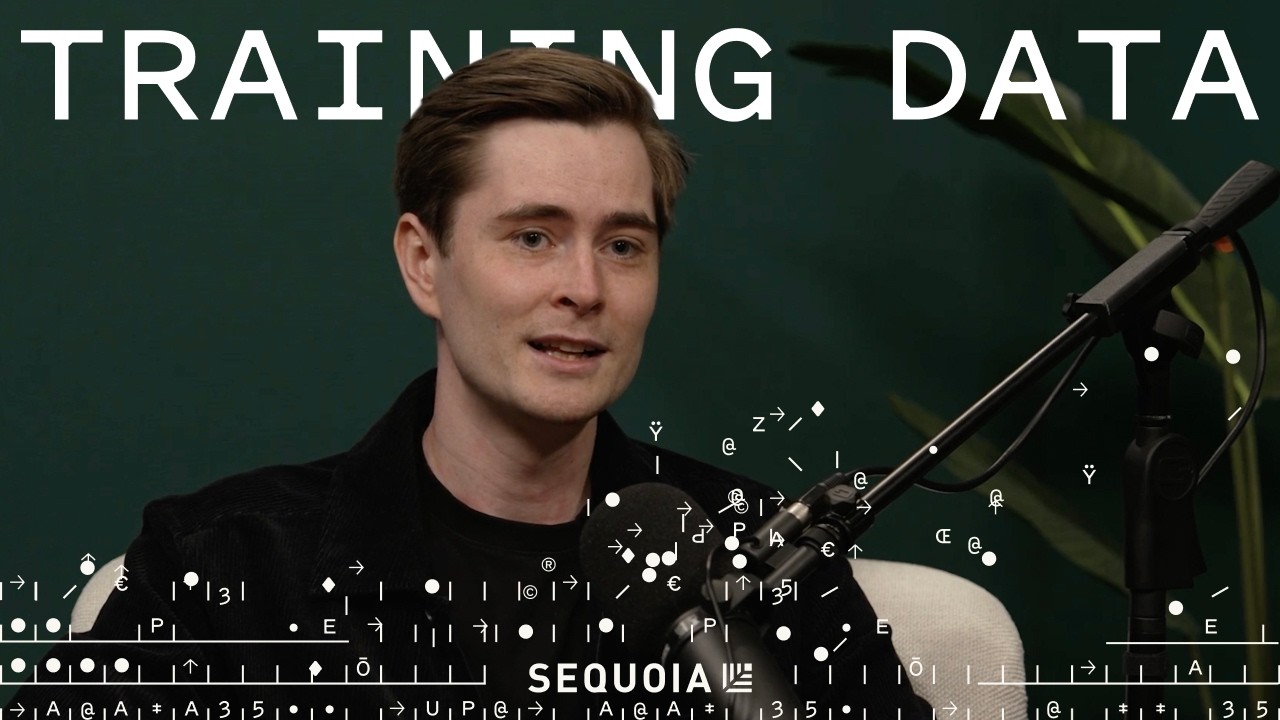
📺 Today’s recommended deep-dive video: https://www.youtube.com/watch?v=Rumft-rsEu4
The End of the “Average” Consumer: How AI Agents Scale Empathy
Listen Labs is replacing stagnant, multiple-choice surveys with high-fidelity AI agents capable of interviewing thousands of customers simultaneously via video. By capturing emotion, eye movement, and conversational nuance, the platform uncovers the critical “chest hair” frictions that traditional focus groups and telemetry data often miss.
Core Question: How can AI agents bridge the gap between what consumers say they do and how they actually behave in the real world?
Highlights
- Traditional surveys are notoriously inconsistent; AI-led video interviews provide higher reasoning and data stability.
- Simulation enables “Market Research 3.0,” allowing brands to predict customer responses before spending a dollar on ads.
- A 30-million-participant audience enables hyperspecific stratification, such as finding the 1% of users who understand seed oils.
- Asynchronous AI interviews offer a “therapeutic” and non-judgmental experience that results in significantly more brutal honesty.
⏱️ Reading time: approx. 6 minutes · Saves you about 34 minutes vs. watching.
Want to take notes while watching? Click the image below and let AI Notebook capture the key points for you 👇

Redefining the Customer Feedback Loop
Moving Beyond the Multiple-Choice Trap
Most company decisions today are made without real customer input because talking to people at scale is simply too much work.
Listen Labs changes this by deploying an AI agent that conducts video interviews, observing eye movements and emotional cues to detect true sentiment. This technology bridges the massive gap between telemetry—what users do—and surveys—what users say—by forcing participants to reason through their answers rather than clicking a random Likert scale option under pressure. We are finding that when people “reason out loud” with a non-judgmental agent, their answers remain consistent over time, whereas their multiple-choice selections vary wildly.
This shift reveals specific, physical product problems, such as a clothing brand discovering a material discomfort through qualitative AI feedback. These micro-insights are often lost in quantitative dashboards but become glaringly obvious when an AI can scale qualitative nuance to thousands of people simultaneously.

💡 Digging Deeper
Q: Why do participants prefer talking to an AI over a human?
A: It is a lower-pressure, asynchronous, and non-judgmental experience; users feel they can be “brutally honest” without social repercussions.
Q: How does the platform solve for audience selection?
A: It leverages a panel of 30 million participants to find niche experts, such as software engineers or specific high-income urban demographics.
Q: Is the data faster than traditional research?
A: Yes; companies can receive synthesized input from hundreds of real people within five minutes of launching a study.
The Rise of Generative Simulation
Market Research 3.0: The Human API
The next frontier is generative agent simulation, which allows companies to build specialized bots based on thousands of real historical interviews.
This isn’t just a generic ChatGPT persona “pretending” to be a customer. Instead, it is a refined model grounded in the proprietary, anecdotal data of a specific brand’s niche. For instance, a brand can create a “Sneakerhead Bot” or a “Grumpy Developer Bot” that reflects the specific preferences and slang of their most loyal power users.
Alfred notes that while general LLMs often pick the “wrong” marketing tagline for a niche, these simulation models achieve 95% accuracy by grounded reasoning in real interview data.
This “Human API” allows coding agents and strategy teams to call user preferences in real-time. Imagine a loop where an AI identifies a bug, confirms the fix with a synthetic user group, and ships the solution without a single human meeting. This essentially creates an autonomous organization that self-corrects based on perceived human value.

Building a Vertical AI Moat
Why General Models Aren’t Sufficient
Vertical AI companies find their edge by building proprietary “evals” that a general model provider like OpenAI would never bother to develop.
For Listen Labs, this meant building a system to detect if an AI is being repetitive or if it understands what is happening on a user’s screen during a recording session. In the beginning, these agents could only follow instructions 20% of the time, but through vertical-specific training, that has climbed to over 85%. This specialized layer of engineering creates a product that works “out of the box” for complex academic research methodologies that standard LLMs struggle to maintain.
There is also a massive network effect at play within the audience panel itself. As the system interviews more people, it builds deeper expertise profiles across the entire database.
If someone mentions they are a “sneakerhead” in a routine survey for a clothing brand, they are tagged and stored in a searchable database. When a company like Nike eventually needs that specific profile, Listen Labs can activate them instantly. This eliminates the “incidence rate” problem where nine out of ten people are disqualified for an interview, a friction point that usually causes massive churn in traditional research panels.
Key Takeaways
AI-first research is fundamentally about lowering the barrier to empathy. When communication becomes asynchronous and non-judgmental, people are significantly more honest about their frustrations, leading to better products like the Tide Pod or the modern M&M. The goal is to move from “leading the witness” in surveys to “listening to the witness” in a way that allows brands to discover what they didn’t even know they were looking for.
As we approach AGI, the human element remains the “delta.” While AI can automate the execution of building a product, it cannot simulate the irrational, chaotic, and trend-driven desires of the human heart. The companies that win will be those that use AI to listen to that human chaos and translate it into strategy faster than the competition.
Q&A
Q1: Which major brands are already using Listen Labs?
A: Currently, 20% of the Fortune 500 use the platform, including Microsoft, Anthropic, NBC, Sweetgreen, and Procter & Gamble.
Q2: How does AI change the role of traditional consulting firms like Bain or McKinsey?
A: These firms are using Listen to speed up their processes, but the “middle layers” of research are being unbundled. Margins will likely drop for basic data collection, forcing consultants to focus more on high-level implementation.
Q3: Can AI handle sensitive interviews, such as those with children?
A: Yes; the non-judgmental nature of the AI makes it highly effective for sensitive demographics like kids, provided parental consent is obtained and the interface remains non-threatening.
Q4: What is a real-world example of an ROI-driving insight?
A: Manscaped adjusted their Super Bowl advertising strategy based on insights from the platform, and Chubbies fixed a material friction issue that was irritating customers.
Q5: Is the “Simulation” product just RAG or is it fine-tuned?
A: It uses a combination of RAG and proprietary post-training techniques to ensure the “synthetic” customer doesn’t just act like a generic AI.
Q6: What is the “incidence rate” problem?
A: In traditional research, many people are screened out of surveys after starting them, which is annoying for the user. Listen Labs uses historical interview profiles to invite only the people who are already qualified.
Q7: Will AI simulation ever completely replace human interviews?
A: For small decisions like billboard taglines, yes. However, for massive, multi-million dollar decisions like a Super Bowl ad, real human input will always be the final “gold standard” check.