📺 Today’s recommended deep-dive video: https://www.youtube.com/watch?v=Toz7XEsSH_o
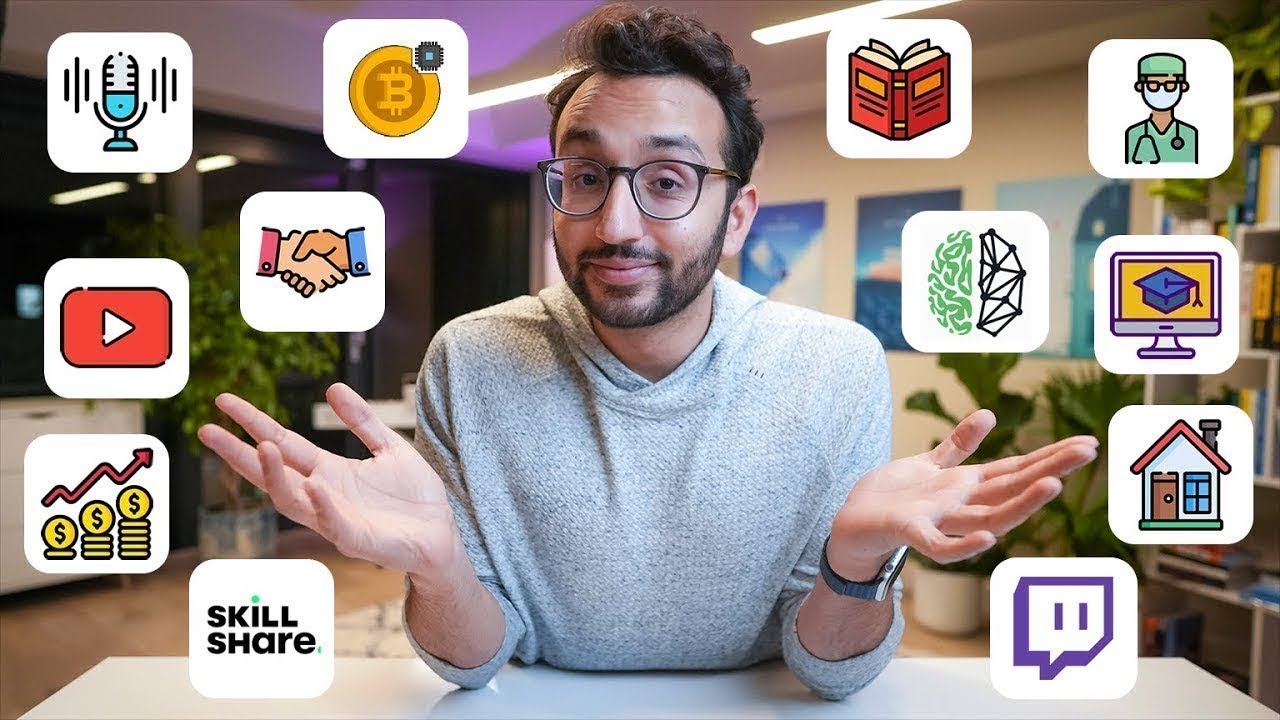
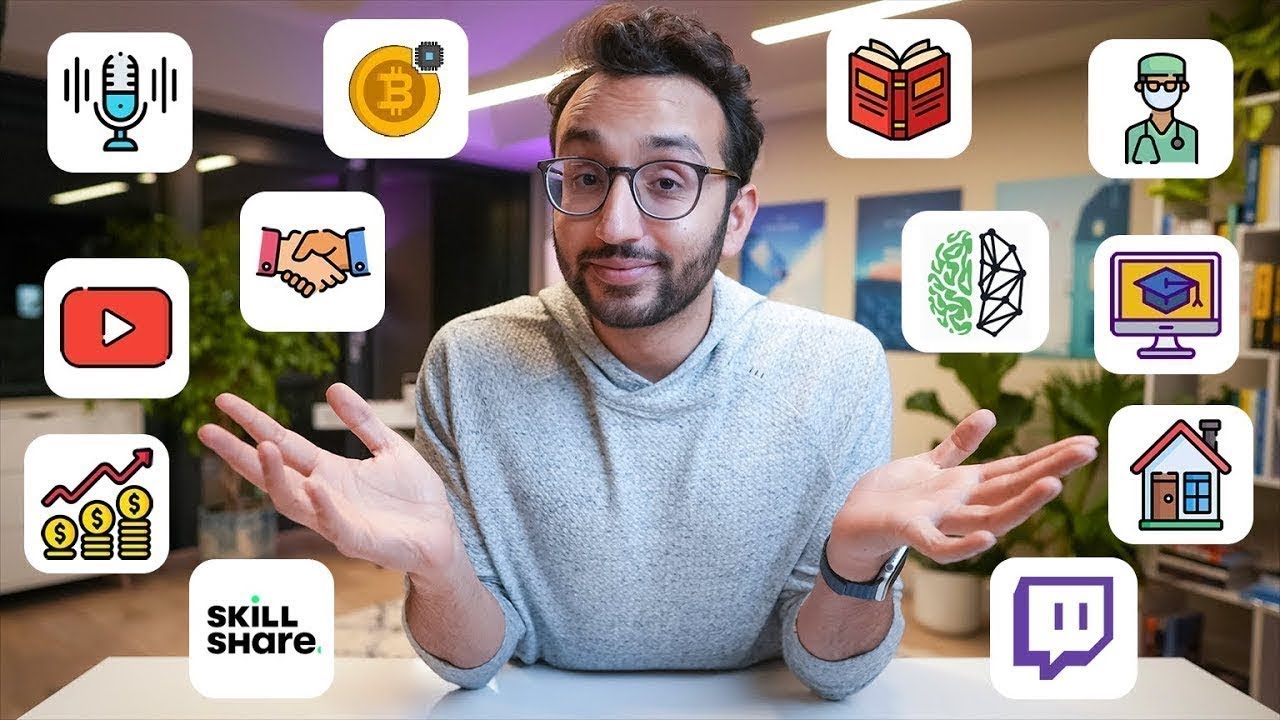
From $0 to $4.8 Million: Breaking Down 15 Income Streams of a Creator Giant
Ali Abdal peels back the curtain on a year of explosive growth, revealing how a former doctor built a multi-million dollar media empire. It is a candid look at the numbers, the luck, and the 14-year journey required to become an “overnight success.”
Core Question: How does a modern creator diversify revenue to reach nearly $5 million in annual turnover?
Highlights
- The massive shift from active medical work to digital product dominance and high-leverage assets.
- Why the Part-Time YouTuber Academy became a $2.5M “golden goose” for the business.
- The reality of “passive” income through Skillshare royalties and automated affiliate marketing.
- The psychological burden of managing a 20-person team and the fear of a “House of Cards” collapse.
⏱️ Reading time: approx. 8 minutes · Saves you about 29 minutes vs. watching.
Want to take notes while watching? Click the image below and let AI Notebook capture the key points for you 👇

The Foundation: From Doctoring to Digital Content
The Transition from Active to Semi-Passive Income
Ali started 2021 with one foot still in the medical world, though it quickly became clear where his future lay.
From a meager $92 earned while streaming World of Warcraft on Twitch to a few hundred pounds working as a locum doctor, these initial streams represent the transition from traditional labor to creative exploration. They are less about the money and more about testing boundaries and maintaining a connection to his previous life.
Even the real estate and podcasting ventures, while bringing in thousands, are currently more passion projects or asset-building plays than primary profit centers. For instance, the podcast actually operates at a loss when accounting for the full-time producer and social media team required to maintain its high production quality. These layers provide stability and brand authority, but the real financial engine sits elsewhere in the digital ecosystem.

💡 Digging Deeper
Q: Why continue working as a doctor for only $640?
A: It was a remnant of his medical career during a sabbatical year; it served more as a personal milestone than a financial necessity.
Q: Why run the podcast if it is “losing money”?
A: Ali views it as a networking and passion project that builds deep relationships with guests, which is more valuable than immediate cash flow.
Q: What is Nebula’s role in this mix?
A: It is a creator-owned platform that pays royalties based on watch time, acting as a “Spotify for educational creators” and providing a niche revenue stream.
Scaling Assets: Investments and Intellectual Property
Leveraging the Power of Long-Term Compounding
Ali’s investment strategy is a mix of disciplined index fund contributions and high-risk dabbling in crypto and individual tech stocks. While he admits to losing money on “meme coins” like Dogecoin and Shiba Inu, his long-term hold on Ethereum since 2017 paid off massively during the 2021 bull run, highlighting the power of time in the market over timing the market.
The book deals represent a major milestone, securing $200,000 in advances from top-tier publishers like Penguin and US-based partners.
Negotiating six-figure deals for a book that is still in the writing process illustrates the immense leverage a large audience provides. These advances, combined with foreign translation rights in territories like Korea and France, turn intellectual property into a globally tradable asset before a single copy even hits the shelves.

💡 Digging Deeper
Q: Is Ali an expert stock picker?
A: No; he admits that without his “free shares” from affiliate sign-ups, his individual stock picking would likely be in the red.
Q: How did he fund his house deposit?
A: He sold five or six Bitcoin at a much lower price than today’s value, which he jokes is a $300,000 lesson in opportunity cost.
Q: Why are book deals listed twice?
A: He signed two separate six-figure deals—one for the UK and one for the US market—plus various international rights.
The Creator Powerhouse: High-Leverage Products
The “Golden Goose” of Cohort-Based Learning
At the top of the revenue pyramid, the business shifts from passive gains to high-leverage digital products and massive partnerships. Affiliate income alone generated over $200,000, simply by recommending tools like Ghost, Skillshare, and Epidemic Sound that Ali and his team already use daily to produce their content.
The Part-Time YouTuber Academy (PTYA) stands as the undisputed “Golden Goose,” generating a staggering $2.59 million across three cohorts in 2021. This transition from a solo creator to an educational institution required hiring a team of 20 people, transforming Ali’s role from a content maker into a CEO managing complex operations, student mentors, and high-stakes marketing launches.
Skillshare continues to be a reliable powerhouse, netting over $700,000 by paying out royalties for every minute a student watches one of Ali’s productivity classes.

💡 Digging Deeper
Q: What is the refund policy for the $2.5M course?
A: A very liberal guarantee: if you do the work and don’t find value, you get your money back; only two people out of a thousand have used it.
Q: How does Skillshare pay its teachers?
A: It functions like Spotify; teachers get a share of a massive pool of subscription fees based on their total minutes of watch time.
Q: Is YouTube AdSense the biggest earner?
A: Surprisingly no; while $391,000 is a lot, it is dwarfed by the millions made from the Academy and Skillshare royalties.
Key Takeaways
The journey from a solo freelancer making websites at 13 to a media CEO with $4.8 million in revenue is not an overnight feat. Ali emphasizes that while 2021 was the year of exponential growth, it was built on over a decade of failed experiments, consistent content creation, and the slow accumulation of internet leverage.
A critical shift occurred when Ali stopped being a “highly paid freelancer” and started building a legitimate business infrastructure. By hiring a team of 20, he was able to stop “burning the midnight oil” on editing and admin, allowing him to focus on the mission of teaching and documenting his journey toward a fulfilled life.
Despite the astronomical numbers, Ali remains wary of the “House of Cards” nature of the creator economy. He views himself as an athlete in his prime, making “hay while the sun shines” but acknowledging that audience interest could fade, which is why he focuses on a 10-year vision of help, fun, and sustainability rather than just chasing higher numbers.
Q&A
Q1: Is it too late to start a YouTube channel in 2022?
A1: Not at all; while many niches are saturated, the “YouTube Industrial Complex” is more mature, with better algorithms and more monetization options than ever before.
Q2: What is the difference between revenue and profit?
A2: Revenue is the $4.8M total, but Ali notes that his costs (staff, office space, production) have grown even faster, making profit a much smaller, more complex figure.
Q3: Does Ali pick his own stocks?
A3: He puts most of his money into the S&P 500 through Vanguard index funds, only “dabbling” in individual stocks for fun.
Q4: How much work does Ali do for the $2.5M Academy now?
A4: He shows up to teach for 6-8 hours a week during cohorts; the rest of the operational heavy lifting is handled by his dedicated 4-person PTYA team.
Q5: What is the most important mindset for a new creator?
A5: Consistency over a long period. Ali has been making internet businesses since he was 13, and it took seven years for his first business to see real success.
Q6: Why is crypto such a large part of his portfolio?
A6: He is “bullish” on the technology and held Ethereum through the “crypto winter” of 2018-2020, which resulted in a $132,000 gain in 2021 alone.
Q7: What keeps Ali up at night regarding the business?
A7: The fear that the entire structure relies on his personal brand; if people stop watching his videos, the downstream revenue streams could collapse.