📺 Today’s recommended deep-dive video: https://www.youtube.com/watch?v=VTTp5A-rSdc
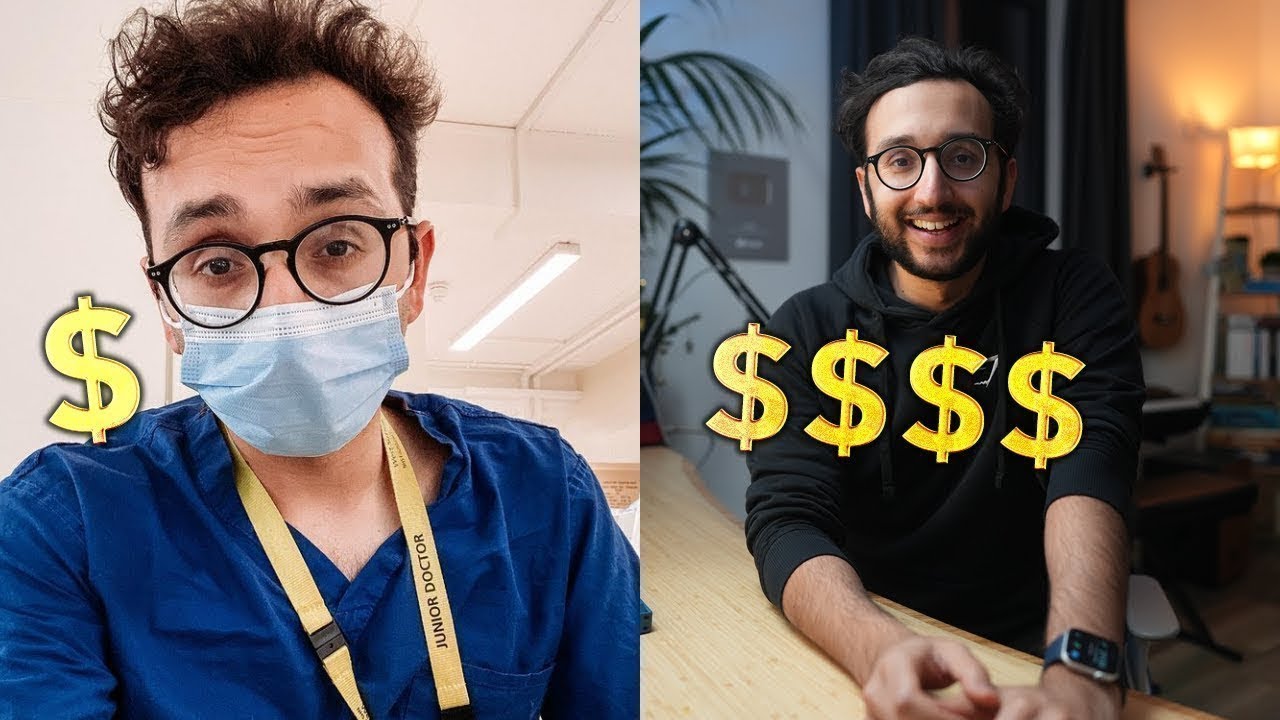
From Junior Doctor to Millionaire Creator: A £1.3M Income Breakdown
Ali Abdaal pulls back the curtain on his 2020 finances, revealing how he transitioned from a full-time NHS salary to a seven-figure creator business. This isn’t just a list of numbers; it’s a transparency-driven blueprint for building a sustainable life online through consistent value creation and strategic scaling.
Core Question: How does a creator scale their annual income from a professional medical salary to over one million pounds using diverse digital revenue streams?
Highlights
- A detailed breakdown of seven distinct income streams, including medical salary, Adsense, and high-ticket courses.
- The “Success Equation” that balances consistent work, algorithmic luck, and the strategic use of unfair advantages.
- Why the “two videos a week for two years” rule is the fundamental threshold for life-changing digital growth.
- The massive financial shift from passive platforms like Skillshare to high-accountability, cohort-based learning models.
⏱️ Reading time: approx. 8 minutes · Saves you about 42 minutes vs. watching.
Want to take notes while watching? Click the image below and let AI Notebook capture the key points for you 👇

The Foundation: Medicine and the “Slow Burn” of YouTube
The Reality of an NHS Salary
Transitioning from a junior doctor’s salary to a seven-figure business sounds like an overnight miracle, but it actually took fourteen years of consistent experimentation.
During the first seven months of 2020, I earned £22,100 working as a Senior House Officer in the NHS, averaging about £14 per hour after considering the daily commute. While doctors are in the top 20% of earners in the UK, I realized early on that I didn’t want my lifestyle to be entirely dependent on a single, high-stress source of income that offered little flexibility for personal creative pursuits.
My journey into entrepreneurship began long before I stepped into a hospital ward, starting with web design projects at age twelve that mostly failed to generate meaningful revenue. By the time I launched my YouTube channel in 2017, I was leveraging years of technical skills in coding and design, yet it still took fifty-two videos just to reach my first thousand subscribers. This reinforces the idea that what looks like sudden success is often the result of invisible years spent honing a craft behind the scenes while working a demanding day job.
The Compounding Power of Adsense
YouTube Adsense is the ultimate baseline for many creators, yet it remains a game of extreme patience and volume.
In 2017, my total revenue from YouTube was exactly £0.00, despite publishing nearly sixty videos. By 2020, that figure exploded to over £100,000 as my subscriber count surpassed one million and my total views for the year hit 57 million. This growth isn’t linear; it follows an exponential curve where the effort you put in today might not pay off for eighteen to twenty-four months.

💡 Digging Deeper
Q: Is being a doctor worth the debt if the hourly rate is so low?
A: It depends on your goals; medicine offers high job security and fulfillment, but it is rarely the fastest path to wealth compared to scalable digital businesses.
Q: How many videos do I need to make to see success?
A: Data suggests the average channel with 1k–10k subscribers has 152 videos; you generally need to commit to two years of consistent posting to see a life-changing shift.
Q: Did being a Cambridge graduate help your channel?
A: Absolutely. It was an “unfair advantage” that provided a specific niche (applying to medical school) which allowed me to build an initial core audience.
Scaling Trust: Affiliates and Global Sponsorships
The Recommendation Engine
One of the most powerful perks of a consistent content schedule is building an audience that knows, likes, and trusts your recommendations.
Affiliate income, which involves getting a kickback from products like keyboards or screen protectors, generated over £132,000 for the business in 2020. This revenue stream is essentially “passive” because it relies on links in video descriptions that continue to generate sales long after the video is filmed. It works because the recommendation is sincere; if you use a tool daily, your audience is more likely to value your endorsement over a random advertisement.
Navigating the World of Brand Deals
Sponsorships represent the “holy grail” for many YouTubers, but they require a significant professional infrastructure to manage effectively at scale.
By joining an agency like Standard, I was able to outsource the negotiation process, leading to roughly £136,000 in sponsorship revenue from brands like Notion and Skillshare. I typically charge between $20 and $30 per thousand views (CPM), meaning a video getting 100,000 views can generate thousands of dollars in a single deal. This is why I advise beginners to ignore sponsorships entirely until they have built a substantial library of at least 100 useful videos.

The Big Leaps: Digital Education and Cohorts
The Skillshare Goldmine
Skillshare functions like the “Netflix of online courses,” where teachers are paid based on the number of minutes students spend watching their classes.
In 2020, my Skillshare revenue surpassed £350,000, largely driven by classes on productivity, studying, and even cooking. This platform is particularly effective because the barrier to entry for the student is low—often a free trial—allowing you to provide value at a massive scale without charging the user directly. However, this level of income is only possible when you have hundreds of thousands of students watching millions of minutes of content.
High-Ticket Transformation
The final frontier of my 2020 revenue was the launch of the Part-Time YouTuber Academy, a live, cohort-based course that focuses on accountability.
Unlike a pre-recorded class, a live course allows for community building and direct access, which justified a price tag of $1,000 to $4,000. This single course generated £220,000 in its first cohort because it targeted a specific demographic: professionals who want to treat YouTube as a serious business. High prices ensure that students are “skin in the game” and actually do the work required to see results, rather than just passively consuming content.

Key Takeaways
Success in the creator economy is fundamentally built on the equation: Work x Luck x Unfair Advantages. You cannot control luck, and you can only partially influence your unfair advantages, but you have total control over the volume of work you produce. By focusing on “Journey before Destination,” you ensure that the process of making videos remains fun, which is the only way to maintain the consistency required to hit the “lucky” breaks in the algorithm.
The transition from a £22,000 medical salary to a million-pound business was not a result of a single viral moment, but the culmination of fourteen years of “playing” with the internet. Money, at this scale, is simply a byproduct of providing value to others at a massive scale. If you can commit to making useful things once or twice a week for several years, you create a surface area for luck that makes financial independence almost inevitable.
Q&A
Q1: Why are you so transparent about your money?
A1: Society treats money as a taboo, which prevents people from learning how to achieve financial independence. Seeing others’ transparency is what inspired me to start my own journey.
Q2: Did you quit being a doctor because of the money?
A2: Not exactly. I love medicine, but I wanted the freedom to do it part-time without being financially dependent on it, which prevents burnout and stress.
Q3: Can I start a YouTube channel today and make a million pounds next year?
A3: It is highly unlikely. This was a 14-year journey. You should expect to earn nothing for the first year and work toward a full-time living by year three.
Q4: What is the most important skill for a new creator?
A4: Consistency. Specifically, the ability to publish one to two useful videos every single week for at least two years without quitting.
Q5: Why do you charge $1,000+ for your academy?
A5: High prices provide the resources for a better student experience and, more importantly, they force the student to take the course seriously and actually implement the lessons.
Q6: How do you balance a medical career with a YouTube channel?
A6: It involves treating your creative work like “play” rather than “work.” I would come home from a shift and spend six hours editing because I genuinely enjoyed the process.
Q7: What is the best way to get started with affiliate marketing?
A7: Sign up for Amazon Associates. It’s the easiest way for beginners to start earning small commissions on products they already use and recommend.