📺 Today’s recommended deep-dive video: https://www.youtube.com/watch?v=e3gBwLWAerw
Beyond the Bitter Lesson: How AlphaFold Solved Biology’s Holy Grail
For over fifty years, the “protein folding problem” stood as a monumental bottleneck in biology, requiring years of specialist labor to solve a single structure. Nobel laureate John Jumper and his team at DeepMind revolutionized this field by creating AlphaFold, an AI system capable of predicting atomic-scale structures in minutes. This shift from physical experimentation to computational prediction is now accelerating drug discovery and empowering scientists across the globe.
Core Question: Can specialized AI architectures bridge the gap between simple genetic sequences and complex biological functions to solve the world’s hardest scientific puzzles?
Highlights
- AlphaFold 2 compressed years of PhD-level structural biology into ten-minute computational tasks.
- The system’s success earned Jumper and Demis Hassabis the 2024 Nobel Prize in Chemistry.
- Unlike generic AI, AlphaFold relies on a hybrid of deep learning and domain-specific engineering.
- AlphaFold 3 expands these capabilities to the “protein cinematic universe,” including DNA and drug interactions.
⏱️ Reading time: approx. 8 minutes · Saves you about 45 minutes vs. watching.
Want to take notes while watching? Click the image below and let AI Notebook capture the key points for you 👇

The Protein Bottleneck and the AlphaFold Leap
The 3D Machinery of Life
Proteins are the workhorses of the cell, twisting from simple amino acid chains into complex three-dimensional shapes that determine everything from how we digest food to how our immune systems function. For decades, reading the DNA “instruction manual” was easy, but predicting the final 3D shape of the resulting protein remained an elusive mystery. Without knowing the shape, scientists were essentially flying blind when trying to understand diseases or design new medications.
Traditionally, capturing a single protein structure required massive synchrotrons—machines the size of small towns—to generate bright X-rays for crystallization experiments. These projects were notoriously difficult, often serving as the entire focus of a five-year PhD program with no guarantee of success. John Jumper’s team changed the landscape by developing a deep learning system that predicts these structures with atomic-level precision, rivaling the accuracy of the most expensive experimental methods.
A process that once cost $100,000 and years of manual research can now be completed on a standard computer in under ten minutes.

💡 Digging Deeper
Q: Why is protein structure so critical for drug discovery?
A: Drugs are typically small molecules that “stick” to specific proteins; if you don’t know the protein’s shape, you cannot design a molecule that fits perfectly into its binding site.
Q: What was the scale of the AlphaFold structure release?
A: DeepMind released a public database containing 200 million predicted structures, covering almost every organism with a sequenced genome.
Q: How do biologists verify these AI predictions?
A: Researchers often use “blobbology” (cryo-electron microscopy) to get a rough outline of a protein and then fit AlphaFold’s high-resolution atomic models into that experimental shape.
Engineering Architecture vs. Raw Scale
Dissolving the Bitter Lesson
Jumper offers a nuanced critique of “The Bitter Lesson”—the idea that raw compute and general algorithms always triumph over human-engineered domain knowledge. AlphaFold 2 was not a generic model; it was a science-first architecture that utilized a specialized “EvoFormer” trunk to balance evolutionary data with geometric constraints. The team found that while generic vision models (CNNs) performed decently, they couldn’t reach the “Nature-level” accuracy required for real science without specialized engineering.
The breakthrough was not simply about throwing more data at the problem, but about creating an architecture that allowed the physical geometry of the protein to emerge from non-geometric sequence inputs.
Curiously, many popular concepts in AI research, such as SE(3) symmetries, were not the primary drivers of AlphaFold’s success. While geometric deep learning helped, the real heavy lifting came from “frame-aligned point error” (FAPE) losses and a process called “recycling,” where the model iteratively refines a structure by passing it back through itself. This iterative refinement mimics the way a physical system settles into its most stable state, treating the protein like a “residue gas” before locking the atoms into their final positions.

💡 Digging Deeper
Q: What is the “EvoFormer”?
A: It is the central processing unit of AlphaFold 2 that uses axial attention to reconcile what the model knows about a protein’s evolution with what it knows about its geometry.
Q: Did AlphaFold 2 just have more data than its predecessor?
A: No, AlphaFold 2 used the same amount of data as version 1 but was roughly 100 times more efficient due to its superior architectural design.
Q: How does “recycling” work in the model?
A: The model takes its intermediate structure, feeds it back into the starting layers, and uses that “context” to refine the positions of the atoms over several passes.
From AlphaFold 3 to the Future of AI for Science
Expanding the Cinematic Universe
While AlphaFold 2 focused primarily on single protein chains, AlphaFold 3 expands the scope to what Jumper calls the “protein cinematic universe.” This version can predict the interactions between proteins, DNA, RNA, and small-molecule drugs (ligands). By shifting to a diffusion-based architecture for its final output, AlphaFold 3 handles the diverse chemical bonds of a whole cell with far more flexibility than previous versions, which were more rigid in their geometric assumptions.
Jumper views these models as powerful “starting points” for research rather than all-knowing biology machines. He distinguishes between predicting (telling you what an experiment will show), controlling (designing an intervention), and understanding (compactly explaining a phenomenon). AlphaFold is a world-class predictor, but it still requires human scientists to take those predictions and turn them into “understanding” that can cure diseases like Parkinson’s or malaria.
The true impact of AI in science lies in its ability to empower researchers worldwide, especially those in regions with limited access to expensive experimental infrastructure.

💡 Digging Deeper
Q: Is AlphaFold 3 essentially a “DALL-E for proteins”?
A: While it uses diffusion like an image generator, it has a massive non-diffusion trunk that does the heavy lifting of determining the structure before the diffusion process refines the atomic details.
Q: How is this technology being democratized globally?
A: Scientists like Emmanuel Nee are training researchers in Africa to use AlphaFold to study local health challenges, such as antibiotic-resistant infections and malaria.
Q: What is the next frontier for AlphaFold’s lead?
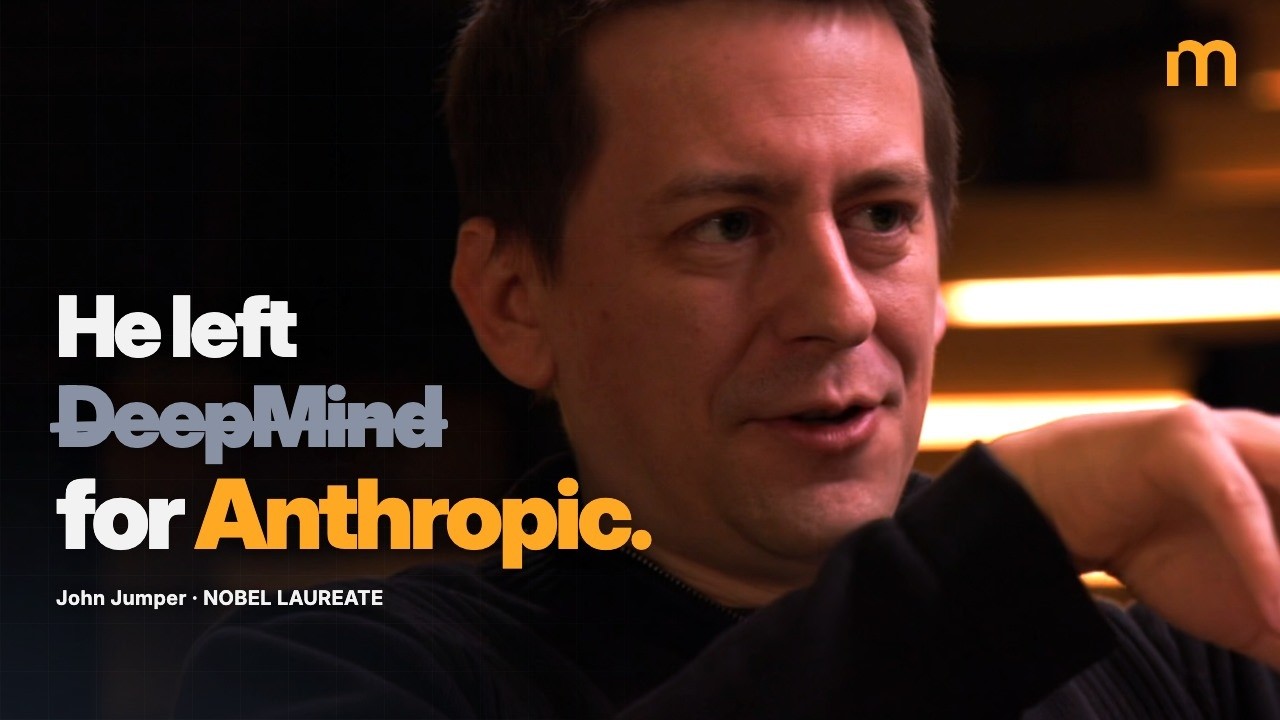
A: John Jumper recently moved to Anthropic, potentially signaling a shift toward combining specialized scientific AI with the general reasoning capabilities of Large Language Models.
Key Takeaways
AlphaFold represents a fundamental shift in the scientific method, moving from labor-intensive physical observation to high-fidelity computational prediction. By compressing decades of potential research into a few months, it has unlocked new pathways for drug discovery and molecular biology that were previously blocked by the sheer difficulty of seeing the microscopic world.
However, the success of AlphaFold also serves as a reminder that “general” AI is not a silver bullet for science. The project required deep domain expertise, careful architectural engineering, and a willingness to move beyond generic models to respect the specific physical realities of biology. As Jumper moves to new frontiers, the hybrid model of “expert AI” remains the most promising template for solving the next generation of scientific “holy grails.”
Q&A
Q1: What exactly did AlphaFold solve?
A: It solved the protein folding problem, which is the ability to predict the 3D structure of a protein based solely on its amino acid sequence.
Q2: How accurate is the system?
A: AlphaFold 2 typically predicts structures within the radius of a single atom, a level of precision that makes the results immediately useful for laboratory science.
Q3: Can AlphaFold cure diseases on its own?
A: No. It provides the structure of the “nanomachines” involved in a disease, but scientists must still figure out how to intervene in the complex, adaptive system of the human body.
Q4: Why was AlphaFold 2 so much better than AlphaFold 1?
A: The team moved away from off-the-shelf computer vision models and built a bespoke architecture (the EvoFormer) that integrated biological and geometric hypotheses directly into the code.
Q5: What is the “residue gas” concept?
A: Instead of forcing the model to follow rigid chemical bonds from the start, AlphaFold 2 allowed the parts of the protein to float freely and “find” each other during the prediction process.
Q6: How is AlphaFold 3 different?
A: It uses a diffusion model to predict a wider range of molecules, including how proteins interact with DNA, RNA, and potential drug molecules.
Q7: What is the humanitarian significance of this tool?
A: Because the database and tool are public, scientists in developing nations can now conduct high-level structural biology research without needing multi-million dollar laboratory equipment.