📺 Today’s recommended deep-dive video: https://www.youtube.com/watch?v=6UHAop9fhNU
Beyond Being Right: Amy Vora on the Power of Messy Success and Functional Metaphors
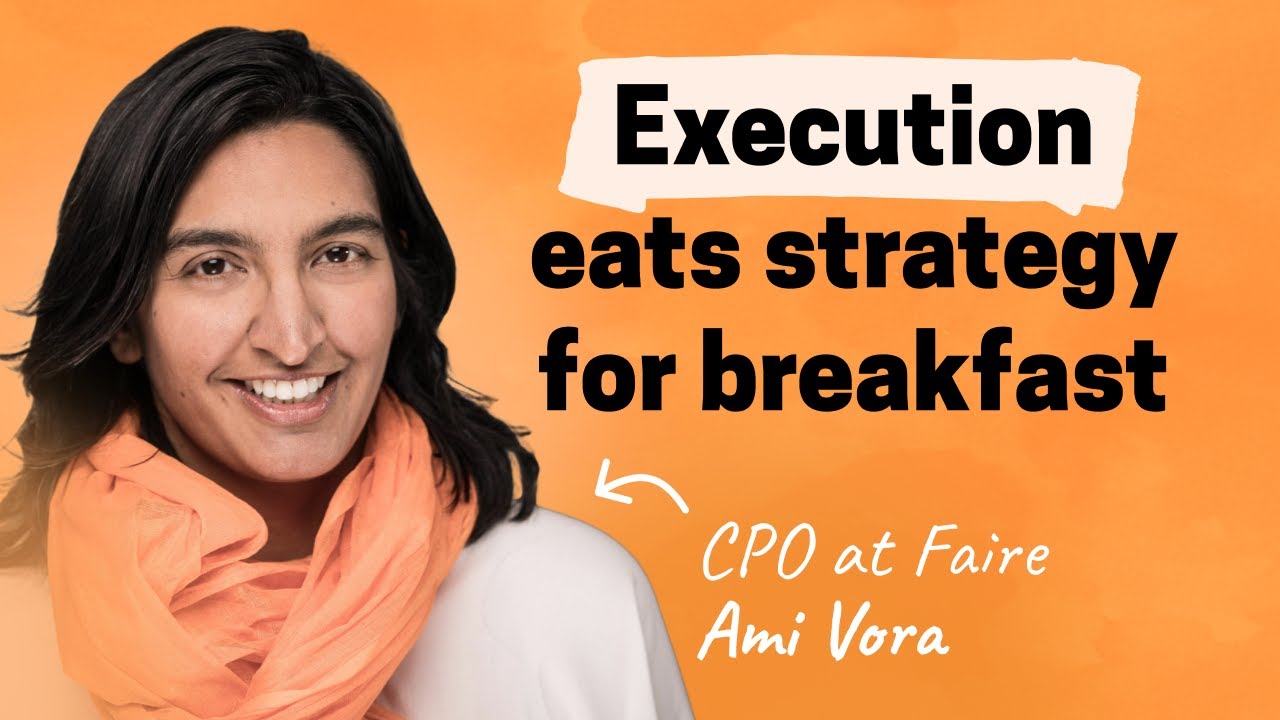
Amy Vora, Chief Product Officer at Faire and former executive at Meta and WhatsApp, dismantles the myth of the “perfect” leader by sharing her journey through the messy realities of high-stakes product management. From working in a bathroom to manage a household of three kids to mastering the art of “fascinating” disagreements, she provides a masterclass in sublimating ego to achieve superior outcomes.
Core Question: How can product leaders use curiosity, varied mental emulators, and functional metaphors to bridge the gap between complex strategy and high-velocity execution?
Highlights
- The “Fascinating” Mindset: Why treating a profound disagreement as a learning opportunity rather than a threat accelerates team trust.
- The Dinosaur Brain: Understanding that executives can only process limited facts, requiring PMs to bring opinions, not just data.
- The Hill Climb Metaphor: Navigating the painful valley between a local optimum and a global summit during major strategic shifts.
- Expanding the Toolkit: Why women in tech should focus on adding new leadership “keys” rather than shrinking their personalities to fit feedback.
⏱️ Reading time: approx. 12 minutes · Saves you about 72 minutes vs. watching.
Want to take notes while watching? Click the image below and let AI Notebook capture the key points for you 👇

The “Fascinating” Art of Disagreement
Sublimating Ego for Better Outcomes
Amy’s success at Meta was characterized by a specific reaction to conflict that CTO Andrew Bosworth described as “alien.” When faced with an idea she found fundamentally wrong, she wouldn’t push back; instead, she would respond with, “Fascinating, tell me more.” This isn’t just a polite reflex. It is a deliberate choice to prioritize the best collective outcome over the individual desire to be the smartest person in the room.
We all grow up building identities around being “right,” but in the professional world, that ego becomes a ceiling. By acknowledging that others hold information you lack, you transform a potential collision into a discovery mission.
If you assume every person in a meeting knows at least one thing you don’t, boredom disappears and curiosity takes over. This mindset creates a positive feedback loop: curiosity leads to better information, which leads to better outcomes, which ultimately makes the team feel more respected and aligned. It turns the visceral “lizard brain” reaction of defensiveness into an opening for growth.

💡 Digging Deeper
Q: How do you handle the visceral physical reaction to a bad idea?
A: You have to take a literal pause. That one-second breath allows your body to move from a “protective” primal state to a “learning” state.
Q: Is “Fascinating” a code word for “I think you’re wrong”?
A: It can be if used sarcastically, but the goal is to mean it from the core—recognizing that it is genuinely interesting that two people can see the same facts and reach different conclusions.
Managing the “Dinosaur Brain”
Recommendations vs. Data Dumps
One of the most common mistakes product managers make in reviews is providing too much information in hopes that the executive will make the “right” decision. Amy describes the executive mind as a “dinosaur brain”—a small, focused processor that can only hold about three facts at once. When you bring an exhaustive catalog of data without a clear point of view, you aren’t being helpful; you are offloading the hard work of synthesis.
The manager owns the context, but the PM owns the recommendation.
The most effective product reviews are not about getting a “yes” or “no” on a specific feature. Instead, they should be used to calibrate on principles. If you walk out of a meeting with a decision but no understanding of why it was made, you haven’t built any new capacity in the system. You want to establish the “trade-offs” and “risk tolerance” levels so that the team can make the next ten decisions without needing another meeting.

💡 Digging Deeper
Q: How much should you cut from a product review deck?
A: Write everything you need to feel confident, then cut out almost all of it. Bring only the minimum information required to support a clean, opinionated recommendation.
Q: Who should be in the room for these reviews?
A: Smaller is better to keep things informal and fast. However, it should be cross-functional at both the leadership and presenting levels to ensure accountability.
Metaphors as Strategy Emulators
The Hill Climb and the Dolores Park Feeling
Strategy often feels abstract and distant, making it difficult for large teams to execute consistently. Amy uses metaphors to bridge this gap, such as the “Hill Climb.” This describes the transition from a local optimum (a desktop product that works well) to a global optimum (a mobile-first future). To get to the higher mountain, you must be willing to walk down into the “valley of the slog,” where things feel worse before they get better.
When a team agrees on a metaphor, the narrative carries the “water” that individual specs cannot.
For WhatsApp, the metaphor was “face-to-face communication.” This simple image guided every technical decision. It meant the app had to feel as intimate as a kitchen table conversation, leading to features like typing indicators (the digital equivalent of someone taking a breath to speak) and disappearing messages (the transience of casual banter). If the team agrees the product should feel like “sitting in Dolores Park on a sunny Saturday,” the designers won’t build something cold and corporate.

💡 Digging Deeper
Q: What is a “mental emulator”?
A: It’s a technique where you “load” a specific mentor’s personality into your head to solve a problem. You ask, “What would [Leader X] do?” to gain a fresh lens on a stalemate.
Q: How do you create a good product metaphor?
A: Think about how you want the user to feel. Identify a real-world situation where that feeling exists, and then use that situation as the North Star for design and communication.
Strategy, Execution, and the Likability Trap
Why Execution Eats Strategy for Breakfast
There is a dangerous mythology around strategy being the “glamorous” part of product management, but Amy insists that execution is what actually serves the customer. A perfect strategy that never ships is worth zero. Furthermore, great execution on a “good enough” strategy allows for a faster feedback loop; you learn if the strategy was wrong because you know the execution wasn’t the bottleneck.
Strategy should change your behavior today, not just your plan for five years from now.
Amy also addresses the specific challenges faced by women in tech, particularly the feedback to be “more likable” or “less aggressive.” Early in her career, she responded by shrinking herself—even wearing earth tones to “fade back.” Eventually, she realized that the goal isn’t to change who you are, but to expand your toolkit. Instead of shrinking, you add “new keys” to unlock different kinds of doors, allowing you to work with a broader range of people without losing your directive edge.

💡 Digging Deeper
Q: What is “Toddler Soccer” in goal setting?
A: It’s when every team runs toward the same high-level metric (like Revenue), causing them to trip over each other. You must detangle goals into “input metrics” unique to each team.
Q: How do you handle being a senior leader when you feel you’re “worse” at everything?
A: Acknowledge that as you get senior, you only see “unsolvable” problems. Your job is to choose which branch of “suboptimal” is the best path forward for the time being.
Key Takeaways
Leadership is less about having a perfect five-year plan and more about building a high-trust environment where curiosity thrives. By framing disagreements as “fascinating,” leaders can strip away the ego that prevents teams from seeing the truth. This openness must be paired with a relentless focus on execution, as the customer only experiences the final product, not the whiteboard session.
Metaphors serve as the ultimate alignment tool for scaling organizations. Whether it’s the “Dinosaur Brain” for communication or “Face-to-Face” for product feel, these images allow hundreds of people to make autonomous decisions that remain coherent with the brand’s soul. Success is messy, often managed from a bathroom or a temp desk, and the most effective leaders are those who embrace that imperfection while constantly expanding their leadership toolkit.
Q&A
Q: Why did you start at Facebook as a temp in PR?
A: In 2007, I just knew I wanted to be there. I offered to buy people coffee just to get an introduction. The only opening was a temp role reviewing press releases, so I moved to California and slept on couches to take it.
Q: How do you reconcile “Execution beats Strategy” with the need for a vision?
A: You need enough strategy to head in the right direction (about 20% of your time), but the bulk of your time should be spent making sure that vision actually reaches the market and solves customer problems.
Q: What is the most important thing for a PM to focus on as an organization scales?
A: The customer. It’s the easiest thing to lose when you’re worried about internal alignment, roadmaps, and hiring, but it is the only shortcut to true success.
Q: How do you handle feedback that feels personal, especially as a woman?
A: Recognize that women often receive feedback on “style” rather than “content.” You don’t have to act on all of it. Choose which feedback helps you expand your toolkit and which parts of your personality are vital to your leadership.
Q: What did the zero say to the eight?
A: “Nice belt.”
Q: What is the one thing you recommend to avoid in goal setting?
A: Avoid goaling every team on a single output metric like GMV. It creates “toddler soccer” where everyone trips over each other. Break it down into input metrics like “reorder rate” or “conversion” per surface.
Q: How do you ramp up in a new CPO role?
A: Write a “hot takes” document for provocation. Share observations early to build credibility and trust, but give yourself 90 to 120 days before trying to fundamentally change the machine.