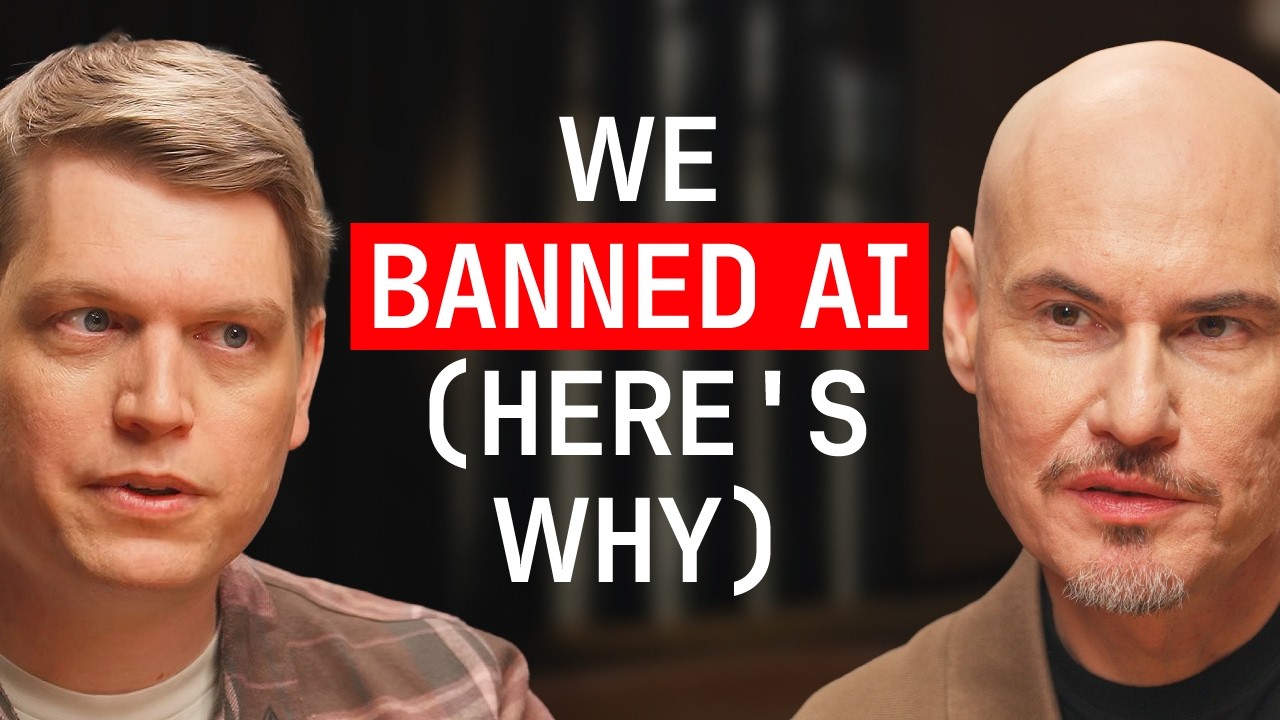
📺 Today’s recommended deep-dive video: https://www.youtube.com/watch?v=iqddnwKF8HQ
Beyond the Hubris: Andrew Kelly on Zig’s Uncompromising Path to 1.0
Andrew Kelly didn’t start Zig just to add another tool to the shelf; he did it because he found every other systems language fundamentally flawed for high-performance audio work. By rejecting the “worse is better” philosophy and banning AI-generated code, he is building a language designed to last fifty years.
Core Question: Can a lean, non-profit-backed systems language successfully replace C by refusing to compromise on performance, transparency, and human-centric development?
Highlights
- Zig’s strict “No AI” policy protects limited review time and prioritizes genuine human mentorship over “garbage” automated PRs.
- The transition from GitHub to Codeberg was a strategic move to ensure functional CI and align with non-profit stability.
- Andrew Kelly maintains total independence for the Zig Software Foundation through a diverse, million-dollar-a-year donation stream.
- By building native backends and moving away from LLVM, Zig achieves sub-50ms incremental compilation for massive codebases.
⏱️ Reading time: approx. 8 minutes · Saves you about 65 minutes vs. watching.
Want to take notes while watching? Click the image below and let AI Notebook capture the key points for you 👇

The Hubris of Better Tooling
The Failure of the Status Quo
Andrew Kelly admits that the creation of Zig was born out of pure hubris.
While attempting to build a digital audio workstation, he cycled through the modern landscape of languages only to find insurmountable walls: JavaScript lacked hardware access, Go’s garbage collector caused unacceptable audio glitches, Rust’s rigid rules triggered cascading compile errors, and C++ invited weeks of debugging for simple typos. He concluded that the problem wasn’t his skill level, but the fundamental limitations of the existing toolchains.
Zig was designed to be the “third option” for developers who refuse to compromise on the user experience or leave performance on the table.

💡 Digging Deeper
Q: Why is audio work the ultimate test for a language?
A: Audio has real-time deadlines; if you miss a processing window by even a millisecond due to a garbage collection pause, the user hears a glitch, which is unacceptable for live performance.
Q: What does it mean to “do more with less”?
A: It refers to finding the sweet spot where a small feature, like Zig’s comptime, provides immense utility without bloating the language specification.
Q: How does Zig avoid the “foot-guns” of C?
A: It offers better debuggability, such as full stack traces for segmentation faults, and gives developers explicit control over integer overflow semantics that C lacks.
The Foundation of Independence
Building a Lean Non-Profit
The Zig Software Foundation (ZSF) operates as a 501(c)(3) non-profit, a structure intentionally chosen to avoid the corrupting influence of venture capital.
Andrew Kelly earns a salary of $154,000, modeled after the median senior engineer salary in New York, and manages a lean team of five contractors. This financial transparency isn’t just a legal obligation; it’s a marketing tool that builds community trust and ensures no single corporate donor can dictate the project’s direction.
If a large company offered $100 million, Andrew claims he would take it only to fund the project for a century, not to aggressively scale the team.
Escaping the GitHub Monopoly
In late 2024, the Zig project made waves by moving its main repository from GitHub to Codeberg.
The move was practical rather than political: GitHub’s continuous integration simply stopped working for the project’s needs. By choosing Codeberg, a German non-profit, Zig aligned itself with an organization that values stability and service over the quarterly growth targets of a massive corporation.
Some feared this would turn Zig into a “niche” language, but Andrew argues that a code forge is a tool for development, not a primary marketing arm.

Technical Edge and AI Resistance
Taking the Training Wheels Off
For a decade, Zig relied on LLVM as its primary backend, but that is changing.
Andrew compares LLVM to training wheels on a bicycle; they were necessary to get the language off the ground, but now they are a dependency that limits the core product. By developing native X86 backends, Zig has unlocked incremental compilation speeds that can update a million-line binary in under 50 milliseconds, a feat physically impossible within the LLVM architecture.
Owning the full stack allows Zig to innovate on the “readme check”—ensuring a project can be built with a single command and zero external system dependencies.
Why “Slop” is Banned
Zig maintains a controversial but strict no-AI policy for code contributions.
This is a defensive measure against “slop contributions” that waste the core team’s limited review time while providing zero educational value to the contributor. Andrew views pull requests as a form of mentorship; using an LLM to “launder” code bypasses the learning process and prevents contributors from eventually joining the core team.
Reviewing AI-generated code is often more exhausting than writing it from scratch because the reviewer must remain hyper-vigilant for subtle, hallucinatory bugs.

Key Takeaways
Zig represents a shift back toward the “Benevolent Dictator for Life” (BDFL) model of leadership. Andrew Kelly argues that committees inevitably lead to compromise, which dilutes the coherent vision of a programming language. By maintaining hierarchical control, Zig can remain a “uncompromising labor of love” that avoids the “oxidation” typically caused by the flow of corporate money and democratic voting.
The language is not just a tool; it is a “shrine to computers” intended to restore the user as the boss of the hardware. Whether it’s through the move to Codeberg, the rejection of AI, or the refusal to rush to a 1.0 release, every decision is made with a fifty-year horizon in mind. This long-term stability is what Andrew believes will eventually allow Zig to beat C at its own game.
Q&A
Q1: Why is the language named “Zig”?
A1: Andrew wanted a short word that returned zero Google results for “programming language” at the time. He ran a Python script to generate random words, and “Zig” stood out.
Q2: What is the “Ziguana”?
A2: It is the project’s mascot—an iguana—named as a pun on the language itself.
Q3: How does Andrew justify a strict “no AI” policy when Zig code is used to train AI?
A3: He views the MIT license as a “no strings attached” gift to the world. While companies can use Zig for AI training, he refuses to let that AI-generated “garbage” degrade the quality of his project’s source code or its mentorship mission.
Q4: When will Zig 1.0 be released?
A4: There is no fixed deadline. Andrew wants 1.0 to be a “true uncompromising labor of love” free of rushed, bad decisions. He joked that the next release (0.16) is in a “race” with the publication of his recent interviews.
Q5: Is Zig a good first programming language?
A5: Andrew believes it is excellent for learning how computers actually work (CPUs and memory) rather than just learning “language rules” like a borrow checker.
Q6: What software projects does Andrew admire most?
A6: Linux, Blender, and VLC. He respects them for being high-quality, professional-grade tools maintained by non-profits that compete successfully with proprietary giants.
Q7: Why does Zig treat unused variables as a compilation error?
A7: Because it saves massive amounts of time during refactoring by catching bugs early. Developers who find it annoying can use editor plugins (like ZLS) to automate the removal and addition of these variables.