📺 Today’s recommended deep-dive video: https://www.youtube.com/watch?v=OxFyVcO1Yow
The Orchestrator’s Gambit: Aravind Srinivas on the Death of the Model-as-Product
Aravind Srinivas, the CEO of Perplexity, reveals why he believes the era of the “frontier model” as a standalone product is ending, replaced by a ruthless race for agentic orchestration. From forcing Google to redesign its homepage to predicting why hardware giants like Micron may soon dwarf social media titans, Srinivas outlines a future where the only metric that matters is “token value per watt.”
Core Question: How can a lean startup survive the AI arms race when the underlying models are rapidly becoming commoditized utilities?
Highlights
- Perplexity’s aggressive UI innovations forced Google to redesign a $250 billion homepage interface for the first time in decades.
- The shift from “answering engines” to “agent harnesses” that perform autonomous, repetitive work for power users.
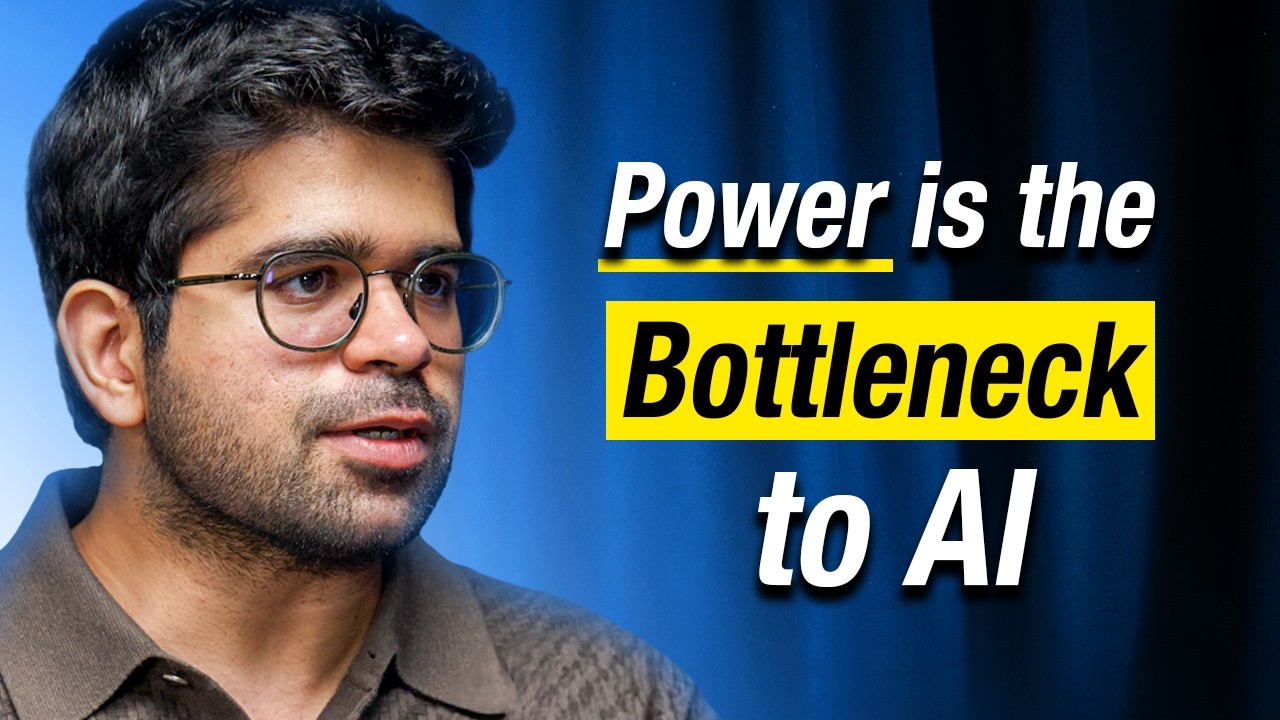
- Why physical infrastructure—specifically power permits and high-bandwidth memory—remains the only true bottleneck to AGI.
- The rise of the “40-person unicorn,” where extreme efficiency allows small teams to generate multi-billion dollar valuations.
⏱️ Reading time: approx. 9 minutes · Saves you about 86 minutes vs. watching.
Want to take notes while watching? Click the image below and let AI Notebook capture the key points for you 👇

The Illusion of the Frontier Model
Orchestration vs. Raw Intelligence
Aravind argues that the industry is undergoing a massive shift where the underlying model is no longer the product; instead, the value lies in the “agent harness.” This harness acts as an orchestration layer, grounding models in context, connecting them to tools, and managing sub-agents to perform actual labor rather than just generating text.
The strategy is simple: attack. (Short)
Perplexity differentiates itself by being model-agnostic, allowing it to swap in the best-performing tools from OpenAI, Anthropic, or open-source providers based on efficiency and cost. This “positive-sum” approach means that every time NVIDIA releases a better chip or Claude releases a better model, Perplexity’s product improves without the company having to bear the R&D costs of the base layer.
Srinivas believes advertising is a poor fit for chat interfaces because the inherent subjectivity of ads corrupts the trust required for an objective answer engine. He is bearish on the idea that ChatGPT or Perplexity will replicate the Google Search ad model, suggesting instead that revenue will come from high-value usage-based agents that replace human labor in finance, research, and coding.

💡 Digging Deeper
Q: Why did Google change its interface to look like Perplexity?
A: They had no choice; Perplexity proved that users wanted cited, bolded answers rather than a list of blue links, even though it threatened Google’s $250 billion ad revenue stream.
Q: What is the single most important metric in the AI era?
A: Token value per watt per user—delivering the highest fidelity output with the least possible power consumption.
The Physical Bottlenecks of AGI
The War for Power and Memory
While much of the public discourse focuses on software, Srinivas identifies physical infrastructure—specifically power and land permits—as the true limiting factor for the next three years. Data centers are increasingly facing public resistance due to misconceptions about water and energy usage, creating a lead-time problem that cannot be solved by software alone.
Hardware is the new software. (Short)
He predicts that companies like Micron, which provide the high-bandwidth memory (HBM) essential for inference, could become more valuable than Meta or other software giants. The logic is that whoever owns the bottleneck commands the price; currently, the bottleneck has shifted from GPUs to the power and memory required to run them.
Interestingly, Srinivas suggests that export controls on China are a double-edged sword. While they have slowed Chinese progress in the short term, they have forced companies like DeepSeek to innovate at the architectural level, creating models that are significantly more memory-efficient than American counterparts because they cannot rely on high-end NVIDIA hardware.

💡 Digging Deeper
Q: Is there an infrastructure bubble in AI?
A: No, because the demand for frontier output tokens continues to outstrip the physical supply of chips and data centers.
Q: Will data centers move to space?
A: Elon Musk’s SpaceX is the most likely candidate for this, as it could bypass Earth-bound power and cooling constraints by harnessing direct solar energy.
The Rise of the Efficient Unicorn
Headcount vs. Impact
Srinivas envisions a future where the traditional relationship between company valuation and employee headcount is completely severed. He cites Perplexity’s ability to reach a multi-billion dollar scale with only 400 people as the new blueprint for the “billion-dollar build,” where agents handle the majority of operational tasks.
Curiosity is the only job security. (Short)
He encourages a new generation of founders to move with extreme velocity, viewing speed as a form of humility because it forces constant contact with reality and user feedback. By utilizing agents for repetitive “cron job” tasks—like monitoring latency spikes or triaging emails—small teams of 20 to 30 people can now accomplish what previously required hundreds of middle managers.
This shift doesn’t necessarily mean the end of jobs, but rather a redistribution of agency. Srinivas tells the story of an Uber driver who used AI to build a web app that now generates more passive income than driving, suggesting that the “agency gap” is the real divide in the modern economy.

💡 Digging Deeper
Q: Should founders focus on fine-tuning their own models?
A: Only if it brings down costs for existing features; for new capabilities, always stay at the frontier by using the best available models.
Q: How does a company avoid being disrupted by the next “DeepSeek moment”?
A: By staying vertically integrated at the orchestration layer while remaining horizontally flexible at the model layer.
Key Takeaways
The transition from a “Search Engine” to an “Agentic Conductor” represents the most significant shift in computing since the browser. Success no longer depends on building the single best model—a feat that is increasingly commoditized—but on building the most reliable router and harness. This layer abstracts the complexity of the AI stack, allowing users to focus on outcomes while the system optimizes for token cost and accuracy.
We are entering a period of intense physical industrialism disguised as a digital revolution. The winners will not just be those with the best code, but those who can navigate the gritty realities of power grids, fab permits, and hardware bottlenecks. As agency becomes a commodity, the defining human skill will shift from execution to the ability to ask the right questions and manage fleets of autonomous intelligence.
Q&A
Q1: Why is Aravind so bullish on SpaceX over OpenAI or Anthropic for a 10-year hold?
A1: SpaceX is a “one-of-one” company with no direct competitors in space-based connectivity and infrastructure, whereas model labs are in a constant, brutal race to keep up with each other’s capabilities.
Q2: Will AI agents eventually replace all subjective human decisions?
A2: No. Srinivas believes subjective areas like fashion, aesthetics, and vibes will remain human-driven and ad-supported, while objective tasks like research and logistics will be entirely delegated to agents.
Q3: How does Perplexity handle the high cost of using frontier models?
A3: They use a hybrid approach: own-model inference for established features to save on margins, while reserving expensive frontier models (like GPT-4 or Claude Opus) for complex, novel tasks.
Q4: What is the “billion-dollar build”?
A4: It is a program by Perplexity to provide million-dollar compute credits to lean teams, with the goal of fostering startups that reach billion-dollar valuations with fewer than 50 employees.
Q5: Is Google still a threat to Perplexity?
A5: Yes, but Google is hampered by its need to protect its existing ad revenue, which makes them slower to adopt the radical interface changes that Perplexity can ship in weeks.
Q6: What is the most important trait for a founder in the AI era?
A6: The ability to focus on the “limiting problem.” Srinivas notes that leaders like Elon Musk succeed by ignoring all distractions to solve the single bottleneck holding the entire business back.
Q7: Will we see 24/7 autonomous agents soon?
A7: Yes, but the bottleneck is orchestration and cost. We need a “router” that uses local device compute for minor tasks and server-side frontier models only when absolutely necessary to prevent user bankruptcy.