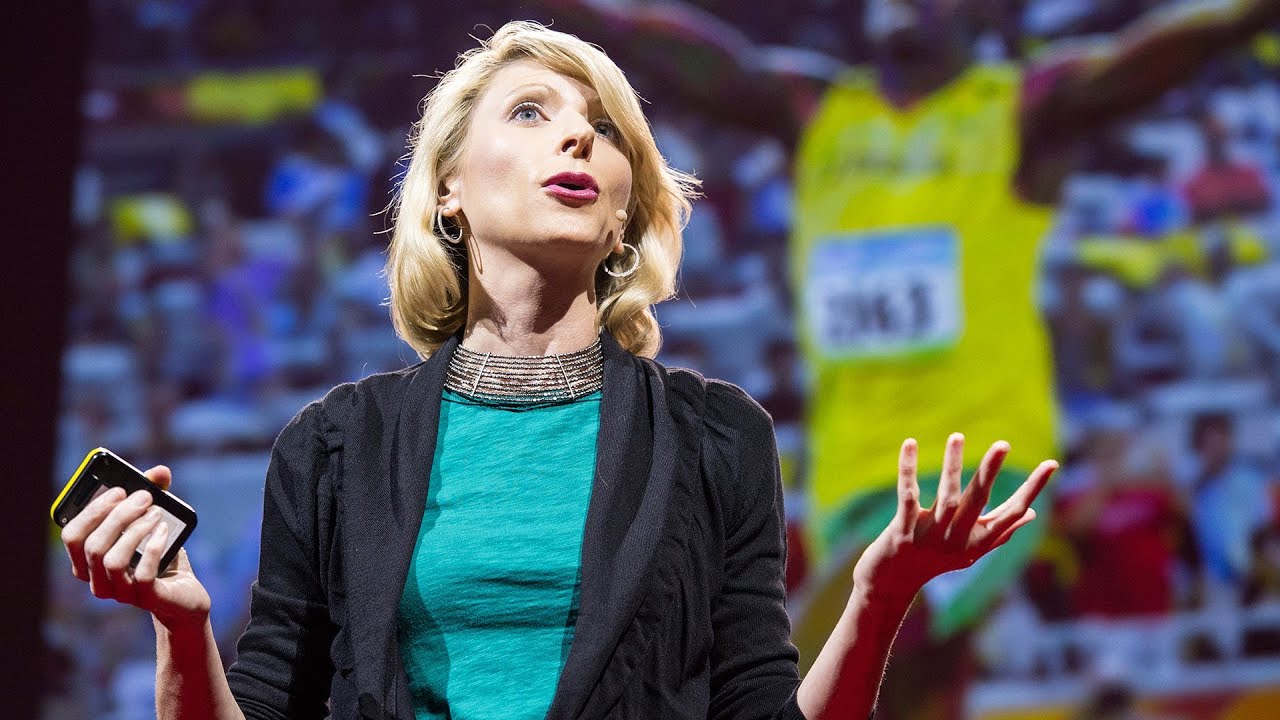
📺 Today’s recommended deep-dive video: https://www.youtube.com/watch?v=Ks-_Mh1QhMc
The Two-Minute Transformation: How Posture Shapes Your Mind
We often view body language as a tool for influencing others, yet the most important person influenced by your posture is actually you. By making a simple physical adjustment for just two minutes, you can fundamentally alter your hormonal profile, boosting confidence while lowering stress. This “no-tech life hack” offers a way to configure your brain for success in high-stakes situations without spending a dime.
Core Question: Can physically expanding your body for two minutes trigger biological changes that improve your performance and internal sense of power?
Highlights
- Expansive “power poses” increase testosterone levels by 20% and decrease cortisol by 25% in just two minutes.
- Nonverbal behavior doesn’t just communicate status to others; it serves as a feedback loop that changes how we think and feel about ourselves.
- In evaluative settings like job interviews, “presence”—the ability to be authentic and confident—outshines the specific content of a speech.
- The goal of power posing is to “fake it until you become it,” eventually internalizing a sense of belonging and competence.
⏱️ Reading time: approx. 5 minutes · Saves you about 16 minutes vs. watching.
Want to take notes while watching? Click the image below and let AI Notebook capture the key points for you 👇

The Science of Nonverbal Influence
Beyond Social Communication
We are fascinated by body language because it is a primary driver of social judgment. We look at handshakes, winks, and even the way people sit to make sweeping inferences about their competence and likability. Social scientists have found that these judgments are remarkably predictive of significant life outcomes.
Our bodies speak to our minds.
A study by Nalini Ambady revealed that judging a physician’s “niceness” in a 30-second silent video can predict whether that doctor will be sued for malpractice, regardless of their actual medical skill. Similarly, Alex Todorov found that one-second glances at political candidates’ faces can predict election results with 70% accuracy. This demonstrates that nonverbal cues are not just supplemental; they are foundational to how we navigate the human world and determine who gets hired, promoted, or asked on a date.

💡 Digging Deeper
Q: Why do we complement rather than mirror power poses?
A: In power dynamics, humans tend to do the opposite of their counterpart; if one person is being dominant and expansive, the other instinctively makes themselves smaller.
Q: Is power posing different for men and women?
A: While both benefit equally from the biology, women are culturally more likely to adopt “low-power” poses, which may contribute to gaps in participation in competitive environments like MBA classrooms.
Q: Can digital communication involve nonverbals?
A: Yes, research shows that the effective use of emoticons in online negotiations can lead to better financial outcomes and value claiming.
The Biological Feedback Loop
Hormones and Risk Tolerance
Power is not just an abstract feeling; it is a physiological state defined by the interaction between testosterone and cortisol. High-power individuals typically exhibit high testosterone (the dominance hormone) and low cortisol (the stress hormone). This specific hormonal profile creates a leader who is assertive and confident but remains calm and resilient under intense pressure.
Our physical posture can actually hijack this hormonal system.
When participants in a lab study held expansive poses for just two minutes, their testosterone increased by 20%, while their cortisol dropped by 25%. Conversely, those in low-power poses saw a 10% drop in testosterone and a 15% increase in cortisol. These biological shifts directly influenced behavior: 86% of the high-power group was willing to take a gambling risk, compared to only 60% of the low-power group.

💡 Digging Deeper
Q: Is the effect of posing just a psychological “prime”?
A: No, the spit-sample data confirms that these are measurable, objective physiological changes in the endocrine system, not just subjective feelings.
Q: Do you have to be seen posing for it to work?
A: Absolutely not. The benefit comes from the internal feedback loop, meaning you should pose in private—like a bathroom stall or elevator—before an event, rather than during it.
Q: How does stress reactivity change with cortisol?
A: Low cortisol allows you to remain “laid back” and clear-headed; high-power individuals are defined not just by dominance, but by their lack of reactivity to social threats.
From Faking It to Becoming It
The Journey of Presence
The concept of “faking it till you make it” often carries a heavy burden of imposter syndrome. Many people fear that even if they succeed, they will feel like a fraud who doesn’t truly belong. However, the true power of nonverbal shifts is the ability to move past “making it” and into “becoming it.” This happens when the behavior is repeated often enough that it becomes a core part of one’s identity.
Tiny tweaks lead to big changes.
During a stressful job interview study, judges (who were trained to give no feedback) overwhelmingly chose to “hire” the candidates who had power-posed beforehand. Interestingly, the judges didn’t cite the candidates’ qualifications or the structure of their speech as the deciding factor. Instead, they were drawn to the “presence” the candidates brought—a sense of authenticity, passion, and confidence that allowed their true selves to shine through without the residue of anxiety.

💡 Digging Deeper
Q: What is “presence” in this context?
A: Presence is the ability to bring your ideas and your true self to a situation without being overshadowed by the fear of being judged.
Q: How long does the effect of a power pose last?
A: While the hormonal spike is immediate, the goal is to use the two-minute boost to get through the “threshold” of a stressful event, which eventually builds long-term confidence.
Q: Can people with no resources use this?
A: Yes, that is the most vital part of the research; it requires no technology, no money, and no status—only your body and two minutes of privacy.
Key Takeaways
The relationship between the body and the mind is a two-way street. While we know that our thoughts can change our physical state, we must realize that our physical state is a powerful lever for changing our thoughts. By deliberately occupying more space, we signal to our brains that we are safe, powerful, and capable, which in turn lowers our biological stress response and prepares us for challenges.
This practice is particularly crucial for those who feel powerless due to social status, lack of resources, or past trauma. Amy Cuddy’s personal story of recovering from a brain injury reminds us that “belonging” is often a matter of persistence and faking the confidence we don’t yet feel. By “faking it until we become it,” we don’t just trick others; we eventually convince ourselves.
Ultimately, the most effective life hacks are those that are simple, free, and grounded in biology. Before your next high-stakes meeting or difficult conversation, take two minutes to stand in the “Wonder Woman” pose. It isn’t about arrogance or dominating others; it’s about configuring your brain to be the best version of yourself, so you can leave the room knowing you truly showed them who you are.
Q&A
Q1: Should I use power poses while I am actually talking to someone?
A: No. Power posing is a “pre-game” routine. Doing it during an interaction can come off as aggressive or socially awkward. You should do it in private—like a bathroom stall—to prepare your physiology before the interaction starts.
Q2: Does this work for people who are naturally introverted?
A: Yes. Power posing isn’t about changing your personality from an introvert to an extrovert; it’s about reducing the stress that prevents your natural personality from coming through in high-pressure moments.
Q3: How much of a difference does the two-minute window really make?
A: The research shows it is a “whopping significant difference.” Two minutes is enough to cause a 25% drop in cortisol, which is the difference between feeling shut down by stress and feeling comfortable and assertive.
Q4: What if I feel like a fraud while doing it?
A: That is a normal part of the process. The advice is to “fake it until you become it.” Most high-achievers experience imposter syndrome; the key is to keep performing the behavior until it internalizes and you no longer feel like you’re faking.
Q5: Is there a specific pose that is most effective?
A: Any pose that is “expansive” works—meaning you are opening up and taking up space. The “Wonder Woman” (hands on hips) and the “V-shape” (arms raised in victory) are the most commonly cited examples.
Q6: Does this apply to children or just adults?
A: The study notes that these expressions of power are universal and even seen in people who are congenitally blind, suggesting they are hardwired into the human species from birth regardless of age or sight.
Q7: Can these poses help with clinical anxiety?
A: While they are not a substitute for medical treatment, they are a functional tool for managing “situational” anxiety—the specific spike in stress we feel when being evaluated by others.