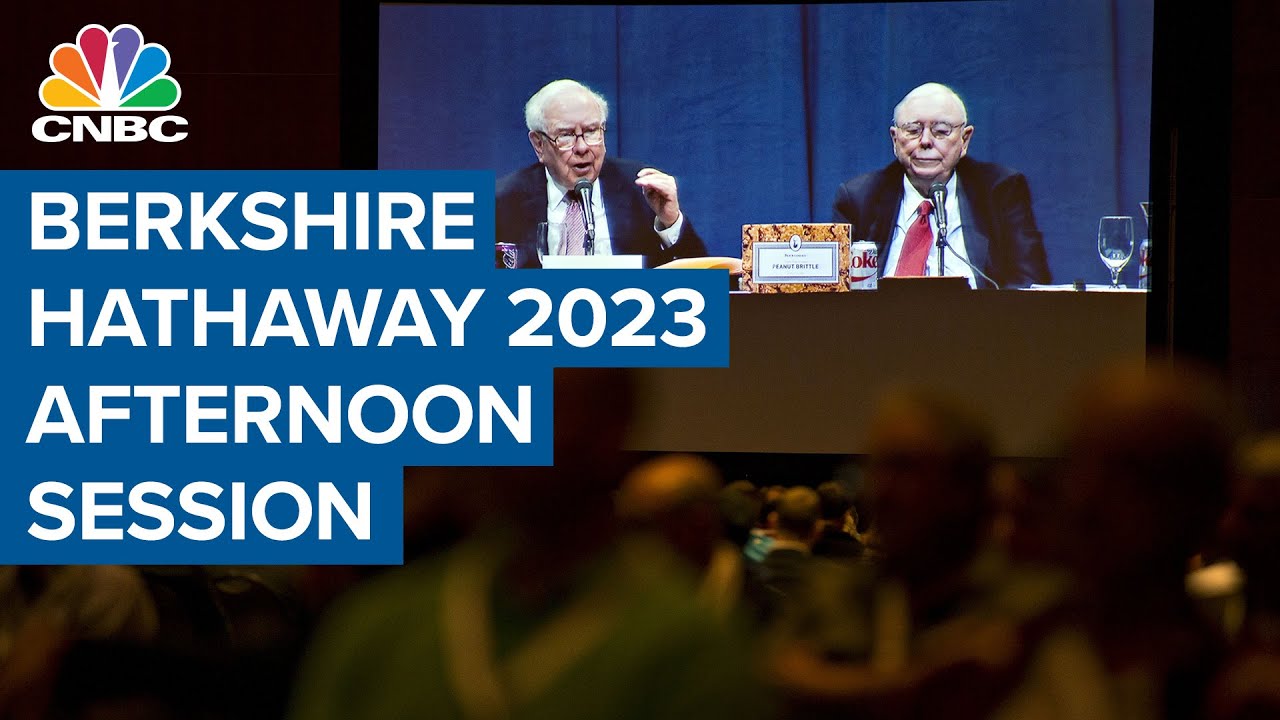
📺 Today’s recommended deep-dive video: https://www.youtube.com/watch?v=5QBkn42PSxk
Banking Panics and the Dollar: Lessons from the Woodstock of Capitalism
Warren Buffett and Charlie Munger provide a masterclass on the shifting sands of the American economy, from the digital fragility of modern banking to the enduring power of the US dollar. This article breaks down their deep-seated concerns regarding fiscal policy, their strategic bets on energy, and the timeless wisdom that has defined Berkshire Hathaway for decades.
Core Question: How can investors maintain stability in a world defined by instant digital bank runs and unprecedented national debt?
Highlights
- The transition from physical bank lines to “button-press” digital panics.
- Why the US Dollar remains the only viable global reserve currency.
- The strategic logic behind Berkshire’s massive holdings in the Permian Basin.
- Life advice on avoiding toxic people and the “obituary test.”
⏱️ Reading time: approx. 12 minutes · Saves you about 140 minutes vs. watching.
Want to take notes while watching? Click the image below and let AI Notebook capture the key points for you 👇

The New Era of Banking
Digital Runs and Regulatory Failure
Buffett reflects on how bank runs have evolved from the physical lines his father witnessed in 1931 to the instant, button-press panics that characterize the modern era. This digital shift makes deposits significantly less “sticky,” creating a volatility that regulators and the public have yet to fully comprehend.
Fear is a contagious force in finance, and when politicians or the press fail to communicate clearly, a small match can quickly ignite a conflagration.
The FDIC was designed to stabilize the economy by ensuring that depositors feel safe, yet recent bank failures show that public confusion persists despite government guarantees. Buffett emphasizes that while the 1934 laws were revolutionary, the modern incentive structure is broken; CEOs and directors who run banks into the ground often suffer no personal financial loss, while shareholders are left holding the bag. This lack of accountability creates a toxic environment where reckless risk-taking becomes the norm.

💡 Digging Deeper
Q: Is the $250,000 FDIC limit still relevant?
A: Buffett argues that while the limit exists, the US government has no interest in seeing depositors lose money, as evidenced by recent interventions. The public remains confused because the messaging from politicians and agencies has been poor.
Q: How should bank leadership be handled?
A: The focus should shift toward holding leadership personally accountable for failures rather than just penalizing the corporate entity. If a CEO gets a bank in trouble, both they and the directors should suffer financial consequences.
The Dollar, Debt, and the Inflation Genie
The Reserve Currency Reality
The conversation shifts to the $31 trillion national debt and whether the US Dollar is at risk of losing its status as the global reserve currency. Buffett remains skeptical of any alternative emerging soon, noting that while other nations may look elsewhere, the US still holds the primary position. However, he warns that printing money indefinitely is a dangerous game where the “genie” of inflation, once released, is nearly impossible to put back.
Charlie Munger adds that printing money to buy votes eventually becomes counterproductive, potentially leading the nation toward long-term economic stasis or ruin.
Japan provides an interesting case study of a cohesive culture managing high debt levels, but the duo warns against imitating their path. America lacks the same cultural “stick-to-it-iveness,” and fiscal discipline remains the only sustainable way to prevent the destruction of the world’s reserve currency and the purchasing power of its citizens.
💡 Digging Deeper
Q: What is the best defense against inflation?
A: Your own earning power. Being the best at what you do ensures your value remains constant regardless of the currency’s value.
Q: Can “tokens” or cryptocurrency replace the dollar?
A: Buffett dismisses this as “madness,” asserting that only real assets and productive businesses provide true long-term protection against monetary debasement.
Energy, Oil, and the Logic of Occidental
The Permian Basin Powerhouse
Berkshire’s heavy investment in Occidental Petroleum and the Permian Basin isn’t a bet on “magic” but a recognition of unique geological reality. Unlike traditional wells that pump for decades, shale wells have a “quick death,” requiring sophisticated technology to extract oil from horizontal pipes buried miles beneath the surface.
The US is fortunate to have these resources, but we must recognize that they are not an unlimited, long-term source of energy without continuous, heavy capital investment.
Regarding the transition to renewables, Buffett points to Iowa as a leader, where Berkshire Hathaway Energy has reinvested billions in wind and solar power. While activists demand a faster retirement of coal plants, the reality of the power grid requires a balance of reliability and affordability. Democracy creates friction, as neighbors often object to power lines or pipelines, making the transition a slow, political process rather than a purely technological one.

💡 Digging Deeper
Q: Will Berkshire buy control of Occidental?
A: No. Buffett explicitly stated they will not buy control; they are happy with the current management and the warrants they hold.
Q: Why hold Chevron and Occidental simultaneously?
A: These companies represent the most promising oil basins in the US, providing a strategic hedge in an uncertain global energy market.
Key Takeaways
Investing success is often about avoiding “major mistakes” rather than seeking impossible genius. Buffett and Munger stress the importance of staying away from toxic people and activities that could take you out of the game. Living below your means and avoiding credit card debt—effectively avoiding the 14% “drag” on your life—are the fundamental building blocks of financial freedom.
The modern world offers more distractions than ever—from the “streaming wars” to the allure of wealth management over engineering—but the old values of service and integrity remain supreme. Whether it’s managing a bank like an engineer or treating partners with kindness, the “Woodstock of Capitalism” reminds us that character is the ultimate asset. By writing your own obituary now and living up to it, you ensure a life of purpose and sustained success.
Q&A
Q1: What is the biggest mistake to avoid in life?
A: Getting behind the game through debt. Spending more than you earn creates a cycle of high-interest debt that is almost impossible to escape.
Q2: How do you handle negative people who are family members?
A: You minimize the interaction. While you can’t always cut them off entirely, you must protect your own mental space and minimize the toxic influence.
Q3: What do you think about Elon Musk?
A: Munger acknowledges Musk’s brilliance but notes he takes on “the impossible job,” whereas Berkshire looks for the “easy job” that can be identified and executed with less failure.
Q4: Is the streaming business a good investment?
A: It is a tough business with too many players. You either need fewer competitors or higher prices to make it work, as talent and agents will always take a large cut of the profit.
Q5: Why did Berkshire sell its bank stocks?
A: Public misunderstanding of the banking system and poor communication from authorities have changed the “stickiness” of deposits, making the sector more volatile than before.
Q6: What is the best investment for a 13-year-old?
A: Investment in yourself. Your value to the community is the only thing that can’t be inflated away or stolen.
Q7: How do you incentivize managers at Berkshire?
A: By giving them autonomy. They get to run their businesses without the “miserable” aspects of being a public company CEO, like courting analysts or dealing with banks.