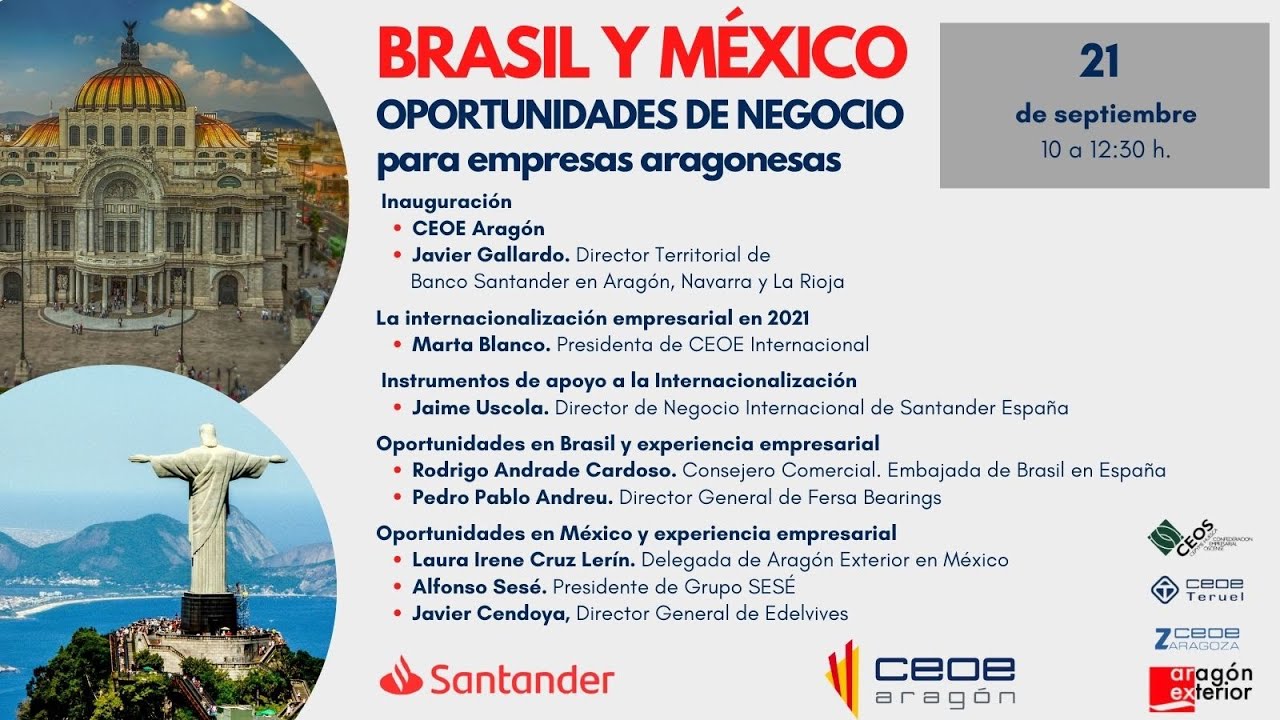
📺 Today’s recommended deep-dive video: https://www.youtube.com/watch?v=fO8EzZpJCqo
Bridging the Atlantic: Navigating Growth Opportunities in Mexico and Brazil
As the global economy pivots back to physical presence, Spanish companies are looking toward their most natural markets in Latin America to drive recovery. With over 240 million consumers combined, Brazil and Mexico offer immense scale, yet each requires a distinct strategic roadmap to navigate specific regulatory and cultural nuances. This guide explores how institutional support and local experience can turn these complex markets into successful business hubs.
Core Question: How can Spanish businesses leverage banking partnerships and local cultural intelligence to succeed in the two largest economies of Latin America?
Highlights
- Brazil is currently the 12th largest economy globally, offering a massive domestic market and significant infrastructure opportunities.
- Mexico serves as a strategic manufacturing hub for North America, benefiting from a common language and deep trade links with the US.
- Success in both markets depends on managing “Custo Brasil” (the cost of doing business) and understanding the “people factor” in Mexico.
- Digital transformation and the diversification of supply chains are the key trends driving post-pandemic internationalization.
⏱️ Reading time: approx. 7 minutes · Saves you about 149 minutes vs. watching.
Want to take notes while watching? Click the image below and let AI Notebook capture the key points for you 👇

The New Paradigm of Global Expansion
A Strategic Return to Physicality and Growth
The return to “true normality” marks a pivotal moment for Spanish enterprises, particularly those in the Aragon region, as they look to reconnect with international markets. Internationalization is no longer just a secondary growth strategy; it is the fundamental engine for wealth generation and employment in a post-pandemic world. Leveraging the support of major financial entities like Banco Santander provides companies with a global platform, offering the security needed to navigate volatile foreign exchange rates and complex logistics.
The transition from a domestic focus to a global one requires a deep understanding of how global value chains have shifted since 2020. Companies are now prioritizing the diversification of their supply sources and the digitalization of their sales channels to mitigate future risks. During the crisis, many Spanish firms discovered that buying from abroad was their first step toward selling abroad, creating a new generation of exporters who are digitally savvy and operationally flexible.
This evolution is supported by historic investment opportunities, such as the Next Generation EU funds, which emphasize digital and ecological transitions. These funds represent a once-in-a-generation chance for SMEs to modernize their internal processes before attempting to compete in high-scale markets like Latin America.
💡 Digging Deeper
Q: Why is Latin America considered a “natural market” for Spanish firms?
A: Beyond the common language in most countries, the shared history and cultural proximity provide a level of comfort and trust that facilitates negotiations more easily than in Asian or Middle Eastern markets.
Q: How has the pandemic changed the way SMEs approach international trade?
A: It accelerated the use of digital tools for prospecting and financing, with nearly 90% of international transactions now occurring through digital platforms.
Brazil: A Continental Powerhouse
Navigating the “Custo Brasil” and Infrastructure Booms
Brazil is essentially a continent within a country, demanding a regional rather than a national strategy due to its sheer size and diversity. While it offers a massive internal market of over 210 million people, it is famous for the “Custo Brasil”—a combination of bureaucratic hurdles, complex tax structures, and logistical challenges. However, recent reforms are actively reducing the time required to open a business, bringing it down from over five days to just two in many cases.
The infrastructure sector remains the most significant opportunity for foreign investors, with billions of dollars slated for transportation, energy, and sanitation projects. For Spanish firms, the lack of a shared language is often mitigated by the fact that Brazil is a society “under construction,” where innovation and new solutions are highly welcomed. Success requires a commitment to local content, as products manufactured within Brazil often receive preferential tax treatment and better access to domestic supply chains.
Fersa Bearings’ experience illustrates the typical journey: moving from simple export to a local agent, and finally establishing an independent distribution hub. They found that Brazilian customers are surprisingly open to new brands if those brands offer personalized service and superior technical support. This “customer-centricity” is a gap in the local market that Spanish firms are perfectly positioned to fill with their high-quality industrial standards.

💡 Digging Deeper
Q: What is the biggest regulatory hurdle for newcomers in Brazil?
A: The interstate tax system and labor laws are notoriously complex, requiring expert local legal and accounting counsel from day one.
Q: Is the current devaluation of the Real an advantage or a disadvantage?
A: It is an advantage for those looking to invest in assets or manufacturing, as entry costs are lower, but a challenge for those purely exporting from Spain.
Mexico: The Gateway to the North
Culture, Trust, and North American Synergy
Mexico is the 15th largest economy in the world and serves as a vital bridge between Latin America and the United States. Its strategic position within the USMCA framework makes it an ideal manufacturing hub for companies looking to supply the North American market without the high costs of US labor. The common language is a double-edged sword; while it facilitates communication, it can lead to a false sense of security regarding cultural alignment.
Successful integration in Mexico depends almost entirely on the “human factor” and building authentic relationships with local teams. As Edelvives discovered, attempting to impose a purely European corporate culture can lead to friction, whereas blending Spanish processes with Mexican creativity leads to a powerful synergy. The Mexican market is highly sophisticated and digitally advanced, with e-commerce adoption rates that now rival or exceed many European nations.
Despite political shifts and concerns over legal security in certain sectors, Mexico remains a stable environment for long-term industrial investment. The key is to view Mexico not as a “fix” for domestic Spanish problems, but as a strategic growth engine that requires its own dedicated resources and expatriate leadership. By treating the Mexican subsidiary as a partner rather than a satellite, Spanish firms can unlock a market of 130 million eager consumers.

💡 Digging Deeper
Q: How important is the US-Mexico relationship for Spanish investors?
A: Extremely; most industrial growth in Mexico is driven by the demand from the US, making Mexico a proxy for North American stability.
Q: What was the biggest lesson from Edelvives’ experience?
A: The importance of localizing the product and the brand, rather than just translating it, to meet the specific educational and cultural needs of the Mexican people.
Key Takeaways
Internationalization is a journey of resilience that requires a clear “Business Case” before the first flight is even booked. Whether entering the continental complexity of Brazil or the relationship-driven market of Mexico, companies must prioritize cultural intelligence and local partnerships. The most successful firms are those that adapt their “body and soul” to the new territory while maintaining their core Spanish standards of quality and innovation.
Financial partnerships serve as the safety net for this expansion, providing the necessary tools to handle currency volatility and document-based payment security. In a world of broken supply chains, being physically present in these high-potential markets is no longer a luxury but a strategic necessity. Those who invest in understanding the local “rhythms”—whether it is the bureaucratic pace of Brazil or the relationship-first nature of Mexico—will find themselves well-positioned for the next decade of growth.
Q&A
Q1: What are the main sectors for Spanish investment in Mexico?
A: Infrastructure, energy, financial services, telecommunications, and the automotive industry are the primary drivers of Spanish capital in Mexico.
Q2: How can a small SME start prospecting in Brazil without a huge budget?
A: Digital platforms like Santander Trade provide access to thousands of market reports and potential client databases, allowing for low-cost initial research before committing to a physical presence.
Q3: Is the “Custo Brasil” really being reduced?
A: Yes, recent administrative and pension reforms, along with the “Economic Freedom Law,” have significantly cut the red tape involved in business registration and licensing.
Q4: Why is a local partner often risky in Mexico?
A: As shown by Edelvives, misaligned visions and different measures of “time” can lead to failed joint ventures; many companies now prefer a 100% owned subsidiary model to maintain control.
Q5: What role do Next Generation EU funds play in internationalization?
A: They provide the capital for digitalization and sustainability, which are essential for making Spanish products competitive in sophisticated markets like Brazil and Mexico.
Q6: How does the “regional distribution” model work in Brazil?
A: Because of the country’s size, it is often better to have different distributors for different states (e.g., Minas Gerais vs. Mato Grosso) rather than one single national partner who may not have local reach.