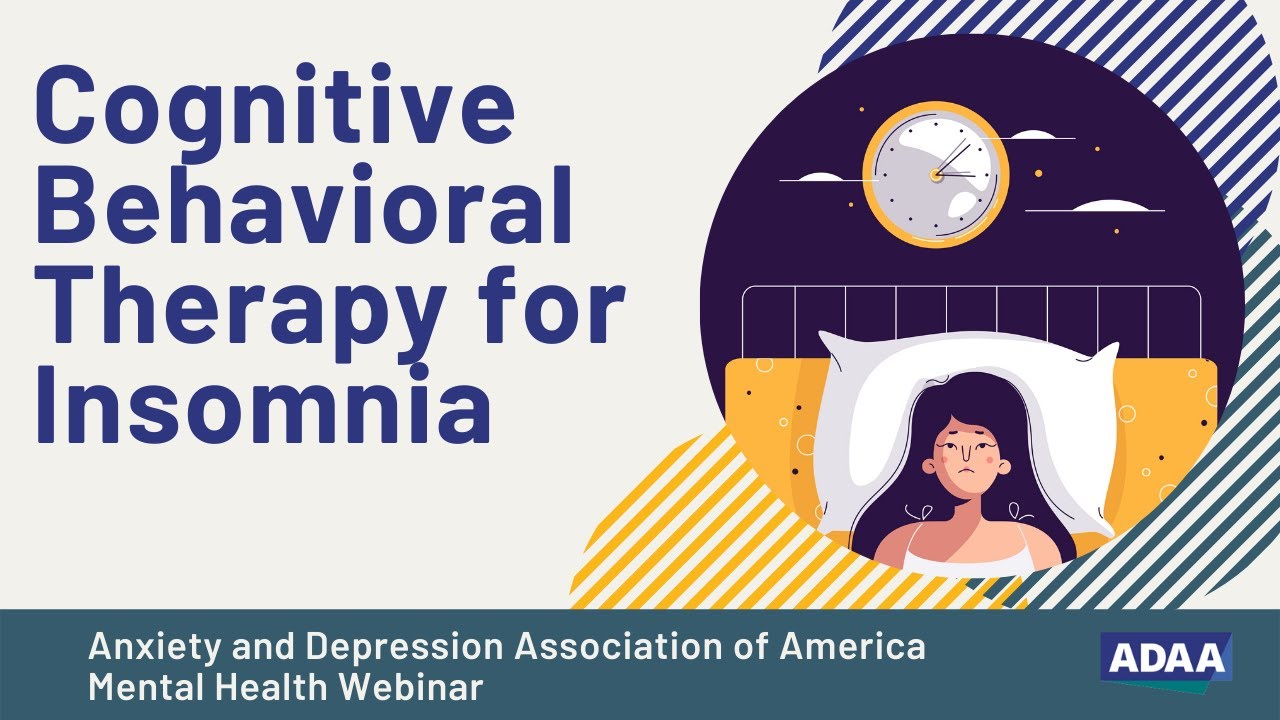
📺 Today’s recommended deep-dive video: https://www.youtube.com/watch?v=PFP7LOQNbO8
Rewire Your Brain for Better Rest: The Science of CBT-I
If you’ve spent countless nights staring at the ceiling, you know that willpower alone cannot force sleep. Dr. Virginia Runko, a board-certified sleep specialist, explains why chronic insomnia is a learned behavior and how Cognitive Behavioral Therapy for Insomnia (CBT-I) provides a permanent, drug-free cure.
Core Question: Why is CBT-I now recommended as the first-line treatment for insomnia over sleeping pills, and how can specific behavioral changes retrain the brain’s sleep-wake cycle?
Highlights
- The “Conditioned Arousal” trap: how your bed becomes a trigger for wakefulness.
- The Sleep Restriction Paradox: why spending less time in bed leads to better quality rest.
- Why insomnia is no longer viewed as just a “symptom” of anxiety but as a standalone disorder.
- The truth about CBD and Melatonin: why supplements often fail where therapy succeeds.
⏱️ Reading time: approx. 7 minutes · Saves you about 61 minutes vs. watching.
Want to take notes while watching? Click the image below and let AI Notebook capture the key points for you 👇

The Diagnosis: When Sleep Becomes a Disorder
Beyond the Occasional Bad Night
Insomnia is not just a frustrating night of tossing and turning; it is a clinical condition defined by persistent difficulty falling or staying asleep that causes significant daytime impairment.
To meet the formal criteria, these struggles must occur at least three nights a week and persist for three months or longer.
Unlike sleep apnea, which requires a laboratory study, insomnia is diagnosed through clinical history. Your provider looks for a pattern of “nocturnal awakenings” or “early morning wake-ups” that leave you feeling irritable, fatigued, or unable to concentrate during your working hours.
In the past, doctors treated insomnia as a secondary symptom of anxiety or depression, assuming it would vanish once the “primary” issue was resolved. We now know this was a mistake. Research proves that insomnia often takes on a life of its own, remaining even after anxiety fades and potentially triggering a relapse if not treated directly as its own independent disorder.

💡 Digging Deeper
Q: Do I need a sleep study to start CBT-I?
A: No. A sleep study is mainly used to rule out physical issues like sleep apnea or restless leg syndrome, but the diagnosis of insomnia is made through your self-reported history.
Q: Can I have both anxiety and insomnia?
A: Absolutely. They share a bi-directional relationship, meaning they feed into each other, and the current gold standard is to treat both conditions simultaneously rather than waiting for one to fix the other.
Retraining the Brain: Stimulus Control
Breaking the Pavlovian Bed Trap
Most chronic insomniacs inadvertently train their bodies to stay awake. Through a process called classical conditioning, the bed becomes paired with frustration, planning, and physiological arousal rather than rest.
If you lie in bed for hours trying to force sleep, your brain begins to view the bedroom as a place for wakefulness, much like Pavlov’s dogs were trained to salivate at the sound of a bell.
Stimulus control aims to break this pairing. The rules are strict but effective: use the bed only for sleep (and sex), and never stay in bed if you are not sleeping. By removing the “wakeful” stimulus, you begin to rebuild the association between your mattress and immediate drowsiness.
If you aren’t asleep within roughly 20 minutes, you must get out of bed.
Go to a different room and engage in a quiet, sedentary activity—like reading or folding laundry—until you feel genuinely sleepy. This “short-term pain for long-term gain” approach prevents your brain from practicing wakefulness in the one place it should be resting.

The Power of Sleep Restriction
Quality Over Quantity
Sleep restriction is perhaps the most powerful tool in the CBT-I arsenal, though it sounds counterintuitive to those who are already exhausted.
The goal is to match your “sleep opportunity window” to the actual amount of sleep you are getting. If you spend nine hours in bed but only sleep for five, you are essentially training yourself to have shallow, fragmented rest.
By temporarily limiting your time in bed to five hours, you build up a massive “sleep drive.”
This biological pressure ensures that when you finally hit the pillow, you fall asleep faster and stay in a deeper, more consolidated state. Once your sleep efficiency improves and you are sleeping through that five-hour window, you gradually add 15 minutes back each week until you reach your ideal duration.
This protocol requires immense discipline. You must wake up at the same time every morning, regardless of how poorly you slept, to keep your circadian rhythm anchored. It is a rigorous process, but it is the fastest way to turn shallow, broken sleep into a solid, restorative block.

Beyond the Routine: Hygiene and Supplements
The Limits of Melatonin and Blue Light
While sleep hygiene—keeping the room dark, avoiding caffeine, and limiting alcohol—is important, it is rarely enough to cure chronic insomnia on its own.
Dr. Runko emphasizes that while blue light from screens can suppress melatonin, the content we consume is often more damaging than the light itself.
Scrolling through stressful news or active social media feeds keeps the brain in an “active” mode. If you must use a screen, use blue-light-blocking glasses or “night shift” settings, but focus on passive entertainment like a lighthearted show rather than interactive apps.
Regarding supplements, the evidence for CBD and over-the-counter melatonin is surprisingly weak for chronic insomnia. Melatonin is a signaling hormone, not a sedative; it is great for jet lag or “night owls” trying to shift their clock, but it rarely helps someone stay asleep through the night.
Furthermore, the supplement industry is poorly regulated. Studies have shown that what is on the label of a CBD bottle often doesn’t match what is inside, sometimes even containing toxins or inconsistent doses of active ingredients.
💡 Digging Deeper
Q: Should I stop my sleeping pills before starting CBT-I?
A: Not necessarily. Many patients start CBT-I while still on medication, using the therapy to build the skills necessary to taper off the pills safely under a doctor’s supervision later.
Q: What are the best blue-light blockers?
A: Dr. Runko recommends orange-tinted safety glasses (like Uvex Skyper) which are proven to filter blue light more effectively than standard clear-lens “computer glasses.”
Key Takeaways
Insomnia is a treatable behavioral problem, not a permanent biological defect. By shifting the focus away from “trying to sleep” and toward “controlling wakefulness,” CBT-I allows patients to reclaim their nights. The process involves breaking the psychological association between the bed and stress, primarily through stimulus control and sleep restriction.
Success requires a shift in mindset: viewing sleepiness not as an enemy, but as a tool to be harvested. While the initial weeks of therapy can be difficult due to increased fatigue, the result is a consolidated, high-quality sleep architecture that medication simply cannot replicate.
For those seeking help, resources range from one-on-one sessions with board-certified specialists to evidence-based apps like Sleepio or the VA’s Insomnia Coach. Regardless of the path chosen, the science is clear: changing your behavior is the most effective way to change your sleep.
Q&A
Q1: How long does a typical course of CBT-I take?
A: It is generally a short-term treatment consisting of four to eight weekly sessions, depending on the severity of the insomnia and the patient’s adherence to the protocols.
Q2: Can sleep restriction be dangerous for certain people?
A: Yes. People with bipolar disorder (where sleep loss can trigger mania), epilepsy, or untreated sleep apnea should only attempt sleep restriction under strict professional supervision.
Q3: What should I do if I get out of bed in the middle of the night?
A: Engage in something quiet and sedentary. Avoid exercise, hot showers, or bright lights. Reading a book or even watching a calm TV show is fine, as long as it doesn’t make you feel “wound up.”
Q4: Is melatonin helpful for general insomnia?
A: The research is weak. It is most effective for circadian rhythm issues (like jet lag). For chronic insomnia, the behavioral changes in CBT-I are far more effective.
Q5: Why is the bed only for sleep and sex?
A: To maintain a strong “stimulus-response” bond. If you work, eat, or watch intense movies in bed, your brain learns that the bed is a multi-purpose zone for high-brain activity.
Q6: How do I handle the fatigue during the first week of sleep restriction?
A: Use counter-fatigue measures like extra caffeine (only in the morning), physical activity breaks, and splashing cold water on your face. Remember that daytime sleepiness is actually a sign that your “sleep drive” is building, which will help you sleep better the following night.
Q7: Are there any free resources for CBT-I?
A: Yes, the Veterans Affairs (VA) offers free apps like “Insomnia Coach” and “Path to Better Sleep” which are excellent, evidence-based tools available to the general public.