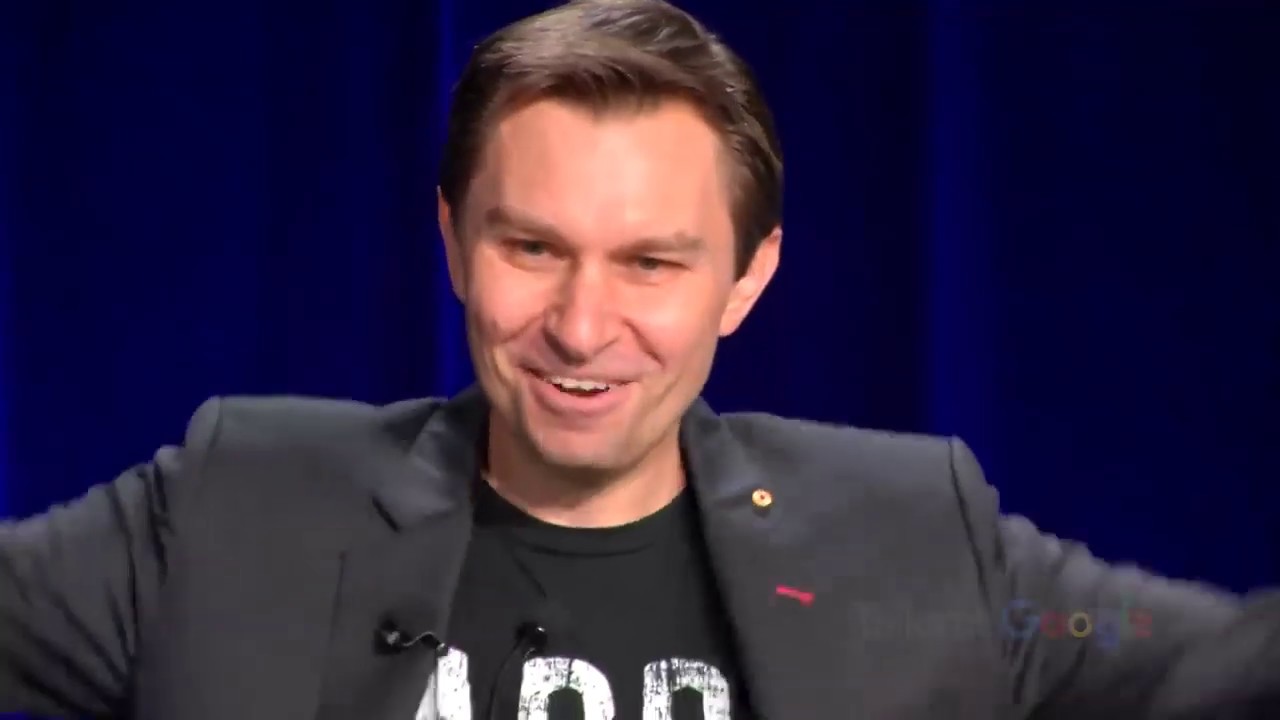
📺 Today’s recommended deep-dive video: https://www.youtube.com/watch?v=XKXXY1o_C4o
Rewriting the Code of Life: Why Aging is an Information Problem
For decades, we have accepted physical decline and frailty as the inevitable taxes of human existence. However, groundbreaking research suggests that aging isn’t an unchangeable law of nature, but a treatable medical condition rooted in the loss of cellular data. By understanding the “Information Theory of Aging,” we may finally be able to stop—and even reverse—the clock.
Core Question: Can we treat aging as a manageable disease by resetting the body’s epigenetic “software” to its youthful state?
Highlights
- Aging is primarily caused by a loss of analog epigenetic information rather than digital genetic mutations.
- The World Health Organization has recently reclassified aging as a medical condition, opening doors for clinical treatment.
- Scientists have successfully restored vision in mice by “rebooting” cells using a subset of Yamanaka factors.
- Practical interventions like intermittent fasting and molecules like NMN can activate internal survival pathways today.
⏱️ Reading time: approx. 6 minutes · Saves you about 49 minutes vs. watching.
Want to take notes while watching? Click the image below and let AI Notebook capture the key points for you 👇

The Information Theory of Aging
From Digital Integrity to Analog Decay
Most people assume we age because our DNA becomes riddled with mutations, but current research suggests this is largely incorrect. While our genetic code (DNA) is digital and highly resilient, the system that controls it—the epigenome—is analog. This epigenome acts like a cellular conductor, telling a heart cell to stay a heart cell and a brain cell to stay a brain cell by spooling certain genes tightly and leaving others open.
Aging, therefore, is a loss of information.
Think of your body like a compact disk. The music (the digital DNA) is still perfectly intact even as the disk gets old, but the scratches on the surface (epigenetic noise) prevent the laser from reading the songs correctly. As cells lose their identity, a nerve cell might start “forgetting” its function and behaving partially like a skin cell, leading to the systemic loss of function we call aging.
We can now measure this process with incredible precision using “biological clocks” that track DNA methylation. By analyzing these chemical marks on your genome, scientists can predict your biological age and your health trajectory more accurately than a calendar ever could.

💡 Digging Deeper
Q: Why is the epigenome analog instead of digital?
A: The epigenome must respond instantly to the environment—diet, stress, and temperature—which requires millions of possible states that a binary digital system simply couldn’t handle as efficiently.
Q: Is the damage from broken chromosomes reversible?
A: Research indicates that while broken chromosomes cause the “scratches” on the epigenetic CD, the original “digital” backup of how the cell should function remains accessible if we find the right key.
The Biological Reset Button
Tapping into the “Observer”
To fix a scratched CD, you need a backup copy of the original data. In cellular biology, this backup is called the “Observer,” a latent set of instructions that can restore the epigenome to its youthful configuration. Using a subset of Yamanaka factors—specific genes that can turn adult cells back into stem cells—scientists have discovered a way to trigger this reset without turning the entire body into a tumor.
This isn’t just theory; it has been proven in the lab.
By delivering these factors via a virus into the eyes of mice, researchers successfully regrew crushed optic nerves and restored vision in mice with glaucoma. The “biological clock” of these treated eyes actually moved backward, proving that the cell remembered how to be young and functional again once the epigenetic noise was cleared.
This process, known as cellular reprogramming, suggests that our tissues have an innate capacity for renewal. We are currently moving toward human clinical trials for vision loss, with the hope that this “reset” can eventually be applied to the entire body.

💡 Digging Deeper
Q: What are the specific Yamanaka factors used in this research?
A: The researchers used three specific factors—Oct4, Sox2, and Klf4 (OSK)—purposely leaving out the “Myc” factor, which is known to cause cancer.
Q: How many times can a cell be reset?
A: This is the frontier of the research. While we don’t know the limit, the stability of the epigenome suggests we could potentially reset the system multiple times over many decades.
Activating Longevity Pathways Today
The Power of Adversity
While advanced gene therapies are years away, we can activate our body’s natural defense mechanisms right now through a concept called “hormesis.” This is the idea that what doesn’t kill you makes you stronger; by putting our bodies under mild stress, we trigger survival circuits that repair DNA and stabilize the epigenome.
The single most effective tool we have is eating less often.
When we are constantly satiated, our longevity genes—like the sirtuins—stay dormant because they think times are good. By practicing intermittent fasting or skipping a meal, we raise levels of a molecule called NAD+, which acts as fuel for these repair enzymes. This mimics the biological state of our ancestors who had to endure periods of scarcity.
Beyond fasting, molecules like NMN (a precursor to NAD+) and Metformin (a diabetes drug) are showing promise in clinical settings for their ability to enhance insulin sensitivity and mimic the effects of exercise. These interventions don’t just add years to your life; they add “healthspan,” ensuring that your final decades are spent playing tennis or traveling rather than in a hospital bed.

💡 Digging Deeper
Q: Why is high protein intake sometimes counterproductive for longevity?
A: Excess protein, specifically certain amino acids, activates the mTOR pathway, which tells the cell to grow and divide rather than focus on recycling waste and repairing damage.
Q: Is there a “best” exercise for longevity?
A: Any activity that gets you “puffed” or breathless for just 10 to 15 minutes a day is enough to trigger the survival circuits that protect the epigenome.
Key Takeaways
We are standing at a turning point in human history where aging is no longer an immutable fact of life. The shift from seeing aging as “wear and tear” to seeing it as “information loss” provides a concrete roadmap for medical intervention. If we can polish the “scratches” on our epigenetic disk, the potential for human healthspan is far greater than the current 80-year average.
Living longer is not about vanity or avoiding the inevitable; it is about reducing the global burden of disease and allowing people to remain productive, healthy, and engaged with their families well into their second century. By combining ancient practices like fasting with futuristic gene reprogramming, we can fundamentally change what it means to grow old.
Q&A
Q1: Is there a specific age when one should start these interventions?
A: While it is never too late to start, biological aging begins as early as the womb. Most researchers suggest that focusing on these pathways in your 30s and 40s can provide the most significant long-term preventative benefits.
Q2: What is the role of insulin in the aging process?
A: High insulin sensitivity is one of the best predictors of longevity. Keeping blood glucose levels low through diet and exercise ensures that the body stays in a “maintenance and repair” mode rather than a “growth and storage” mode.
Q3: How does the Information Theory of Aging explain things like gray hair or wrinkles?
A: These are outward symptoms of cells losing their identity. Melanocytes (pigment cells) in the hair follicle eventually lose their epigenetic “instructions” on how to produce pigment, resulting in gray hair.
Q4: What is the difference between NMN and NR?
A: Both are NAD+ precursors. NMN contains a phosphate group and is often cited as being more stable on the shelf, though both molecules are currently undergoing clinical trials to determine which is more effective at raising human NAD+ levels.
Q5: Can we really reverse aging, or just slow it down?
A: We are already slowing it down through lifestyle, but the optic nerve experiments in mice prove that reversal is biologically possible. We have successfully moved the hands of the biological clock backward.
Q6: Does oxidative damage still matter in this new theory?
A: Yes, but it is viewed as a contributor to the “scratches.” Oxidative stress can cause DNA breaks, and the process of repairing those breaks is what causes the epigenetic factors to move away from their original positions, leading to information loss.
Q7: Will these technologies only be available to the wealthy?
A: While new gene therapies are initially expensive, things like intermittent fasting are free, and molecules like Metformin are incredibly cheap. The goal is to make longevity accessible to the entire global population to save trillions in healthcare costs.