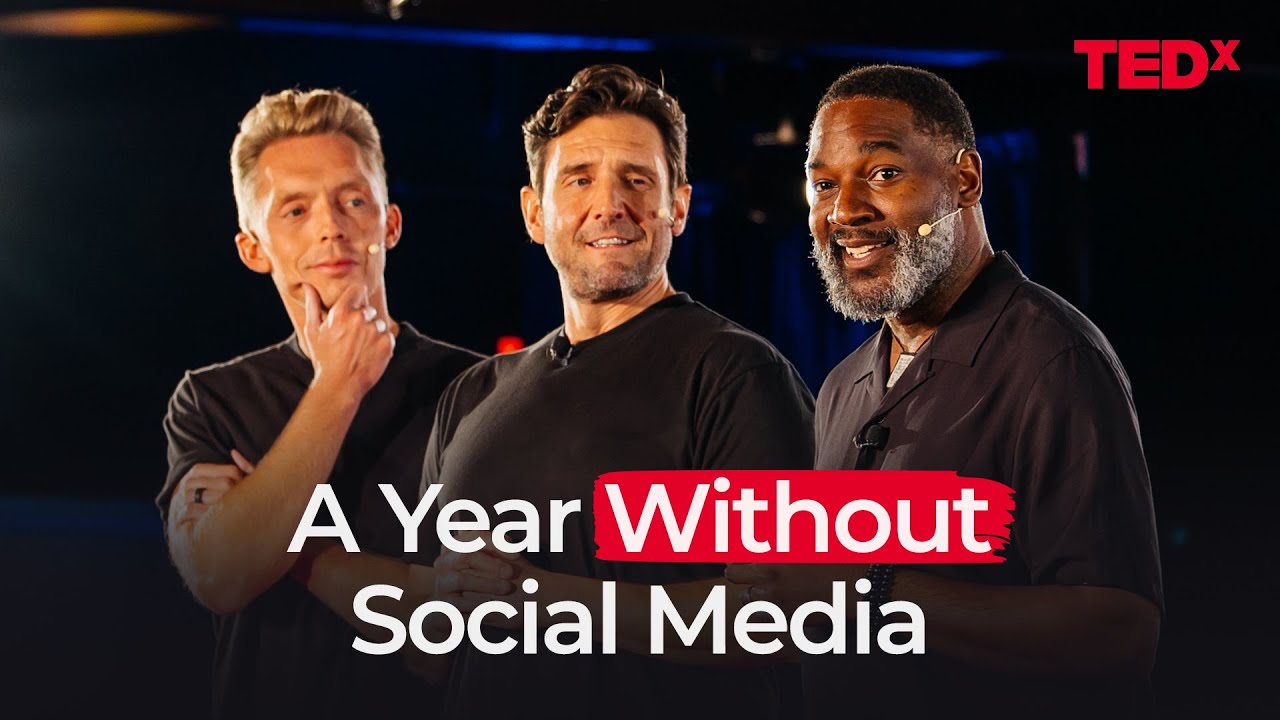
📺 Today’s recommended deep-dive video: https://www.youtube.com/watch?v=eYK1u8Vg5No
The One-Year Disconnect: How The Minimalists Reclaimed Their Attention
In an era where “more” is the ultimate metric, the world’s leading experts on simple living did the unthinkable: they walked away from half a billion views. Their year-long experiment reveals the hidden cost of our digital habits and offers a practical blueprint for reclaiming your sanity from the algorithm.
Core Question: Can we maintain success and connection in the modern world without succumbing to the addictive cycle of social media?
Highlights
- The shocking correlation between high social media use and clinical depression and sleep disorders.
- How eye-tracking technology and “revealed preference” predict your desires before you even click.
- Why the “Casino Rule” and “Entryway Rule” are essential boundaries for digital sanity.
- The surprising 21% financial cost of going offline and the creative “depth” that eventually replaced it.
⏱️ Reading time: approx. 6 minutes · Saves you about 14 minutes vs. watching.
Want to take notes while watching? Click the image below and let AI Notebook capture the key points for you 👇

The Trap of Digital Consumerism
The Illusion of “More”
Social media isn’t just a tool; it has become a form of digital consumerism where the pursuit of followers replaces the pursuit of meaning.
Joshua Fields Millburn and Ryan Nicodemus reached a staggering half a billion people in 2023, yet the achievement only fueled a hunger for more views and likes. This “maximalist” trap mirrors physical consumerism, leading to a constant state of discontent where no milestone is ever enough to satisfy the underlying craving for validation. It turns out that even those who teach minimalism aren’t immune to the “more, more, more” ideology that treats attention as the ultimate commodity.
Computer scientist Cal Newport points out that the average user spends two hours daily on these platforms, resulting in a 40% higher risk of sleep issues. For nearly half of all adolescents, the constant comparison leads to significantly worsened body image and self-esteem.

💡 Digging Deeper
Q: Why is social media compared to consumerism?
A: Because it operates on the ideology that acquiring “more”—more followers, likes, or views—will eventually lead to happiness, though it never actually does.
Q: How does eye-tracking data affect my feed?
A: Platforms use your front-facing camera to see what catches your eye and how long you linger; they learn what you are attracted to even if you never actually click the “like” button.
The Year of Silence
The Psychological Price of Presence
When the team finally disconnected, they faced a visceral withdrawal, describing the absence of apps as a feeling of being “naked” in public.
This initial discomfort revealed a physical “twitch” for the phone that took months to dissipate during quiet moments like waiting in grocery lines or sitting in restaurants. It wasn’t just a habit; it was a nervous system response that had been conditioned by years of instant stimulation.
By six months, the lack of digital noise forced friends and family to initiate deeper, more intentional communication via direct calls and texts.
Beyond the social shift, the financial impact was real, with a 21% drop in revenue that challenged their business model’s foundations. However, this loss in “width” or reach was compensated by an increase in “depth,” as live events saw record attendance from followers seeking genuine connection over algorithmic snippets. They found that being “less informed” about every celebrity slap or viral take actually made them better, more present citizens.

💡 Digging Deeper
Q: What happened to their relationships during the year off?
A: They moved away from the “ephemera” of emojis and comments toward meaningful phone calls and texts, which deepened their connections.
Q: Did they become “irrelevant” by leaving?
A: While their digital reach plummeted to zero, their creative depth increased, leading to new books and documentaries that social media noise had previously prevented.
Redefining the Digital Table
Three Legs of Intentionality
T.K. Coleman suggests viewing social media not as an inherent evil to be renounced, but as a “digital table” with three distinct legs.
When a table is placed randomly in a room, it acts as an obstacle that gets in the way of movement. But when used intentionally for consumption, creativity, and connection, it becomes a hub for community. The problem isn’t the table; it’s the lack of purpose behind its placement.
Redefining consumption means treating information like food—seeking nourishment rather than empty calories that leave the nervous system “milked like a cow.”
Creativity thrives when we stop scrolling and start searching with intention, asking what skills we want to develop rather than what content we want to passively absorb. Technology, like a hammer, only becomes a weapon when we lose sight of its purpose as a tool for generosity. By orienting activities around specific results, social media ceases to be clutter and becomes a well-placed tool for genuine human connection.

The Casino Strategy for Digital Sanity
Establishing New Boundaries
To return to the digital world without losing their peace, the team implemented a set of strict boundaries known as the “Casino Rules.”
Just as one decides a budget before entering a casino, users should set strict time limits and stick to them regardless of the algorithmic “heat.” If you don’t decide what you’re willing to spend—in time and attention—before you log in, the house will always win.
Making the phone boring by switching it to grayscale effectively kills the “slot machine” effect that keeps the eyes glued to the screen.
Perhaps the most effective physical boundary is the “entryway rule,” which involves leaving the smartphone near the front door of the home. This simple act creates a healthy friction, stripping the device of its power to follow the user from room to room and intrude upon private, sacred spaces like the bedroom or the dinner table. If you want to use the distraction, you have to physically get up and go to it, rather than letting it live in your pocket.

Key Takeaways
The Minimalists’ experiment proves that walking away from the digital noise doesn’t result in the social or professional death we often fear. While there was a tangible financial cost to their departure, the gains in creative clarity and emotional peace far outweighed the dip in revenue. They demonstrated that reach is not a synonym for impact.
By treating social media as a tool rather than a mandatory obligation, we can shift from being “users” to being “creators.” The transition from scrolling to searching is the most vital step in this process. When we search, we are in the driver’s seat; when we scroll, we are merely passengers in an algorithm designed to exploit our triggers.
Ultimately, the goal is to set boundaries without falling into dogmatic renunciation. Whether it’s turning your phone to grayscale or adopting the “entryway rule,” the power lies in creating friction between your impulses and your actions. You give yourself permission to walk away when the digital clutter begins to interfere with your health and happiness.
Q&A
Q1: What is the “Casino Rule” for social media?
A1: It means deciding exactly how much time you will spend on a platform before you open the app, and sticking to that limit regardless of how engaging the content becomes.
Q2: How does grayscale mode help reduce phone addiction?
A2: It removes the vibrant, “candy-like” colors that trigger the brain’s reward centers, making the screen less stimulating and less like a slot machine for the eyes.
Q3: What is the difference between “Stated Preference” and “Revealed Preference”?
A3: Stated preference is saying you use social media to “stay in touch,” while revealed preference is the reality of spending hours watching viral fights or influencer fails.
Q4: Why did The Minimalists’ revenue drop by 21%?
A4: Their business relied heavily on social media reach for marketing; leaving the platforms meant they had to rely on deeper, more traditional forms of engagement, which took time to build.
Q5: What is the “Entryway Rule”?
A5: A boundary where you leave your phone at the entrance of your home, forcing you to be intentional about when you use it rather than carrying it from room to room.
Q6: Is renouncing social media the only way to be a minimalist?
A6: No. The goal is “digital minimalism,” which means redeeming the technology through intentional use rather than dogmatically rejecting it.
Q7: What happens to “idea incubation” when we leave social media?
A7: Instead of immediately sharing every impulse online, you begin to ponder observations in your heart, leading to more original and mature creative work.