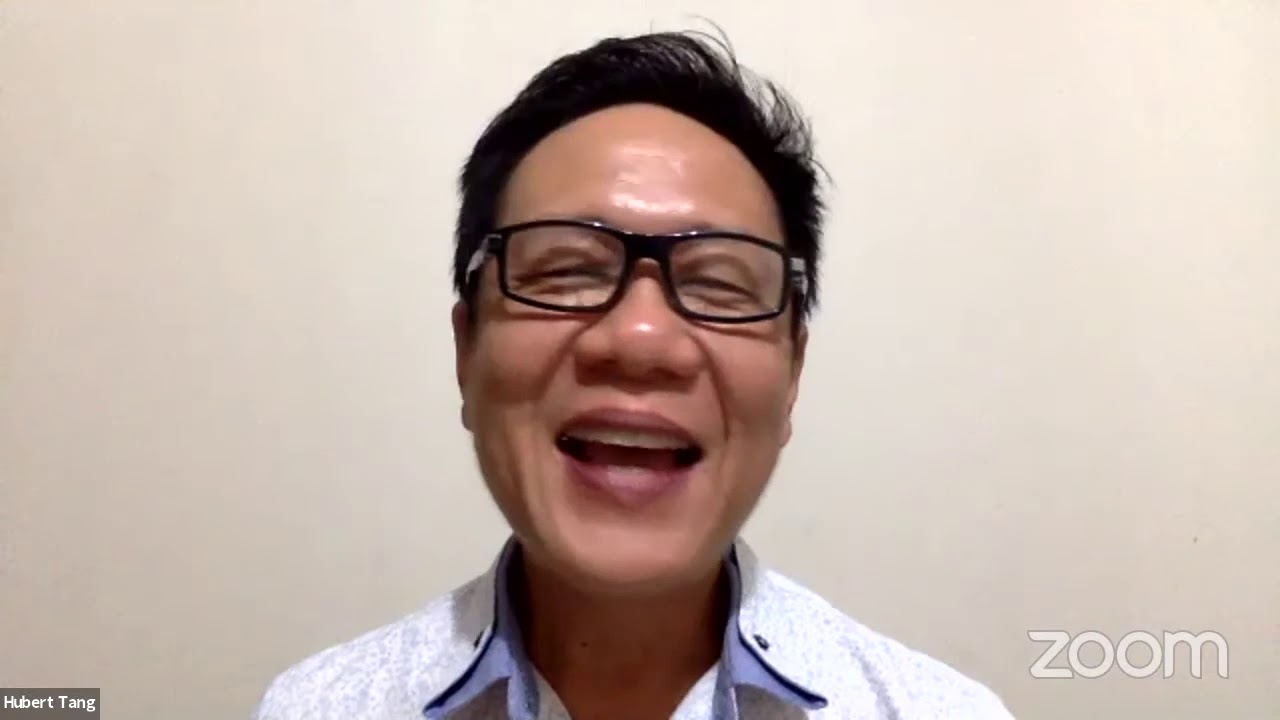
📺 Today’s recommended deep-dive video: https://www.youtube.com/watch?v=K5qJbWT5v7U
Beyond Bricks and Mortar: Dr. Ang Yong Guan’s Vision for a Soulful Marymount
Veteran psychiatrist and former military colonel Dr. Ang Yong Guan steps into the political arena, bringing a unique focus on mental well-being to the new Marymount SMC. He argues that a constituency needs more than just covered walkways; it needs a revived “Gotong Royong” spirit that prioritizes happiness and emotional security over mere economic growth.
Core Question: How can a Member of Parliament move beyond infrastructure to actively foster emotional resilience and community belonging for residents?
Highlights
- The integration of clinical psychiatry and military leadership into grassroots service.
- A localized “Marymount Dream” focused on the “software” of human connection and quality of life.
- Specific solutions for neighborhood issues, from Shunfu’s maintenance to noise pollution in the East.
- A proposal for a “School of Political Education” to empower the next generation of Singaporean leaders.
⏱️ Reading time: approx. 7 minutes · Saves you about 101 minutes vs. watching.
Want to take notes while watching? Click the image below and let AI Notebook capture the key points for you 👇

The Psychiatrist in the Political Chair
Clinical Empathy Meets Grassroots Governance
Dr. Ang Yong Guan is not your typical political candidate, bringing over 30 years of experience as a psychiatrist and 23 years in the Singapore Armed Forces. He views the role of a Member of Parliament through a clinical lens, emphasizing that the center of all policy must be the person sitting right in front of you.
His professional journey—from the Institute of Mental Health to serving as a Colonel and later establishing a private practice—has been defined by his personal motto: “Do, Learn, Grow.” This philosophy advocates for lifelong learning and the humility to admit when one does not have all the answers, a trait he believes is essential for a representative of the people.
Dr. Ang argues that while GDP is essential, it is merely one half of a successful national equation. A nation needs a soul, and a constituency needs an MP who functions as a “people-centered” listener rather than a top-down dictator.

💡 Digging Deeper
Q: How does psychiatric experience translate to MP duties?
A: It provides the tools to show empathy, diagnose community stressors, and treat social issues with compassion rather than just administrative logic.
Q: What is the “Do, Learn, Grow” motto?
A: It is a commitment to smart action, continuous education, and holistic growth across mental, physical, spiritual, and social dimensions.
Mapping the Marymount Dream
Beyond the Inverted L-Shape
Marymount SMC is a uniquely shaped constituency, which Dr. Ang describes as an “inverted L” divided by Marymount Road. He breaks the area down into two distinct zones: the West, featuring the landed properties of Shunfu and the unique rental block at Block 26, and the East, characterized by high-rise executive maisonettes and the bustling “Orchard Road” of Bishan Street 22.
His vision for these areas isn’t just about building more amenities, as he acknowledges the area is already relatively well-equipped. Instead, he focuses on the “heart-ware,” aiming to transport residents to a place where they feel a genuine sense of pride and belonging when they return home.
The Marymount dream involves a radical shift from being self-centered to being community-focused, where residents don’t just close their doors but interact in the common areas. By focusing on the “heart-ware” rather than just the hardware of covered walkways, Dr. Ang believes he can transform a collection of HDB blocks into a cohesive, supportive neighborhood that serves as a model for all of Singapore.

💡 Digging Deeper
Q: What is the significance of the name Marymount?
A: Dr. Ang traces the name back to the Chinese translation of MacRitchie (Molly Chi), where “Chi” implies mounting a horse, leading to the name “Mary-mount.”
Q: What are the specific concerns in West Marymount?
A: Residents have raised issues regarding feeder bus frequency, the cleanliness of rental blocks, and the impact of funeral wakes on local shop operations.
Policy, Stress, and the Future of Youth
From Bad Stress to Political Literacy
One of the most pressing issues Dr. Ang addresses is the national epidemic of “bad stress,” which he defines as chronic pressure that impairs an individual’s ability to eat, sleep, and function. He proposes a “One-Stop Center” for Marymount residents, providing integrated financial, psychological, and physical counseling to ensure no resident has to navigate their struggles alone.
Addressing the younger generation, he emphasizes the need for a “proper childhood” that balances academic rigor with unstructured play. He argues that the current obsession with screens and tuition stifles emotional growth and high EQ, which are far more critical for long-term success than rote memorization.
To ensure the future of Singaporean democracy, Dr. Ang and the PSP propose a “School of Political Education.” This initiative would mentor young residents in the political process, fostering a generation of leaders who are “baptized by fire” and ready to serve selflessly, much like the early founding leaders of the nation.

💡 Digging Deeper
Q: How does the PSP plan to manage the Town Council?
A: They intend to form a joint Town Council with neighboring PSP-contested SMCs to achieve economies of scale, supported by an HQ advisory committee of CEOs and CFOs.
Q: What is the stance on the high cost of HDB flats?
A: The party advocates for helping young couples rent a flat first with a view to buying later, reducing the financial anxiety that delays marriage and parenthood.
Key Takeaways
The core of Dr. Ang’s message is a transition from “transactional” politics to “relational” governance. He asserts that a Member of Parliament should be a catalyst for community happiness, focusing on the mental and emotional well-being of the residents as much as the physical upkeep of the estate. By prioritizing the “software” of society—empathy, grace, and neighborliness—he aims to turn Marymount into a model constituency.
His platform also addresses the broader national landscape, advocating for a reduction in foreign labor reliance and a rethink of the “commercialization” of politics. Whether it is addressing the hoarding behavior of a neighbor or the high-level stress of a young graduate, Dr. Ang’s approach remains rooted in his psychiatric training: listen first, diagnose the root cause, and empower the individual to grow.
Ultimately, the “Marymount Dream” is about creating a second home for every resident. It is a vision where the environment is secure, the parents are equipped with skills to raise resilient children, and the seniors are actively engaged in meaningful social interaction, ensuring that life in the SMC is defined by vitality rather than mere existence.
Q&A
Q1: How will you handle the transition if Marymount becomes an opposition-held SMC?
A: We are prepared to manage a standalone Town Council or partner with other won seats. Our HQ has a dedicated advisory committee of professionals—CEOs and CFOs—to ensure high-quality service and maintenance without necessarily raising fees.
Q2: What can be done for LGBTQ+ individuals in the community?
A: My approach is non-judgmental. We must embrace all residents regardless of lifestyle, fostering an environment of coexistence and education so that no one is ostracized within their own neighborhood.
Q3: How do you plan to improve the lives of senior citizens specifically?
A: It’s not just about having classes; it’s about the participation rate. I want to survey seniors to find out what they actually want—whether it’s sightseeing or specific social activities—to motivate them to come out of their shells and interact.
Q4: What is your stance on holding elections during the COVID-19 pandemic?
A: The health of Singaporeans should come first. Holding an election when community cases are not at zero is a risk, and we respect the rights of citizens who feel uncomfortable voting under these circumstances.
Q5: How can we help children in Marymount develop better emotionally?
A: We need to encourage more physical play and less screen time. I want to enhance neighborhood parks to be more child-friendly and encourage parents to allow their children to pursue artistic or sporting hobbies alongside their studies to build high EQ.
Q6: Are there plans for pet owners, specifically cat owners in HDBs?
A: I am a pet lover myself. Policies are not cast in stone; if residents feel strongly about cat ownership in HDBs, we should have the courage to review and modify those rules in Parliament.
Q7: What happens to your initiatives if you are not elected?
A: My commitment to political education and community dialogue doesn’t end with an election result. I will continue to work on the “School of Political Education” and remain active in promoting mental wellness for Singaporeans.