📺 Today’s recommended deep-dive video: https://www.youtube.com/watch?v=rOYlOdDgYUU
The Biology of Belief: How to Rewire Your Brain and Heal Your Body
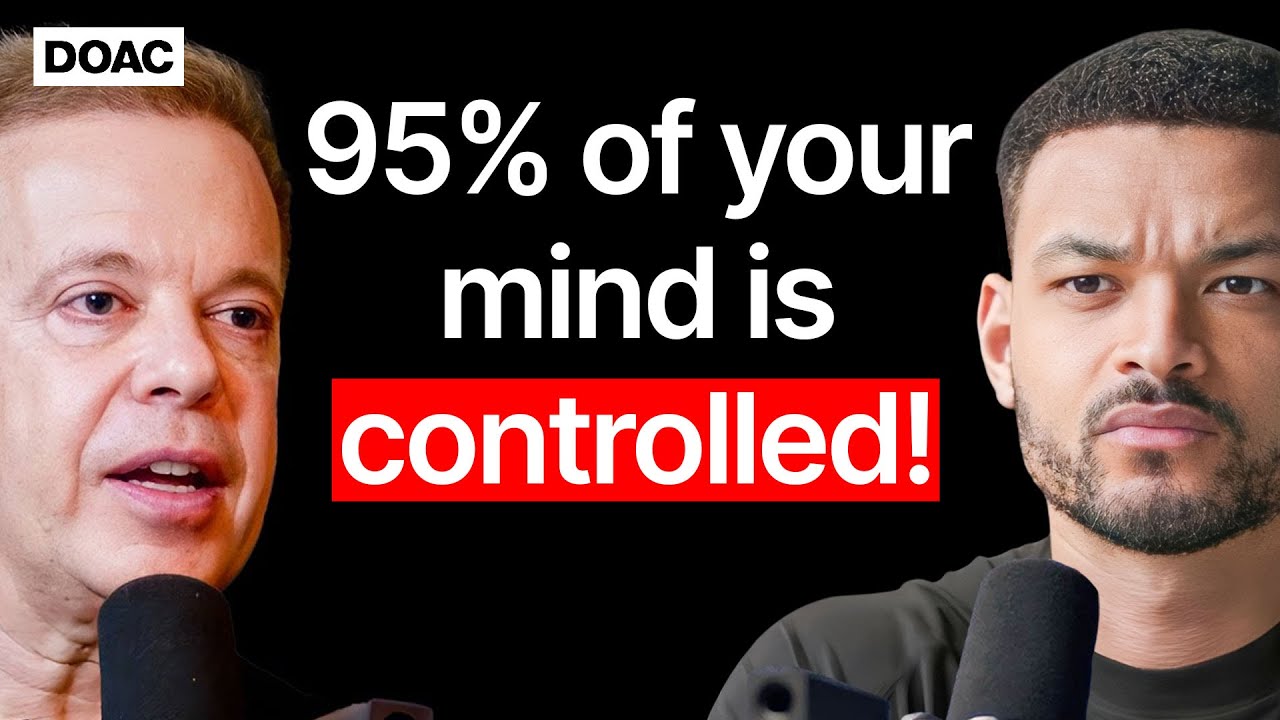
Most people live in a subconscious loop of past emotions, essentially remaining addicted to their own stress and limitations without realizing it. Dr. Joe Dispenza explains that by the age of 35, 95% of our identity is a set of memorized behaviors and emotional reactions that function like a computer program. To change your life, you must learn to step into the “unknown” and teach your body to feel a future that hasn’t happened yet.
Core Question: If our thoughts have the power to make us physically ill, can those same thoughts be harnessed to heal us?
Highlights
- By mid-adulthood, we are mostly a collection of automated habits, making conscious change a battle against the subconscious “autopilot.”
- Stress is an addictive state where we use external problems to reaffirm a familiar, albeit painful, internal chemical identity.
- Mental rehearsal can change the physical structure of the brain as effectively as physical practice, tricking the body into believing an event has already occurred.
- Research shows that seven days of immersive meditation can trigger profound shifts in gene expression, blood chemistry, and immune function.
⏱️ Reading time: approx. 12 minutes · Saves you about 108 minutes vs. watching.
Want to take notes while watching? Click the image below and let AI Notebook capture the key points for you 👇

The Programmed Self
Breaking the Habit of Being Yourself
By the time we reach 35, we are essentially a bundle of conditioned responses. We wake up, check our phones, and immediately reconnect to our problems, which are really just memories of the past. These memories trigger familiar emotions like guilt or anxiety, signaling the body to stay in a state of survival rather than creation.
If you keep thinking the same thoughts and making the same choices, your biology remains static. Neuroplasticity suggests that “nerve cells that fire together, wire together,” meaning your brain becomes a physical record of your past. To change, you must become so conscious of your unconscious thoughts that you no longer let them slip by unnoticed.
When you decide to change, your body will inevitably protest. It has been the “mind” for so long that it craves the familiar chemical rush of your old personality, even if that personality is miserable. This discomfort is the “River of Change,” and crossing it requires a massive amount of energy and conscious awareness to prevent falling back into the old program.

💡 Digging Deeper
Q: Why is it so hard to change after age 35?
A: Because 95% of our identity is then stored in the subconscious as a series of habits. The body has been conditioned to be the mind, making conscious willpower insufficient against the automated system.
Q: Is a habit always a bad thing?
A: Not at all. Habits are useful for things like driving or speaking a language. The problem arises when we habituate negative self-talk, blame, or victimhood, turning them into our default state of being.
Q: How do we start observing the “program”?
A: Through metacognition. By stepping back and observing your thoughts as if they belong to someone else, you exit the program and regain your free will as the observer.
The Science of Transformation
Mental Rehearsal and Biological Shifts
The brain does not know the difference between an actual experience in the world and an experience created by thought alone. In a famous study, people who mentally rehearsed piano scales for five days developed the same neurological changes as those who physically practiced. This proves that we can install the “hardware” for a new life simply by focusing our attention.
When we combine a clear intention with an elevated emotion—like gratitude or joy—we signal the body to change before the environment does. This is the essence of the “placebo effect” turned inward. You aren’t waiting for wealth to feel abundant; you are feeling abundant now, which eventually draws the experience of wealth toward you.
Recent research on seven-day retreats shows that participants experience a massive “pharmacy” of chemical changes within their own blood. Without drugs or diet changes, their bodies begin producing metabolites that fight cancer, suppress stress genes, and enhance the microbiome. The body literally moves into a new timeline.

💡 Digging Deeper
Q: Does mental rehearsal really work for physical health?
A: Yes. Dr. Dispenza cites cases of regrown thyroids and reversed stage-four cancers. If the mind can signal genes to create disease via stress, it can signal genes to create health via coherence.
Q: Why is gratitude so important in this process?
A: Gratitude is the ultimate state of receivership. We usually say “thank you” after something happens, so by feeling gratitude now, you convince your body that the desired future event has already occurred.
Q: What happens to the brain during these shifts?
A: It moves from “incoherence”—where different parts of the brain are firing out of sync due to stress—to “coherence,” where the entire brain functions as a unified, rhythmic network.
Survival vs. Creation
The Addiction to Stress
Most of humanity lives in a state of survival, characterized by the “fight or flight” response. While this was useful for escaping predators, modern humans activate it over a traffic jam or a coworker’s comment. This constant flood of adrenaline and cortisol becomes addictive, as people use their problems to feel a rush of energy.
When you are in survival mode, you become a materialist, focusing only on your body, your environment, and time. You try to force outcomes, manipulate people, and compete for resources. This state narrows your focus and creates separation, making it impossible to access the “quantum field” where all possibilities exist.
Breaking this addiction requires a “dark night of the soul” where you realize that your emotions are only hurting you. When you finally release a long-held emotion like resentment, the memory remains, but the chemical charge is gone. This is the definition of wisdom—memory without the emotional sting.

💡 Digging Deeper
Q: How do thoughts actually make us sick?
A: Stress hormones down-regulate genes and create disease. If you can turn on the stress response just by thinking about your problems, your thoughts are literally killing you.
Q: What is the “Quantum Field”?
A: It is an invisible field of energy and information that exists beyond our senses. It contains all potential realities, and we access it by becoming “no body, no one, no thing, in no place, and in no time.”
Q: Can we help others change?
A: The best way to help others is to be the living example of change. Information won’t enter a person’s system if it doesn’t match their current emotional state; they must be ready to “cross the river” themselves.
The Path to Coherence
Mastering the Morning Routine
The two best times to reprogram the subconscious are right when you wake up and just before you fall asleep. During these windows, your brain waves naturally slow down, bypassing the “analytical mind” that acts as a barrier to the subconscious. Instead of reaching for your phone and reacting to the world, you should use this time to set your internal state.
True meditation is about becoming “familiar with” yourself. You sit down and decide: “I will not get up until I feel like the person I want to become.” You rehearse how you will handle challenges, what thoughts you will no longer think, and what emotions you will choose to embody throughout the day.
If you can maintain that state of heart and brain coherence while your eyes are open, the world will start to respond to you. You’ll notice “synchronicities”—coincidences that seem too perfect to be random. This is the feedback from the universe telling you that your internal change is producing an external effect.

💡 Digging Deeper
Q: What is the role of the Pineal Gland?
A: It acts as a biological transducer. When activated, it picks up higher frequencies from the quantum field and converts them into vivid internal imagery, often described as a mystical experience.
Q: What should I do if I “lose it” during the day?
A: Don’t judge yourself. Just realize you’ve become unconscious and return to your chosen state. The goal is to “shorten the refractory period” of your emotional reactions.
Q: How long does it take to see results?
A: Significant biological changes are seen in just 7 days of immersion. However, daily practice is required to maintain those changes and prevent the environment from pulling you back into the old self.
Key Takeaways
The journey from being a victim of your circumstances to becoming the creator of your life begins with the realization that your personality creates your personal reality. Most of us are living in a “predictable future” based entirely on a “familiar past.” By consciously interrupting our automated thoughts and choosing new ones, we physically rewire our brains, creating a new neurological “hardware” that supports a different way of being.
Science is now the contemporary language of mysticism. We no longer have to rely on blind faith; we can look at brain scans and blood work to see that meditation produces measurable, life-saving changes. Whether you are dealing with chronic illness or a lack of purpose, the solution is the same: you must move beyond your current identity and enter the “fertile void” of the unknown, where all new possibilities are born.
Ultimately, the most important habit you can break is the habit of being yourself. This requires a daily commitment to “rehearsing” your future until your body accepts it as the present truth. When you reach a state of wholeness—where you no longer feel “lack” because your heart is full of the emotion of your future—you stop wanting and start creating. That is when the magic truly begins.
Q&A
Q1: Why do I feel worse when I first start trying to change?
A: This is the body’s withdrawal from its chemical addiction to stress. It is trying to pull you back into the “known” because the unknown feels dangerous to the survival-based ego.
Q2: Can I really heal my body without medicine?
A: The body has an innate “pharmacy” that produces powerful chemicals. While medicine has its place, research shows that changing your emotional state can trigger genetic expressions that promote healing from within.
Q3: Is meditation just “thinking positive”?
A: No. It is a biological process of slowing brain waves to access the subconscious operating system. Positive thinking fails if it stays in the conscious mind while the body is still “feeling” negative.
Q4: How do I know if my brain is “coherent”?
A: You will feel a sense of clarity, peace, and order. Incoherence feels like being “scattered” or overwhelmed, whereas coherence feels like your entire being is vibrating in a single, unified rhythm.
Q5: What if I have deep trauma from childhood?
A: Trauma can be unlearned. By overcoming the emotion associated with the memory, you strip the event of its power over your current biology, essentially “de-programming” the trauma.
Q6: What is the “River of Change”?
A: It is the neurological and chemical gap between your old self and your new self. It is a state of uncertainty where the old is gone but the new hasn’t arrived yet; staying in this gap is where true transformation happens.
Q7: Do I have to meditate for hours a day?
A: While Dr. Dispenza spends two hours, the key is the quality of the state change. Even a shorter session is effective if you truly reach a state of heart-brain coherence and emotional elevation.