📺 Today’s recommended deep-dive video: https://www.youtube.com/watch?v=i-4lil0OcH8
Beyond “Double-Jointed”: A Deep Dive into Ehlers-Danlos Syndromes and HSD
For many patients, chronic pain and “stretchy skin” are just the tip of the iceberg in a complex, multi-system journey through the connective tissue. Understanding the 2017 diagnostic reclassification is essential for navigating the shift from simple hypermobility to specific genetic syndromes.
Core Question: How do clinicians differentiate between the thirteen types of Ehlers-Danlos Syndrome and the broader Hypermobility Spectrum Disorders to ensure accurate diagnosis and multidisciplinary care?
Highlights
- The 2017 criteria refined 13 EDS types, emphasizing molecular confirmation for all but the hypermobile type.
- Classical EDS is defined by dramatic skin hyperextensibility and “fish-mouth” atrophic scarring on the shins.
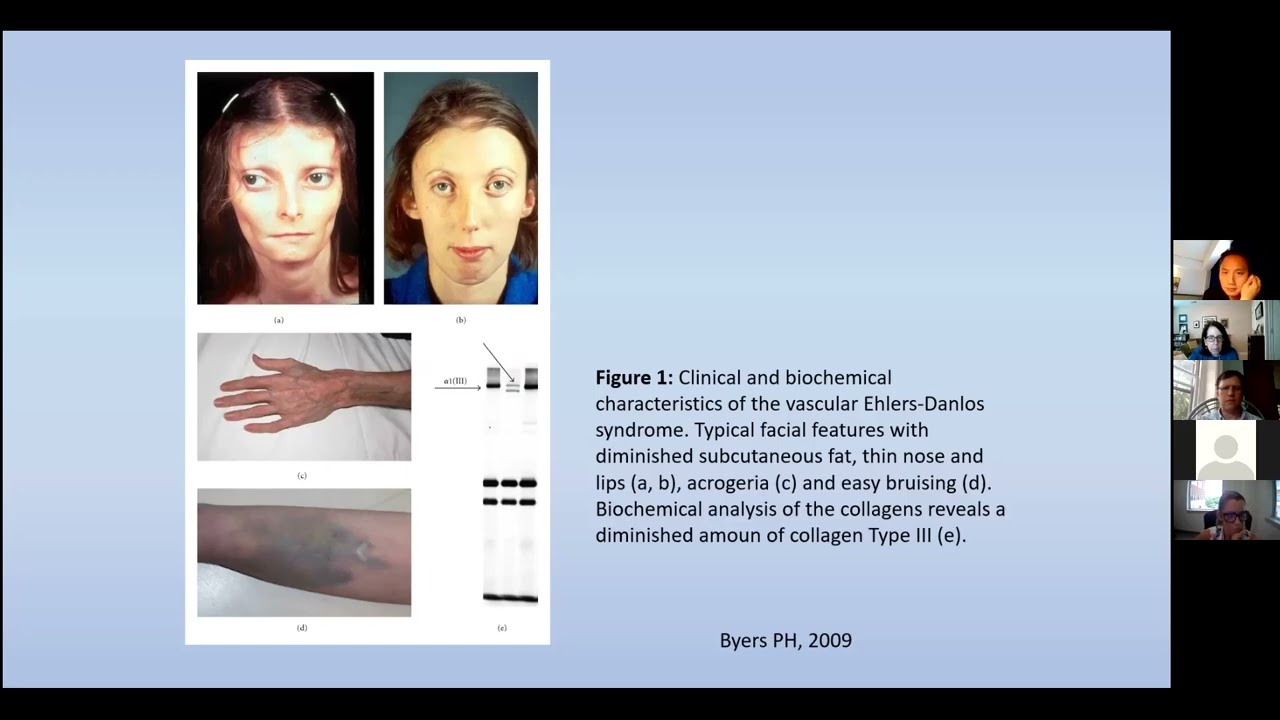
- Vascular EDS carries significant risks of arterial or organ rupture, often requiring specialized genetic screening.
- Hypermobility Spectrum Disorder (HSD) serves as a critical diagnostic category for symptomatic patients who do not meet the strict hEDS criteria.
⏱️ Reading time: approx. 10 minutes · Saves you about 33 minutes vs. watching.
Want to take notes while watching? Click the image below and let AI Notebook capture the key points for you 👇

The Building Blocks and the 2017 Shift
Collagen Architecture and Classification
Fibrillar collagens serve as the primary structural scaffolding for our extracellular matrix, involving a complex assembly of three alpha chains into a triple-helical molecule. When mutations occur in genes like COL5A1 or COL3A1, this scaffolding becomes compromised, leading to the systemic fragility characteristic of Ehlers-Danlos Syndromes. The 2017 reclassification was a pivotal moment, narrowing the diagnostic “net” to create more homogeneous groups for research while identifying 13 distinct types ranging from common to incredibly rare.
This transition from the older 1997 Villevranche criteria to the modern 2017 standards prioritized molecular evidence for almost every variant except the hypermobile type.
Most EDS forms are monogenic, meaning they arise from a defect in a single gene. These defects usually impact fibrillar collagen processing or the biosynthesis of molecules involved in the intracellular trafficking and secretion of the matrix.

💡 Digging Deeper
Q: How has the Beighton score assessment changed for different age groups?
A: The 2017 criteria adjusted cut-offs: a score of ≥6 is required for children, ≥5 for adults up to age 50, and ≥4 for those over 50.
Q: What defines “hyperextensible” skin in a clinical setting?
A: It is measured at specific sites; for example, the skin is hyperextensible if it stretches more than 1.5 cm on the forearm or 3 cm on the neck.
Q: Why was the 1997 classification considered “too wide a net”?
A: It allowed a diagnosis based on hypermobility or smooth skin alone, which failed to distinguish between simple flexibility and a systemic genetic syndrome.
The Three Faces of Common EDS
Distinguishing Classical, Vascular, and Hypermobile Types
Classical EDS is the “textbook” version, marked by skin that can be pulled well beyond normal limits. To meet the criteria, clinicians look for atrophic, “cigarette paper” scarring, particularly over bony prominences like the shins or knees, where the skin splits easily during childhood.
Vascular EDS represents the most life-threatening end of the spectrum, characterized by the risk of spontaneous arterial rupture or organ perforation. Unlike other types, these patients might not have generalized joint hypermobility; instead, their flexibility is often limited to the small joints of the hands and feet. Diagnosis often involves looking for specific facial features—prominent eyes and a thin nose—alongside a history of sigmoid colon perforation or unexplained pneumothorax.
Hypermobile EDS (hEDS) remains the only type without a known genetic marker, requiring a rigorous three-part clinical assessment to diagnose.
💡 Digging Deeper
Q: What is the significance of “Zebra Sauce”?
A: This is a patient nickname for a compounded analgesic cream containing Diclofenac, Gabapentin, and Lidocaine used to manage localized pain.
Q: Can Vascular EDS be diagnosed without the characteristic facial appearance?
A: Yes, the facial phenotype is suggestive but not present in every case; diagnosis rests on identifying a mutation in the COL3A1 gene.
Q: What are molluscoid pseudotumors?
A: These are fleshy, healed lesions frequently found over pressure points like the knees or elbows in patients with Classical EDS.
Exploring Rare Variants and the HSD Spectrum
From Tenascin X to Hypermobility Spectrum Disorders
Beyond the common types lie rare variants like Tenascin X deficiency, which mimics classical EDS but lacks atrophic scarring. These autosomal recessive conditions, along with others like the Kyphoscoliotic or Arthrochalasia types, demonstrate how diverse the molecular defects can be. For example, the Kyphoscoliotic type presents with severe muscle hypotonia and neonatal spine curvature, highlighting that EDS is far more than just “loose joints.”
For those who are symptomatic but fall short of the strict 2017 hEDS criteria, the category of Hypermobility Spectrum Disorders (HSD) provides a vital clinical home. This spectrum recognizes that localized or historical hypermobility can still cause significant pain and instability.
The distinction between hEDS and HSD is often a matter of meeting specific systemic checkboxes, though the clinical management of pain remains largely identical.

💡 Digging Deeper
Q: What causes the Kyphoscoliotic type of EDS?
A: A deficiency in the lysyl hydroxylase enzyme, caused by mutations in the PLOD1 gene, which prevents proper collagen cross-linking.
Q: How does Tenascin X deficiency differ from Classical EDS?
A: Patients with Tenascin X deficiency have hyperextensible skin but do not exhibit the atrophic “cigarette paper” scars seen in cEDS.
Q: What is “historical” hypermobility?
A: It refers to patients who were hypermobile as children or teenagers but have become stiffer with age, yet still suffer from related musculoskeletal issues.
The Multidisciplinary Challenge
Connecting the Issues through Connective Tissue
EDS is rarely confined to the joints, often manifesting as a “constellation” of issues across the gastrointestinal, neurological, and immunological systems. Patients frequently struggle with orthostatic intolerance, irritable bowel syndrome, and even Mast Cell Activation Syndrome (MCAS), which causes systemic allergic-like reactions to food and environment.
Neurological complications can be particularly debilitating, ranging from Chiari malformations to cervical-medullary syndrome. Symptoms like “brain fog,” dizziness, and difficulty swallowing often point toward cranio-cervical instability. Managing these complex cases requires a “Connective Tissue” mindset, where the clinician looks for the underlying thread of laxity that ties together seemingly unrelated symptoms like bladder frequency and chronic headaches.
Stabilizing the joints through aquatic physical therapy and bracing is the cornerstone of treatment, provided patients remain active to avoid muscle atrophy.

💡 Digging Deeper
Q: Why is Botox risky for EDS patients with neck pain?
A: If the neck muscles are too weak or paralyzed by Botox, the patient may lose the ability to hold their head up for several months.
Q: What is the relationship between EDS and the bladder?
A: Issues can range from interstitial cystitis (linked to mast cells) to “tethered cord” syndrome, which affects urinary urgency and frequency.
Q: How does physical therapy differ for EDS patients?
A: It should emphasize “toning and strengthening” to stabilize joints rather than stretching, often starting with aquatic therapy to reduce joint load.
Key Takeaways
The 2017 reclassification of Ehlers-Danlos Syndromes transformed the diagnostic landscape from a vague collection of symptoms into a structured framework of 13 molecularly-defined types. While the hypermobile type remains a clinical diagnosis, the emphasis has shifted toward recognizing the systemic nature of these disorders, moving beyond “double-jointedness” to address the fragility of internal organs, blood vessels, and the autonomic nervous system.
Clinicians must adopt a “connective tissue” mindset to treat the whole patient.
This involves recognizing that a patient’s migraines, digestive issues, and joint dislocations are not isolated problems but are likely linked by the same underlying extracellular matrix defect. Effective management requires a lifelong, multidisciplinary approach that balances physical rehabilitation, pharmacological support, and specialized screenings for high-risk variants like Vascular EDS.
Q&A
Q1: What are the three major criteria for Classical EDS?
A1: The major criteria are skin hyperextensibility, significant atrophic scarring, and generalized joint hypermobility (GJH).
Q2: Which gene is typically mutated in Vascular EDS?
A2: Approximately 95% of cases are caused by a pathogenic variant in the COL3A1 gene, which encodes type III collagen.
Q3: Is there a genetic test for the hypermobile type of EDS?
A3: No, hEDS is currently the only form of EDS that does not have a known molecular or genetic explanation and remains a clinical diagnosis.
Q4: What is the “five-point questionnaire”?
A4: It is a screening tool used to assess historical hypermobility; a person scoring 2 or more can meet hypermobility criteria even if their current Beighton score is slightly below the cut-off.
Q5: What are the risks of cervical-medullary syndrome?
A5: This syndrome can cause headaches, vision changes, difficulty swallowing, and balance issues due to instability at the cranio-cervical junction or Chiari malformation.
Q6: How does Arthrochalasia EDS present at birth?
A6: It is primarily characterized by congenital bilateral hip dislocation and severe joint laxity.
Q7: What role do mast cells play in EDS?
A7: Mast Cell Activation Syndrome (MCAS) is a frequent comorbidity where mast cells inappropriately release chemicals, leading to hives, GI distress, and systemic inflammation.