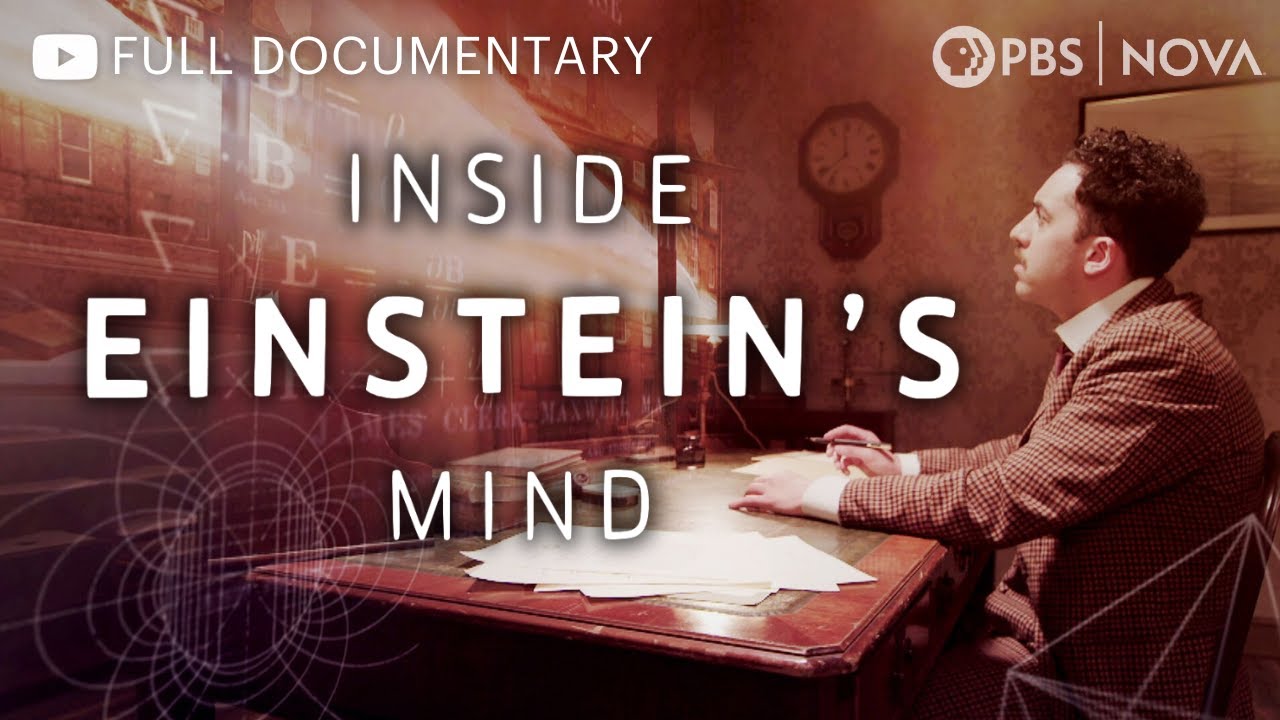
📺 Today’s recommended deep-dive video: https://www.youtube.com/watch?v=WXOz9HHaO3I
Bending the Fabric of Reality: The Genius of General Relativity
A century ago, a lone patent clerk reimagined the very architecture of the universe, turning gravity from a mysterious force into a geometric curve. Albert Einstein’s journey through thought experiments revealed that space and time are not a static stage, but a dynamic fabric shaped by the matter within it.
Core Question: How did Einstein’s visual thought experiments transform our understanding of gravity from a Newtonian force into the curvature of spacetime?
Highlights
- The “Equivalence Principle” shows that gravity and acceleration are physically identical.
- Spacetime is a four-dimensional continuum where mass dictates geometry.
- Experimental proofs range from the 1919 solar eclipse to modern GPS satellite corrections.
- General Relativity remains the foundation for understanding black holes and the Big Bang.
⏱️ Reading time: approx. 8 minutes · Saves you about 45 minutes vs. watching.
Want to take notes while watching? Click the image below and let AI Notebook capture the key points for you 👇

The Loner with a Visual Mind
From Compass Needles to Light Waves
Einstein was never a typical prodigy; he was a slow speaker who preferred building intricate card towers to social interaction. This solitary nature allowed him to develop a unique mental toolkit, where he processed the world through vivid, internal imagery rather than dry mathematical symbols.
His father’s gift of a simple pocket compass sparked a lifelong obsession with invisible forces that could move matter without physical contact. This early curiosity, fueled by childhood books describing journeys through electrical wires, led him to treat physics as a series of visual narratives.
By the age of sixteen, while his peers were occupied with more typical teenage concerns, Einstein was agonizing over a specific mental puzzle: what would happen if he could catch up with a light wave? This specific anxiety, which he claimed made his palms sweat, became the foundational question of his revolutionary career.

💡 Digging Deeper
Q: Why did Einstein struggle in traditional school settings?
A: He hated the rigid discipline and rote memorization of the German school system, often cutting classes to study the physics journals he found more compelling.
Q: How did the patent office help his scientific work?
A: The job required him to visualize how mechanical inventions functioned from technical drawings, which sharpened his ability to conduct “thought experiments” in his head.
Q: What was the primary contradiction Einstein sought to solve?
A: He noticed that Isaac Newton’s laws of motion clashed with James Clerk Maxwell’s theories of electromagnetism regarding the speed of light.
From Lightning Bolts to Spacetime Curves
The End of Absolute Time
Working in the Bern patent office, Einstein realized that time is not a universal constant that ticks away at the same rate for everyone. Through a thought experiment involving a train and lightning bolts, he demonstrated that two people moving at different speeds will never agree on whether two events happened simultaneously.
This realization destroyed the 200-year-old Newtonian vision of a clockwork universe where time was absolute.
His “happiest thought” occurred when he realized that gravity and acceleration are essentially the same thing. If you were trapped in a windowless box floating in space and it was suddenly accelerated upward, the sensation of being pressed to the floor would be indistinguishable from the pull of Earth’s gravity. This “Equivalence Principle” suggested that gravity isn’t a force reaching out to grab objects, but rather the result of our movement through a warped environment.

💡 Digging Deeper
Q: What does “Special Relativity” specifically cover?
A: It deals with objects moving at constant speeds and establishes that the laws of physics are the same for all observers, with light as the universal speed limit.
Q: How does mass affect the “spaghetti strands” of spacetime?
A: Every object creates a world-line trail through the spacetime block; heavy mass curves these trails, forcing nearby objects to follow a bent path we perceive as gravity.
The Race for the Field Equations
Sculpting the Geometry of the Cosmos
The transition from a grand idea to a mathematical reality was a brutal, decade-long struggle that nearly pushed Einstein to a mental breaking point. Because he lacked the advanced geometry required to describe curved four-dimensional surfaces, he had to rely on his friend Marcel Grossman to help him master non-Euclidean mathematics.
Gravity, he eventually concluded, is not something that happens in space, but something that happens to space.
As World War I ravaged Europe, Einstein found himself in a frantic race against the brilliant mathematician David Hilbert to finalize the theory’s equations. The pressure was suffocating, compounded by a collapsing marriage and the isolation of wartime Berlin, yet he emerged in November 1915 with a compact formula: $G{munu} = T{munu}$. This simple-looking equation linked the energy and momentum of matter directly to the geometric curvature of the universe.
💡 Digging Deeper
Q: Why was the orbit of Mercury so important to Einstein?
A: Newton’s equations couldn’t explain a slight wobble in Mercury’s orbit; Einstein’s new theory predicted it perfectly, providing the first proof he was right.
Q: Who was David Hilbert in relation to Einstein?
A: Hilbert was one of the world’s greatest mathematicians who nearly beat Einstein to the final equations after Einstein shared his progress during a lecture.
A Century of Empirical Validation
From Solar Eclipses to GPS
The world truly took notice of Einstein in 1919 when astronomer Arthur Eddington traveled to Africa to photograph a solar eclipse. By observing stars near the sun’s edge, Eddington proved that the sun’s mass actually bent the path of incoming starlight, exactly as Einstein had predicted.
Einstein became an overnight global celebrity, the “icon of genius” whose face would eventually define the 20th century.
Modern technology continues to validate his brilliance with incredible precision. Atomic clock experiments on mountain tops prove that time actually runs faster as you move away from Earth’s mass. Even the GPS systems we use every day would be off by several miles within 24 hours if their software didn’t account for the relativistic time differences between the satellites and the ground.

💡 Digging Deeper
Q: What are gravitational waves?
A: They are literal ripples in the fabric of spacetime caused by violent cosmic events, like two black holes colliding billions of light-years away.
Q: Did Einstein believe in black holes?
A: Although his theory predicted them, he originally found the concept so bizarre that he doubted they could actually exist in the physical universe.
Key Takeaways
General Relativity redefined the universe as a dynamic fabric rather than a static void. By replacing the Newtonian idea of gravity-as-force with gravity-as-geometry, Einstein showed that matter tells space how to curve, and space tells matter how to move. This two-way traffic is the fundamental rule governing everything from the fall of an apple to the expansion of the entire cosmos.
This theory is not merely an academic exercise; it is a practical necessity. Our modern world, which relies on satellite communication and precise navigation, would be impossible without the corrections derived from Einstein’s field equations.
Despite its monumental success, the theory remains a beautiful, incomplete masterpiece. It perfectly describes the massive world of stars and galaxies but fails to align with the quantum mechanics of the subatomic world. The next great revolution in physics will likely involve bridging this gap, finding a “Theory of Everything” that Einstein sought until the final days of his life.
Q&A
Q1: Can anything travel faster than the speed of light?
A1: According to General Relativity, light is the ultimate speed limit of the universe, and nothing with mass can reach or exceed it.
Q2: How does gravity affect time?
A2: Gravity slows time down; the stronger the gravitational pull (the closer you are to a massive object), the slower a clock will tick compared to a clock in weaker gravity.
Q3: What exactly is “spacetime”?
A3: It is a four-dimensional mathematical model that combines the three dimensions of space with the one dimension of time into a single, unified continuum.
Q4: Why was Einstein in a race with David Hilbert?
A4: After Einstein presented his preliminary ideas, Hilbert realized the mathematical potential and began working on the field equations himself, nearly finishing them first.
Q5: What is dark energy?
A5: It is a mysterious force discovered in the 1990s that appears to be pushing the universe to expand at an accelerating rate, fitting into Einstein’s equations as a “cosmological constant.”
Q6: What happens inside a black hole?
A6: At the center lies a singularity where curvature becomes infinite and our current laws of physics—including Einstein’s—break down.
Q7: What is the “Equivalence Principle”?
A7: It is the realization that the physical effects of gravity are identical to the effects of acceleration, forming the conceptual bridge Einstein needed to build General Relativity.