📺 Today’s recommended deep-dive video: https://www.youtube.com/watch?v=cdZZpaB2kDM
The Musk Manifesto: Engineering a Radical Future for Humanity
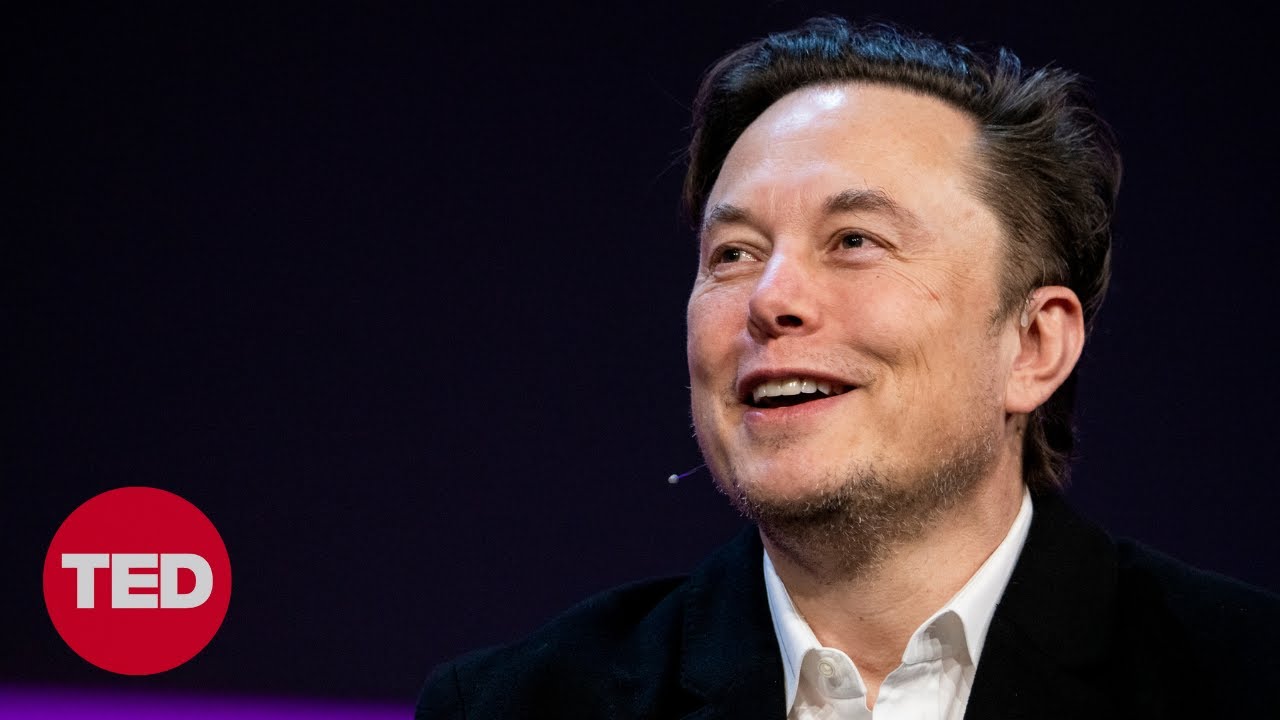
Elon Musk sits down at TED 2022 to discuss the “manufacturing hell” of Tesla, his controversial bid for Twitter, and why the future of labor belongs to humanoid robots. He reveals the philosophical drive behind his companies: a pathological obsession with truth and the expansion of human consciousness.
Core Question: Can humanity transition to a world of abundance by solving real-world AI and scaling sustainable energy to a planetary level?
Highlights
- The AI Pivot: Why solving Full Self-Driving (FSD) is the prerequisite for the Optimus humanoid robot.
- Twitter as a Town Square: The plan to open-source the algorithm and eliminate bot armies to restore public trust.
- The 300 TWh Goal: The massive scale of battery production required to fully transition the global economy to sustainable energy.
- First Principles Philosophy: How Asperger’s and The Hitchhiker’s Guide to the Galaxy shaped Musk’s approach to physics and life.
⏱️ Reading time: approx. 8 minutes · Saves you about 47 minutes vs. watching.
Want to take notes while watching? Click the image below and let AI Notebook capture the key points for you 👇

From Four Wheels to Two Legs: The AI Evolution
Solving the Real-World Vision Problem
Elon Musk admits that predicting the timeline for Full Self-Driving has been his most humbling challenge. The difficulty lies in the “logarithmic curves” of progress, where developers frequently hit ceilings of diminishing returns that require entirely new architectures to overcome.
Because our road networks are designed for biological neural nets and eyes, silicon systems must master real-world AI and sophisticated vision to navigate safely.
If you can solve AI for a car—which Musk describes as essentially a robot on four wheels—you have already built the foundation for a humanoid robot. The logic follows that the transition from automotive to humanoid forms is simply a matter of specialized actuators and scaling manufacturing, two areas where Tesla already possesses a significant lead over traditional robotics firms.
💡 Digging Deeper
Q: Why has FSD been so much harder to predict than Tesla sales?
A: Sales follow relatively predictable growth patterns, but FSD hits “false dawns” where a system looks solved until it encounters a complex edge case it cannot generalize.
Q: Will the Optimus robot be safe?
A: Musk proposes a localized ROM chip for safety, containing a “stop” command that cannot be updated over the air, ensuring a physical kill switch.
The Battle for the Digital Town Square
Transparency as the Antidote to Distrust
Musk’s interest in Twitter is framed not as a financial venture, but as a civilizational necessity. He argues that for a democracy to function, the “de facto town square” must be maximally trusted and broadly inclusive, operating within the bounds of the law rather than the whims of hidden moderators.
His primary prescription for Twitter is a move toward radical transparency.
By open-sourcing the algorithm and hosting the code on GitHub, Musk believes the public can critique and suggest improvements to how tweets are promoted or demoted. This would eliminate the “black box” nature of social media, where manual interventions or algorithmic biases remain invisible to the user base, fueling conspiracy and division.
Beyond code, Musk is obsessed with the “signal-to-noise” ratio on the platform. He identifies the elimination of “spam and scam bots” as a top priority, suggesting that these bot armies distort public perception and make the product significantly worse for actual humans.

💡 Digging Deeper
Q: How will the proposed “Edit Button” work without being exploited?
A: Musk suggests a short edit window and potentially zeroing out retweets and favorites once a post is changed to prevent “bait-and-switch” tactics.
Q: Is Musk a “free speech absolutist”?
A: While he uses that term, he clarifies that the platform must abide by the laws of the land, though he prefers “timeouts” over permanent bans for gray-area speech.
Manufacturing Hell and the Path to Abundance
The Physics of Planetary Scaling
Tesla’s survival was never guaranteed; Musk describes the 2017-2019 period as “three years of hell” where the company sat on the ragged edge of bankruptcy. He lived on the factory floor in Fremont and Nevada, obsessing over every part of the production line, asserting that he now knows more about manufacturing than anyone currently alive.
Reaching volume production is the “actual hard thing” that almost every automotive startup fails to achieve.
To transition the world to sustainable energy, Musk estimates humanity needs approximately 300 terawatt-hours of battery storage. This staggering figure covers the total electrification of transport, the power grid, and heating/cooling systems. It represents a thousand-fold increase over current capacity, a goal that requires a massive, coordinated scale-up of raw material processing and eventual battery recycling.

💡 Digging Deeper
Q: Why is “scale” the focus of the new Master Plan?
A: Because press releases don’t change the climate; only the “tonnage” of batteries produced and deployed can fundamentally shift the global economy away from fossil fuels.
Q: What happens to old batteries?
A: Musk emphasizes that a dead battery pack is “high-grade ore,” worth about $1,000 in raw materials, making recycling an economic inevitability once the fleet matures.
Key Takeaways
The conversation reveals a man who views the world through the lens of first-principles physics and information theory. Musk’s drive isn’t fueled by traditional business metrics but by a “pathological obsession with truth.” This worldview, shaped by a difficult childhood and a self-described literalist interpretation of social cues, allows him to ignore industry conventions and focus entirely on what is scientifically possible.
Musk’s vision for the future is one of radical abundance, where labor shortages are solved by humanoid robots and energy is provided by a massive, sustainable battery grid. While his timelines are often aggressive, his track record with Tesla and SpaceX suggests that even if he is late, the destination usually remains the same. The underlying philosophy is simple: expand the scope and scale of consciousness so that we may better understand the universe and the questions it poses.
Q&A
Q1: What is the primary purpose of the Optimus robot?
A: It is designed to perform tasks that are dangerous, boring, or repetitive—essentially any job that people do not want to do. Eventually, it could serve as a household companion or butler.
Q2: Why does Musk want to buy Twitter?
A: He believes a public platform that is maximally trusted and broadly inclusive is extremely important to the future of civilization and the function of democracy.
Q3: How did Asperger’s affect Musk’s development?
A: He noted that social cues were not intuitive, leading him to take things very literally and spend his time reading books or programming computers, which he found more rewarding than social interaction.
Q4: What was the “worst business decision” Musk ever made?
A: Not starting Tesla originally with only J.B. Straubel, which led to complex legal and narrative disputes with other co-founders.
Q5: What is the “300 Terawatt-Hour” goal?
A: It is the estimated amount of battery storage required to transition the entire global economy—including all transport and heating—to sustainable energy.
Q6: Does Musk believe the future will be good?
A: He is an optimist who believes we must fight for a future that makes us excited to wake up in the morning, rather than just solving one miserable problem after another.
Q7: What book most influenced his philosophy?
A: The Hitchhiker’s Guide to the Galaxy, which taught him that framing the right question is more important and difficult than finding the answer.