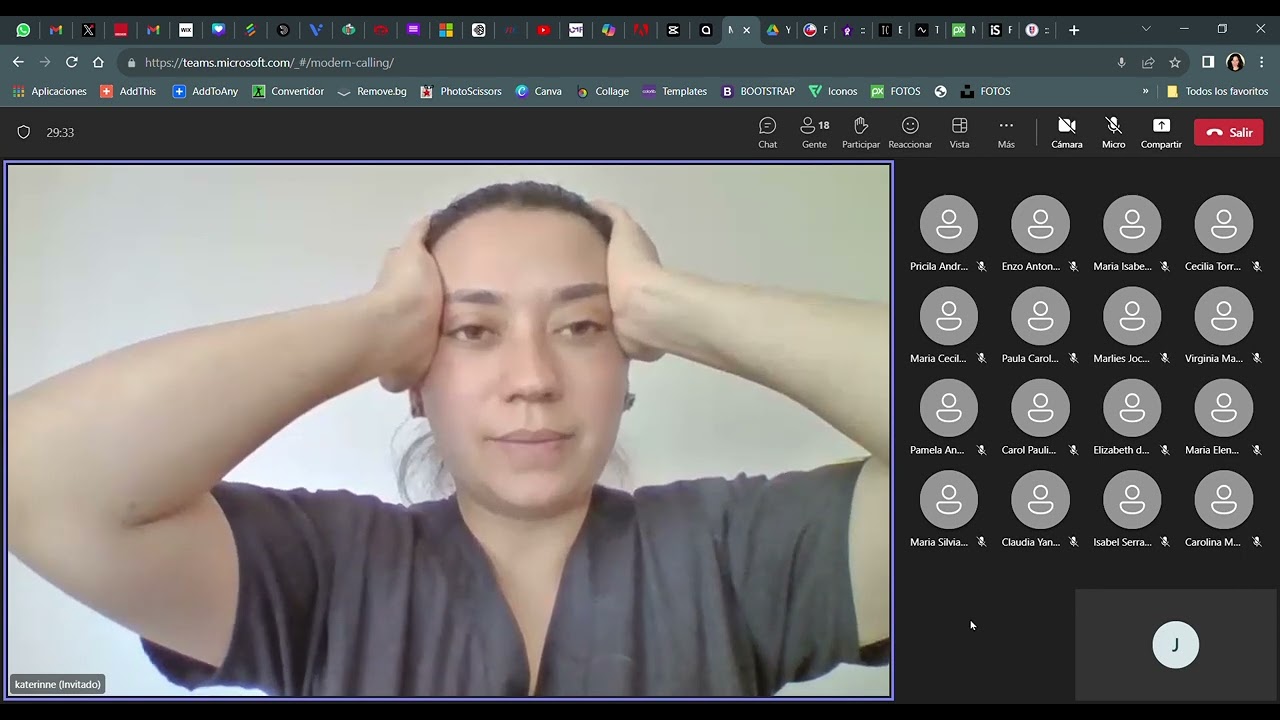
📺 Today’s recommended deep-dive video: https://www.youtube.com/watch?v=9MVLER7FrKI
Eyes Wide Open: Mastering Facial Yoga for the Periocular Zone
Learn how to tone the delicate muscles around your eyes to eliminate crow’s feet and reduce puffiness. This guide covers the essential sequence of lymphatic activation, targeted resistance training, and specialized massage for a refreshed, youthful look.
Core Question: How can a specific sequence of facial yoga exercises and drainage techniques effectively rejuvenate the eye area?
Highlights
- The importance of activating lymph nodes before any facial exercise to prevent fluid buildup.
- Five distinct resistance exercises targeting the upper lid, lower lid, and the entire orbicular muscle.
- The transition from strengthening (no oil) to relaxation massage (requires oil or serum).
- Correct lymphatic drainage directions to specifically reduce “bags” and morning inflammation.
⏱️ Reading time: approx. 6 minutes · Saves you about 50 minutes vs. watching.
Want to take notes while watching? Click the image below and let AI Notebook capture the key points for you 👇

The Foundation of Eye Rejuvenation
Understanding the Orbicular Oculi
Facial yoga isn’t just about looks; it’s a preventative treatment that tones muscles and activates the parasympathetic system to melt away daily stress. By focusing on the periocular zone, we target the orbicular oculi, a sphincter-like muscle that encircles the eye.
The orbicular muscle functions like a round fiber that tightens to close the eye and relaxes to open it. When this muscle stays chronically tight due to constant expression, squinting, or stress, it creates permanent “crow’s feet” that linger even when your face is supposedly at rest. Working this muscle helps restore its natural length and elasticity.
Before touching the eyes, you must activate the lymph nodes in the forehead, ears, and neck using three gentle pumps or rotations coordinated with deep exhalations. This prepares the “drainage pipes” of your face, ensuring that any fluid mobilized during the exercises has a clear path to exit, which is vital for reducing morning inflammation.

💡 Digging Deeper
Q: Why do I need to breathe specifically during activation?
A: Coordinating movements with exhalation helps stimulate the parasympathetic nervous system, enhancing the relaxation effect of the practice.
Q: Can I skip the lymph node activation?
A: It is not recommended; skipping this step can lead to temporary puffiness as fluids have nowhere to drain after the muscles are stimulated.
Q: What is the primary cause of crow’s feet?
A: They are formed by the chronic shortening of the orbicular muscle fibers combined with a loss of skin elasticity over time.
Building Strength: 5 Resistance Exercises
Targeting the Lids and Orbit
Always perform two series of 20 to 25 repetitions for each movement, allowing for a 90-second rest period between sets to prevent excessive muscle fatigue. During the strengthening phase, you should not use oils or creams, as your fingers need a firm, non-slip grip on the skin to provide adequate resistance.
The “V” resistance exercise is specifically designed for the lower eyelid by placing the middle finger at the inner corner and the index at the outer edge. By applying light resistance while attempting to blink, you force the lower portion of the orbicular muscle to work against your fingers, which helps firm up the area where bags usually form.
For a more comprehensive workout, use your palms on your temples to pull slightly outward while blinking slowly and intentionally. This technique engages the entire eye area at once, providing a deeper sense of warmth and activation that many beginners feel immediately after their first set.

💡 Digging Deeper
Q: Why does my eye twitch during the exercises?
A: These are muscle fibrillations caused by activating a tight or fatigued muscle; it’s a sign that you are effectively engaging the fibers.
Q: Should I blink fast?
A: No, the movements must be slow and controlled: contract, hold for one second, and then release for maximum quality.
Q: How do the ‘Goggles’ exercise differ from the ‘V’ exercise?
A: The ‘Goggles’ position uses the entire hand to encircle the eye socket, providing resistance to both the upper and lower lids simultaneously.
Relaxation and Decongestion
Massaging for Muscle Length
Once the strengthening phase is complete, you must transition to relaxation using a non-comedogenic oil or a facial serum to facilitate smooth finger gliding. Massaging without lubrication can pull on the delicate skin, potentially causing more harm than good during these deep relaxation movements.
The expansion technique involves placing the index fingers on the upper and lower lids and gently drawing them apart to stretch the fibers of the orbicular muscle. This is followed by “pincers,” where you lightly grab the muscle and skin between your thumb and forefinger, moving rhythmically around the eye socket to release the tension accumulated from hours of screen time.
Using your knuckles provides a deeper, more structural massage that follows the orbital bone to reach the attachments of the muscle. However, you must be careful not to apply direct pressure to the eyeball itself, focusing instead on the bony ridge that surrounds it.

💡 Digging Deeper
Q: How long should each massage last?
A: Aim for one to one-and-a-half minutes per technique to allow the muscle fibers time to respond and relax.
Q: Is it normal to feel slight pain during the massage?
A: A mild “good” pain is normal if the muscle is tight, but it should never be sharp or cause bruising.
Q: Can I do the massage every day?
A: Yes, while resistance training should be limited to 2-3 times a week per area, relaxation massage can be part of your daily skincare routine.
Key Takeaways
The secret to a successful facial yoga practice lies in the specific order of operations: activation, strengthening, relaxation, and drainage. By first opening the lymphatic pathways, you ensure that the increased blood flow from the exercises doesn’t result in stagnant fluid. The periocular area is particularly sensitive to this, which is why the final drainage step—moving fluid toward the ears—is essential for those struggling with under-eye bags.
Consistency is more important than intensity when it comes to facial muscles. You do not need to perform every single exercise every day; rather, choosing one or two resistance moves and pairing them with daily massage will yield better long-term results than an occasional, exhaustive session. Remember to always clean your skin thoroughly after using oils for the massage phase to prevent clogged pores.
Q&A
Q1: Do I need special creams for the strengthening exercises?
A1: No, strengthening exercises should be done on dry skin so your fingers can provide steady resistance without slipping.
Q2: Will these exercises help with dark circles?
A2: If the circles are caused by poor circulation or fluid retention, yes, as the movements increase oxygenation and drainage.
Q3: How often should I perform the resistance sets?
A3: It is best to work a specific muscle group only two or three times per week to allow for muscle recovery and growth.
Q4: What if I have fat-based bags under my eyes?
A4: Facial yoga is most effective for fluid-based swelling; fat-based deposits may see skin-firming benefits, but the fat itself will not be “drained.”
Q5: In which direction should I perform the final drainage?
A5: You should always move from the inner corner of the eye toward the outer edge, directing the fluid toward the lymph nodes in front of the ears.
Q6: Can I do these exercises while wearing makeup?
A6: It is better to have a clean face, especially for the massage and drainage phases, to avoid pushing debris into the pores.
Q7: Can I do this routine in the morning?
A7: Absolutely; the drainage and massage portions are particularly effective at reducing the facial puffiness often experienced upon waking.