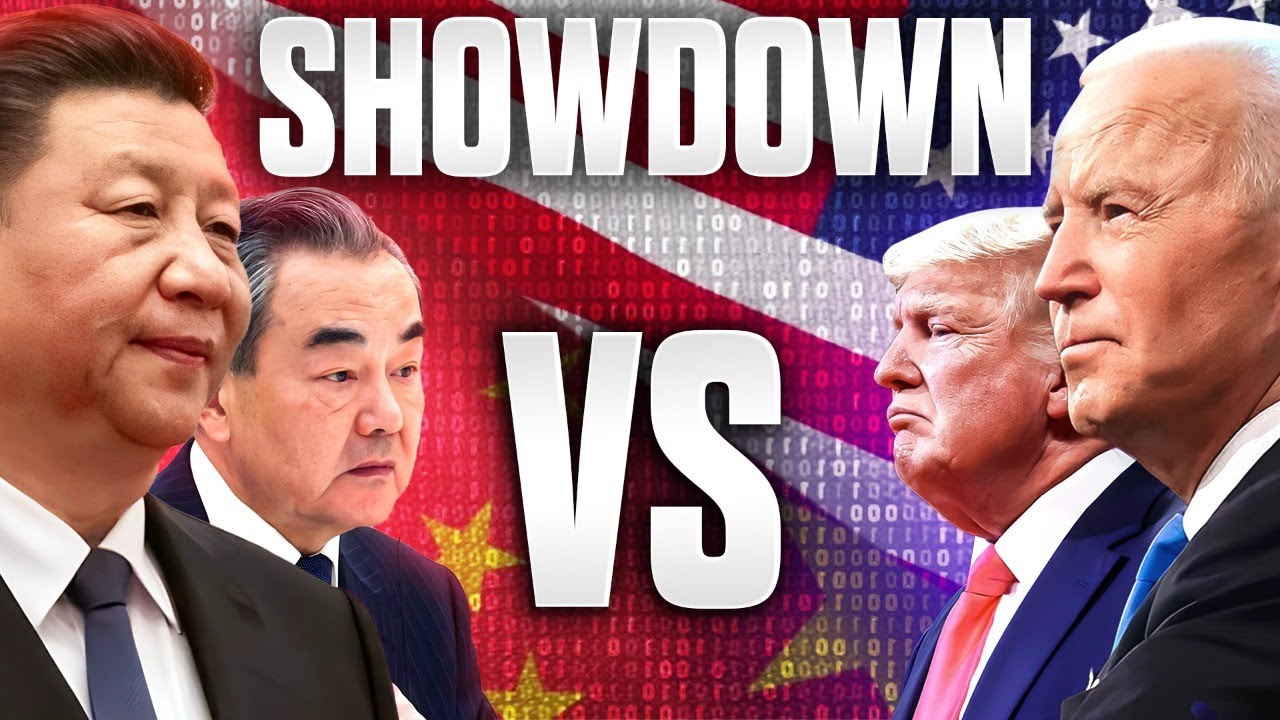
📺 Today’s recommended deep-dive video: https://www.youtube.com/watch?v=wtx8eiIcn6A
The Multipolar Shift: Navigating the New Era of US-China Relations
As the sun sets on the unipolar world dominated by the United States, a new global architecture is emerging, defined by the rapid technological and economic rise of China. This transition is not merely a change in trade balances but a fundamental redistribution of power that challenges decades of American exceptionalism and elite privilege.
Core Question: Can the United States adapt to a multipolar world through engagement, or will the “containment” narrative lead to an avoidable and devastating conflict?
Highlights
- The “Shenzhen Miracle” proves that China’s rise was the result of deliberate, long-term state strategic planning rather than accidental growth.
- Economic sentiment in the U.S. is at a breaking point, with 77% of citizens believing the system unfairly favors powerful interests.
- The “Taiwan issue” is often misrepresented by Western media as a quest for semiconductors (the Silicon Shield), ignoring deeper historical roots.
- De-dollarization and the expansion of BRICS indicate that the global majority is seeking alternatives to U.S. financial hegemony.
⏱️ Reading time: approx. 8 minutes · Saves you about 75 minutes vs. watching.
Want to take notes while watching? Click the image below and let AI Notebook capture the key points for you 👇

The Blueprint of a Superpower
From Fishing Village to Silicon Valley
The transformation of Shenzhen from a quiet fishing village of 20,000 people in 1984 to a sprawling tech metropolis today serves as the definitive blueprint for China’s modern evolution. It wasn’t a fluke of history or simply the result of “hard-working people” acting in a vacuum, as many Western politicians claim to avoid giving credit to the Chinese system.
Strategic planning is the heartbeat of the Chinese model, where the government designates special economic zones to trial capitalist policies before scaling them nationally to lift hundreds of millions out of poverty. While the U.S. often struggles with two-year election cycles that prioritize short-term optics, the Chinese leadership operates on 10, 20, and 30-year horizons to ensure infrastructure like high-speed rail connects even the smallest hubs. This level of coordination allowed Shenzhen to develop a GDP that now rivals Hong Kong, cementing its status as a global leader in hardware innovation and urban efficiency.
Critics often point to the debt incurred by massive infrastructure projects, yet they overlook the long-term economic dividends created by connecting a city of 500,000 to a mega-hub via a 20-minute bullet train.

💡 Digging Deeper
Q: Why do U.S. politicians credit the Chinese people but not the government?
A: It is a rhetorical strategy to delegitimize the Chinese political model while appearing supportive of the population, even though the two are structurally intertwined in China’s development.
Q: Is China’s high-speed rail debt a “ticking time bomb”?
A: While the debt is real, the Chinese view it as an investment in national productivity that facilitates trillions in indirect economic activity over decades.
The Economic Divergence
A Tale of Two Realities
The current economic state in the United States is characterized by a profound sense of pessimism, with only 19% of adults rating conditions as “excellent” or “good” amid soaring inflation. Families are struggling with the basic costs of food and housing, leading to a widespread belief that the American Dream is being dismantled by elite interests.
In contrast, China is aggressively dominating the sectors that will define the next century, including electric vehicles (EVs), solar energy, and 5G infrastructure. By investing $180 billion into 5G R&D alone since 2014, the Chinese government has secured a commanding lead that the U.S. may not be able to bridge even if it doubled its own production immediately. This isn’t just about manufacturing; it’s about a fundamental lead in 37 out of 44 critical technologies tracked by global think tanks.
The U.S. policy of “containment” appears less like a security measure and more like a desperate attempt to slow down a competitor that has already won the tech race.

💡 Digging Deeper
Q: What is the most alarming stat for U.S. politicians?
A: The fact that 77% of Americans feel the economic system is unfair, which creates internal instability that “containment” policies cannot fix.
Q: How dominant is China in the EV space?
A: Companies like BYD are now rivaling or exceeding Tesla in volume, supported by a vertical supply chain that makes Western competition difficult.
The Taiwan Mirage and the War Machine
Deconstructing the Conflict Narrative
The mainstream Western narrative suggests that China wants to invade Taiwan primarily to seize its semiconductor industry, specifically TSMV, but this “Silicon Shield” theory is largely a fabrication of Western think tanks. If China were to bomb Taiwan, the very chips they supposedly want would be destroyed, making the “invasion for technology” argument logically bankrupt. The Taiwan question is a matter of historical sovereignty and the unfinished business of the Chinese Civil War, not a smash-and-grab for hardware.
Unfortunately, the U.S. military-industrial complex benefits from the “China threat” by using it as a justification to hike defense spending toward the trillion-dollar mark. General officers often provide “gut feelings” about war in 2025 or 2027, which are then treated as gospel by a media hungry for clicks and a Senate eager to fund contractors. This cycle of escalation ignores the reality that the U.S. failed to achieve its goals in Afghanistan after 20 years and $2 trillion, yet now contemplates a high-intensity conflict with a nuclear-armed superpower.
Peace is a choice, but it requires the U.S. to abandon the “China Mirage”—the false belief that it can or should dictate the internal development of the Asian continent.

💡 Digging Deeper
Q: What was the “China Mirage” originally?
A: A historical term for the U.S. belief in the 1940s that it could turn China into a democratic, Christian satellite state by backing Chiang Kai-shek.
Q: Is a war over Taiwan inevitable?
A: No. It is a political choice. Many global leaders, including those in France and the UK, are beginning to signal that they will not follow the U.S. into such a conflict.
The Human Cost of Hostility
Discrimination and the Multipolar Future
Back in the United States, the geopolitical tension is manifesting as a resurgence of institutionalized racism, exemplified by Florida’s new housing laws that bar Chinese citizens from purchasing property. These laws don’t just target a foreign government; they profile individuals based on their surnames, instilling fear in Chinese-American communities and eroding the very values of immigration that built the U.S.
The global community is watching these developments and reacting by diversifying their interests away from Western hegemony through the BRICS alliance. When 19 countries, including Mexico, express interest in joining a new trade bloc, it signals that the world is no longer willing to be subject to the “tit-for-tat” sanctions and financial bullying of the unipolar era. The U.S. can either lead through diplomacy and mutual benefit or isolate itself by clinging to a dominant role that no longer fits the reality of the 21st century.
We must humanize the “other,” as personal interactions and dialogue are the only effective antidotes to the propaganda that fuels the engine of war.

💡 Digging Deeper
Q: Why are Florida’s housing laws considered “racist” by activists?
A: Because they create a “too much trouble” hurdle for sellers, leading them to bypass anyone with a Chinese surname to avoid legal scrutiny.
Q: How is the rest of the world responding to US-China tensions?
A: Many nations are adopting “strategic autonomy,” refusing to pick a side and instead trading with both powers to protect their own national interests.
Key Takeaways
The transition to a multipolar world is an irreversible historical process driven by the diffusion of technology and wealth. China’s rise was not an accident but the result of a disciplined, long-term state strategy that has placed it at the forefront of the green energy and telecommunications revolutions. While the U.S. remains a formidable power, its internal economic dissatisfaction and reliance on a “containment” foreign policy are creating a dangerous disconnect between its leadership and the global reality.
The narrative of an inevitable war over Taiwan or semiconductors is largely fueled by the military-industrial complex and a misunderstanding of Chinese history. By framing the relationship as a zero-sum game, the U.S. risks alienating its own allies—such as France and the UK—who are increasingly wary of being dragged into a conflict that does not serve their interests. True security lies not in expanding the defense budget but in fostering a relationship based on dialogue, trade, and the recognition of China’s legitimate role on the world stage.
Ultimately, the path forward requires a return to “street-level” diplomacy. We must look past the headlines and engage with the reality of life on the ground in both nations. As the world moves toward a BRICS-inclusive, multi-currency future, the United States has the opportunity to adapt and thrive as a partner in a global community, rather than a hegemon struggling to hold back the tide of change.
Q&A
Q1: Is the U.S. really losing the tech race to China?
According to reports from institutes like ASPI, China leads in 37 out of 44 critical technologies, including 5G, batteries, and certain areas of AI and quantum computing.
Q2: Why is the “Silicon Shield” theory considered a myth?
The theory suggests China would invade Taiwan for its chips, but a conflict would likely destroy the very infrastructure (TSMC factories) required to produce them, making the “prize” useless.
Q3: How does the U.S. military-industrial complex influence foreign policy?
By promoting “gut feelings” about war dates (e.g., 2025), they create a sense of urgency that justifies massive increases in defense spending and contractor profits.
Q4: What is the impact of anti-China housing laws in the U.S.?
They lead to racial profiling, where sellers avoid anyone with a Chinese surname to avoid legal complications, effectively creating a new form of “redlining” against Asian Americans.
Q5: Why are more countries interested in joining BRICS?
Many nations see “geopolitical risk” in being 100% exposed to the U.S. dollar, fearing that the U.S. could use sanctions to cut them off from the global financial system if they disagree politically.
Q6: Did the U.S. help build China’s economy?
Yes, the U.S. and Canada poured significant capital into China starting in the 1970s, which helped jumpstart China’s growth, though China’s own strategic planning directed that growth.
Q7: Can a regular American citizen understand China better?
The “American bubble” makes this difficult, but seeking independent information and understanding the perspective of someone who has lived in China for a decade provides a much more nuanced, rational view.