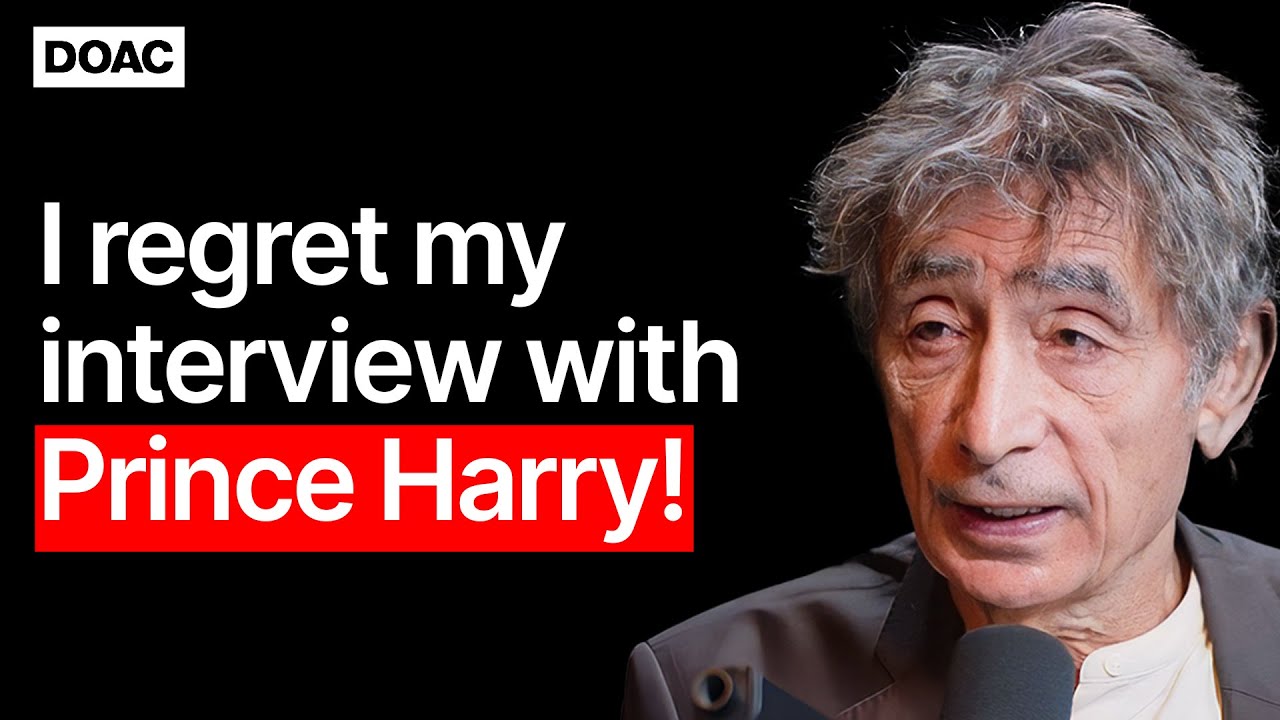
📺 Today’s recommended deep-dive video: https://www.youtube.com/watch?v=L7zWT3l3DV0
The Biology of Repression: Why “Niceness” is a Risk to Your Health
In this profound dialogue, world-renowned trauma expert Dr. Gabor Maté explores the hidden links between childhood wounding, emotional repression, and the modern epidemic of autoimmune disease. He shares his raw personal struggles with media backlash and the “trap of success,” offering a compelling roadmap for moving from people-pleasing to authentic living.
Core Question: How does the conflict between our need for attachment and our need for authenticity lead to physical illness and mental distress?
Highlights
- The hidden physiological cost of “niceness” and why repressing healthy anger weakens the immune system.
- Dr. Maté’s personal experience “losing himself” during the Prince Harry interview and how he recovered.
- The critical distinction between healthy anger (a boundary defense) and chronic rage (a trauma response).
- Why authenticity is a survival requirement, not just a “new age” luxury, and how to reclaim it.
⏱️ Reading time: approx. 9 minutes · Saves you about 104 minutes vs. watching.
Want to take notes while watching? Click the image below and let AI Notebook capture the key points for you 👇

The Vulnerability of the Expert
When Success Becomes a Trap
Even a legendary thinker like Gabor Maté is not immune to the cyclical nature of self-criticism and the heavy weight of public expectation.
Maté admits that following the international success of his book, The Myth of Normal, he became increasingly miserable as he prioritized external validation over his internal peace. He describes a “dark place” fueled by the media’s demeaning reaction to his interview with Prince Harry, which triggered an infant-level wound of “not being seen” that dates back to his survival in Nazi-occupied Hungary.
The remedy for this discombobulation was a radical two-week total sabbatical from the internet, cell phones, and ego-enhancement tools like checking book rankings.
By disconnecting from the digital noise, he was able to observe his mental “hoops” without identifying with them, eventually realizing that his distress was an old programming response rather than a present-moment reality. This serves as a vital reminder that the most courageous thing a human can do is ask for help when the “red mist” of anxiety begins to cloud their rational judgment.

💡 Digging Deeper
Q: Why did the Prince Harry interview cause Maté so much distress?
A: It wasn’t the conversation itself, but the “opportunistic” setup of a paywall that violated Maté’s gut feelings, combined with a vicious media backlash that triggered his childhood trauma of being “unseen.”
Q: What is the physiological purpose of the “internet sabbatical”?
A: It restores the executive functions of the midfrontal cortex, allowing the individual to step outside the “video game” of their emotions and regain control over their rational mind.
When the Body Says No
The Link Between Emotion and Disease
There is a profound, scientifically documented unity between the emotional system and the immune system, often referred to as psychoneuroimmunology.
Dr. Maté argues that the immune system acts as a “floating brain” that reacts to emotional suppression just as it reacts to physical toxins. When individuals—particularly women, who are socially programmed to be caregivers—repress their healthy anger to maintain “niceness,” they inadvertently suppress their immune defenses. This lack of boundary defense in the mind translates to a lack of boundary defense in the cells, potentially leading to autoimmune diseases or malignancy.
Repression of healthy anger is a fatal habit that disrupts the body’s ability to distinguish between self and “other,” causing the immune system to turn against the host.
Research as far back as the 1960s has shown that emotionally repressed individuals are significantly more likely to develop lung cancer, regardless of their smoking habits. Maté highlights that “niceness” is often a survival mechanism used to secure attachment, but it eventually forces the body to say “no” through illness because the mouth was never allowed to speak that word.

💡 Digging Deeper
Q: Is there a difference between healthy anger and rage?
A: Yes; healthy anger is a momentary boundary defense (“Get out of my space”), while rage is a “fit” that recruits brain circuits into a cycle of self-perpetuating stress that increases heart attack risk.
Q: Why do women suffer from 80% of autoimmune diseases?
A: Maté attributes this to a patriarchal society that pressures women to be the primary emotional absorbers and peacemakers, forcing a chronic suppression of their own needs and anger.
Attachment vs. Authenticity
The Root of Childhood Wounding
Human beings are born with two competing needs that are often forced into conflict: the need for attachment and the need for authenticity.
For an infant, attachment is a non-negotiable survival requirement; without a connection to a caregiver, the child dies. However, if a parent makes their love conditional—punishing a child for anger or sadness—the child is forced to choose attachment over their authentic self. This “tragic choice” results in the child disconnecting from their gut feelings to remain “likable,” a pattern that persists into adulthood as compulsive people-pleasing.
Trauma is not just about “terrible things” happening; it is often the wound of not having basic needs met, such as being held, heard, or seen.
Maté points to Prince Harry’s childhood as a prime example, where a sensitive boy was told of his mother’s death with a simple pat on the knee and no physical embrace. This lack of “grooming” or touch, which even mammals like rats and elephants provide for brain development, creates a lasting deprivation that external status or wealth can never fill.

The Path to Recovery
Reclaiming the First Nature
Recovery is not about fixing something that is broken, but about “finding again” the true self that was lost during the struggle for survival.
Maté suggests that while we cannot change our history, we can change our relationship to the “old programming” by becoming conscious of our current triggers. By asking ourselves where we are failing to say “no” and identifying the fear behind our compliance, we can begin to peel back the layers of our “second nature” (the pleaser) to reveal our “first nature” (the authentic self).
The ultimate goal of this work is not just external success or productivity, but the attainment of a sustained inner peace.
True healing requires a commitment to the truth, even if it threatens existing attachment relationships that were built on the “false self.” Maté notes that while losing friends who only liked your “nice” persona is painful, it is far less dangerous than the physiological and psychological cost of losing your soul. As we grow older, the invitation is to “grow” rather than just “age,” moving toward a state of wholeness where our external lives finally align with our internal reality.

Key Takeaways
Modern society operates as a “toxic culture” that prioritizes economic output and social compliance over the fundamental biological needs of the human animal. This creates a baseline of chronic stress that most of us consider “normal,” despite its devastating impact on our physical health and the rising rates of childhood distress.
Healing is a process of reconnection rather than a destination of perfection. By understanding that our adult behaviors—like workaholism or people-pleasing—are actually “normal responses to abnormal circumstances,” we can drop the shame of being “broken.” Recovery begins with the breath and the courageous decision to prioritize inner peace over the addictive hit of external validation.
Ultimately, the body’s illness is often a “wake-up call” to live authentically. We are reminded that “truth is sexy” and that vulnerability is the only place where true growth can occur. To live fully is to embrace our vulnerability, speak our “no,” and return to the wholeness that was always there, waiting to be recovered.
Q&A
Q1: Why does Dr. Maté say “niceness” is a health risk?
A: Compulsive niceness usually involves the repression of healthy anger and personal needs. This emotional suppression is linked to weakened immune function and a higher incidence of autoimmune diseases and cancer.
Q2: What is the definition of “trauma” according to Maté?
A: Trauma is not just the event that happened; it is the wound sustained. Specifically, it is the disconnection from one’s own self and gut feelings that occurs as a survival mechanism.
Q3: How does childhood touch influence adult brain development?
A: Mammalian brains require physical touch (“grooming”) for healthy development. Lack of touch in infancy, as seen in Harry’s “stiff upper lip” upbringing, leads to emotional deprivation and a compromised sense of safety.
Q4: Why are women more likely to be on antidepressants?
A: Women are often socialized to be the “peacemakers” and to absorb the stress of their partners and families, leading to self-repression and higher rates of clinical distress.
Q5: Can you be “too nice” to have certain diseases?
A: Maté cites observations from neurologists that ALS (motor neuron disease) patients are often “extraordinarily nice,” suggesting a lifelong pattern of repressing anger that may contribute to the disease’s onset.
Q6: What is the “tragic choice” children face?
A: It is the choice between authenticity (being themselves) and attachment (staying connected to parents). If parents don’t accept the child’s true emotions, the child will always choose attachment to survive, losing their authenticity.
Q7: What is the most courageous thing a person can do?
A: According to the book The Fox, the Mole, the Horse and the Sea, which Maté quotes, it is asking for “Help.” This allows the individual to move from a state of trauma-induced isolation to healing connection.