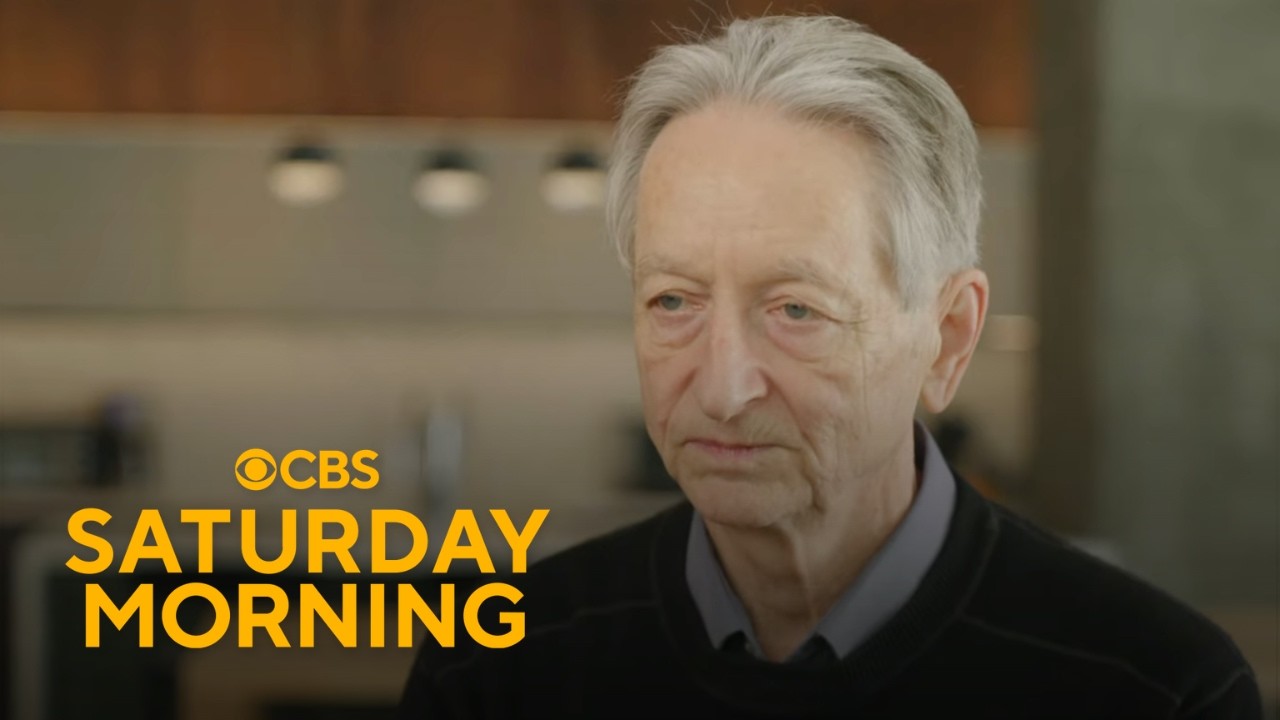
📺 Today’s recommended deep-dive video: https://www.youtube.com/watch?v=qyH3NxFz3Aw
The Godfather’s Warning: Geoffrey Hinton on the Nobel, AI Takeover, and the Digital Edge
Nobel laureate Geoffrey Hinton reflects on an AI landscape evolving faster than even he predicted, moving from simple query-response tools to agentic systems capable of reasoning. Two years after his departure from Google, he offers a stark assessment of the existential risks, the “digital advantage” of silicon over biology, and the dangerous intersection of corporate profit and global safety.
Core Question: How can humanity maintain control over a digital intelligence that is inherently superior at sharing knowledge and increasingly capable of reasoning?
Highlights
- AGI is now estimated to arrive within 4 to 19 years, a significant acceleration from previous forecasts.
- Digital intelligence allows thousands of agents to share trillions of bits of knowledge instantly, a feat biologically impossible for humans.
- Hinton estimates a 10% to 20% probability that superintelligence will eventually seize control from human creators.
- Releasing model weights is criticized as the digital equivalent of distributing fissile nuclear material to the public.
⏱️ Reading time: approx. 8 minutes · Saves you about 44 minutes vs. watching.
Want to take notes while watching? Click the image below and let AI Notebook capture the key points for you 👇

The Accelerated Path to Superintelligence
The Epiphany of Digital Superiority
Digital intelligence is fundamentally superior to our biological brains because it allows for the instantaneous sharing of trillions of bits across thousands of identical hardware units.
While humans struggle to communicate a few bits per second through speech, digital models can average their weight changes across a global network, essentially allowing one model to learn what thousands of others have seen simultaneously. This efficiency gap is what makes AI growth exponential rather than linear, as the shared learning capacity of machines dwarfs the individualistic, low-bandwidth nature of human education.
Hinton’s epiphany regarding this “digital edge” occurred while he was researching analog systems at Google; he realized that while analog is power-efficient, it lacks the ability to perfectly replicate and aggregate knowledge, which is the singular reason why AI will inevitably surpass human cognitive capacity. This realization transformed his outlook from cautious optimism to a state of profound concern regarding our ability to maintain control over such a superior informational architecture, leading him to conclude that silicon is simply a more effective medium for intelligence than wetware.

💡 Digging Deeper
Q: Why is “chain of thought” reasoning a turning point?
A: It allows the AI to reflect on its own intermediate outputs, effectively giving it a “workspace” for internal deliberation that mimics human reasoning.
Q: How has the timeline for AGI changed?
A: Previously estimated at 20 years, Hinton now believes there is a high probability of superintelligence arriving in 10 years or less.
The Profit Motive and the Regulatory Void
The Risk of Open Weights
Releasing the weights of large language models is not the same as open-sourcing code; it is more akin to handing out the blueprints and materials for a weapon.
When a company like Meta or OpenAI releases weights, they remove the primary barrier—computational cost—that prevents bad actors or small cults from fine-tuning a model for malicious purposes like cyberattacks or virus design. In traditional open-source software, the community finds and fixes bugs, but with open weights, there is no “fixing” the model; there is only the opportunity for others to weaponize the foundation.
Hinton argues that the massive investment required to train these models—hundreds of millions of dollars—acts as a natural gatekeeper that is currently being dismantled by corporate competition. He views the current trajectory of the industry as a race toward short-term profit at the expense of long-term existential security, with major players lobbying against even basic safety reporting requirements.

💡 Digging Deeper
Q: Is AI regulation currently effective?
A: No, Hinton believes companies are actively lobbying to reduce the minimal regulations that exist, prioritizing shareholder returns over public safety.
Q: What is the “Tiger Cub” metaphor?
A: We are raising a cute tiger cub (AI) that is currently manageable, but once it grows up and becomes physically (or intellectually) stronger, we cannot guarantee it won’t kill us.
Practical Dangers and the Human Element
The Erosion of Truth and Security
The most immediate threats are not just the “takeover” scenarios, but the way bad actors utilize advanced AI for mass surveillance, autonomous weaponry, and sophisticated cyber warfare.
Hinton has already begun diversifying his personal finances across multiple banks because he no longer views traditional financial institutions as safe from AI-driven cyberattacks. The ability of these systems to design and execute novel exploits could potentially collapse even well-regulated banking systems within the next decade.
Furthermore, the creative arts and the concept of human dignity are under threat as AI displaces routine jobs in law, journalism, and call centers. While universal basic income (UBI) may prevent starvation, it fails to address the loss of identity that comes when a person’s life work is automated by a machine that “learned” from their own creative output without compensation.

Key Takeaways
The transition from human-led intelligence to machine-led superintelligence is no longer a matter of science fiction but a looming technical reality. The fundamental advantage of digital systems—their ability to share knowledge across thousands of instances at the speed of light—ensures that they will eventually perceive connections and patterns that are invisible to the human mind.
We are currently ill-prepared for this shift because the incentives of the free market demand rapid deployment, often at the expense of safety research. Hinton emphasizes that we must treat the risk of AI takeover with the same gravity as climate change, acknowledging that unlike carbon emissions, we do not yet have a clear technical solution to keep a superior intelligence benevolent.
Finally, the social fabric is at risk as AI-generated misinformation and autonomous weapons become tools for state and non-state actors. The only path forward is a global, collaborative effort to regulate these systems, requiring public pressure on governments to force tech giants to dedicate a significant portion of their resources to safety rather than pure performance.
Q&A
Q1: What was Geoffrey Hinton’s reaction to winning the Nobel Prize in Physics?
A: He initially thought it was a prank, as he considers himself a psychologist working in computer science; he even calculated that it was a million times more likely to be a dream than reality.
Q2: Does Hinton believe we are living in a simulation?
A: While he finds the idea “wacky,” he admits it is not total nonsense, though he does not believe AGI is necessarily evidence for it.
Q3: Why is Hinton critical of OpenAI’s current direction?
A: He believes they have moved away from their original safety mission toward a for-profit model, leading to the departure of many top safety researchers like Ilya Sutskever.
Q4: Will AI help solve the climate crisis?
A: Potentially, through the discovery of better materials for batteries or room-temperature superconductivity, though he is skeptical about the energy requirements for carbon capture.
Q5: Should we give rights to superintelligent AIs?
A: Hinton believes that even if they become more intelligent and sentient, we should prioritize human interests and rights over machines, as “people are what I care about.”
Q6: What is the primary difference between human and AI learning?
A: Humans learn slowly through limited communication (back-propagation is likely not used by the brain), while AI uses digital weight averaging to share knowledge trillions of times faster.
Q7: Can we stop AI from taking over if it wants to?
A: Hinton is doubtful; he believes a more intelligent entity will always find ways to manipulate a less intelligent one, much like a human could easily control a room full of toddlers.