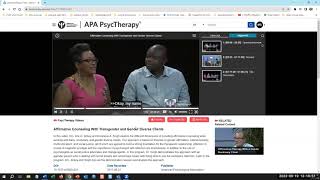
📺 Today’s recommended deep-dive video: https://www.youtube.com/watch?v=KJmBGeZuf3s
Master Class: Unlocking the Power of APA PsycTherapy for Clinical Training
APA PsycTherapy offers a unique window into real-world clinical practice through nearly 1,000 streaming videos of professional sessions. This guide explores the latest updates, advanced search techniques, and integrated teaching tools designed to bridge the gap between psychological theory and practical application.
Core Question: How can students and clinicians leverage APA PsycTherapy’s video library and platform features to master diverse therapeutic approaches?
Highlights
- Massive content expansion doubling the library with former DVD-exclusive series.
- Deep dive into Equity, Diversity, and Inclusion (EDI) searchable attributes.
- Step-by-step navigation for creating custom clips and shareable project lists.
- Integration of pedagogical guides for professors teaching personality theory or clinical supervision.
⏱️ Reading time: approx. 6 minutes · Saves you about 39 minutes vs. watching.
Want to take notes while watching? Click the image below and let AI Notebook capture the key points for you 👇

The Evolution of Clinical Observation
More Than Just a Session
APA PsycTherapy represents the APA’s most specialized digital archive, shifting the focus from academic text to the nuanced visual reality of the therapist-patient dynamic.
In June, the platform underwent a transformative update by absorbing the entire APA DVD series, effectively doubling the available content. These new videos offer a comprehensive three-part structure: a preliminary therapist interview explaining their specific philosophy, the actual 45-minute clinical session, and a concluding roundtable discussion that dissects the techniques used during the meeting.
This expansion ensures that clinicians are no longer just reading case studies but witnessing the subtle body language and vocal shifts that define successful counseling across nearly 1,000 titles.

💡 Digging Deeper
Q: How often is the database updated with new content?
A: Updates occur periodically, usually twice a year, with recent updates adding batches of 20 videos at a time.
Q: What is the significance of the EDI focus?
A: Equity, Diversity, and Inclusion (EDI) is a core APA principle, meaning researchers can now filter sessions by therapist/client race, gender identity, and multicultural approaches.
Q: Are the videos real or scripted?
A: They are unscripted, professional sessions featuring expert therapists working with clients to demonstrate specific therapeutic modalities.
Navigating the Platform and Advanced Search
Mastering the Search Interface
While the platform is accessible through major providers like EBSCOhost or APA PsycNet, users are automatically redirected to a specialized, video-centric interface at psyctherapy.apa.org for the full experience.
Searching here requires a different mindset; because the collection is specialized, starting with broad fields like “Therapeutic Approach” or “Client Race/Ethnicity” yields better results than overly complex strings.
One of the most powerful features is the searchable transcript, which allows users to pinpoint exact moments where specific keywords, such as “anxiety” or “identity,” are mentioned during a session. By clicking a timestamp in the transcript, the video player jumps directly to that dialogue, making it an invaluable tool for students looking for specific clinical examples without watching an entire hour of footage.

💡 Digging Deeper
Q: Can I access PsycTherapy directly without my library link?
A: No, you must always start through your institution’s authentication (EBSCO or PsycNet) before landing on the specialized video site.
Q: Does the transcript move with the video?
A: Yes, the transcript highlights the text in real-time as the therapist or client speaks, allowing for multi-modal learning.
Personalized Tools for Education and Practice
Curating Your Clinical Library
Beyond simple viewing, the platform empowers users to become curators of psychological content through personal accounts and custom playlists.
The “Scissors” tool allows for the creation of precise video clips, which can then be organized into lists that function like project folders. These lists are not limited to APA content; you can integrate external resources like YouTube links or PDF handouts, then set the list to “Shareable” so colleagues or students can access a curated curriculum via a single URL.
For educators, the PsycTherapy Teaching Guide provides a pedagogical roadmap, offering pre-made playlists and discussion questions for courses ranging from clinical supervision to personality theory, moving beyond the traditionally dry textbook approach.

Key Takeaways
APA PsycTherapy serves as a bridge between theoretical learning and clinical practice, providing high-quality visual evidence of therapeutic techniques. The recent doubling of content and the inclusion of EDI-focused metadata ensure that the resource remains relevant in a diverse, modern healthcare landscape. By witnessing the nuances of a 50-minute session—from the opening greeting to the final assessment—students gain a level of clinical intuition that books alone cannot provide.
By utilizing the platform’s unique tools—such as searchable transcripts, custom clipping, and external resource integration—students and professionals can create highly personalized study environments. The mission-driven nature of the APA ensures that these tools are continuously updated not for profit, but to advance the global application of psychology for the benefit of society. Whether you are a librarian organizing resources or a student preparing for your first practicum, these streaming sessions offer an unparalleled look at the art of healing.
Q&A
Q1: Is there a cost to create a personal account on the PsycTherapy site?
A1: No, the personal account is free and allows you to save favorites, create clips, and manage playlists, though institutional access is required to view the videos.
Q2: Can I use my APA professional login for the video platform?
A2: No, you must create a separate, unique login for the psyctherapy.apa.org site, though you can use the same credentials for simplicity.
Q3: What happens if I search for a video in EBSCO instead of the specialized site?
A3: You will see the video title, but clicking “View Video” will redirect you to the specialized platform where all tools (clips/transcripts) are located.
Q4: How does the platform handle virtual therapy sessions?
A4: Many newer videos filmed post-2020 feature a “Zoom-style” interface, reflecting the modern standard of telehealth services.
Q5: Where can I find the Teaching Guide?
A5: It is available as a PDF link directly on the PsycTherapy homepage under the main navigation menus.
Q6: Are there segments already created in the videos?
A6: Yes, most videos are pre-segmented into chapters like “Introduction,” “Clinical Session,” and “Discussion” for easier navigation.
Q7: Can I share my custom lists with people outside my institution?
A7: You can share the link, but the recipient must still have institutional access to PsycTherapy to view the actual APA video content within that list.