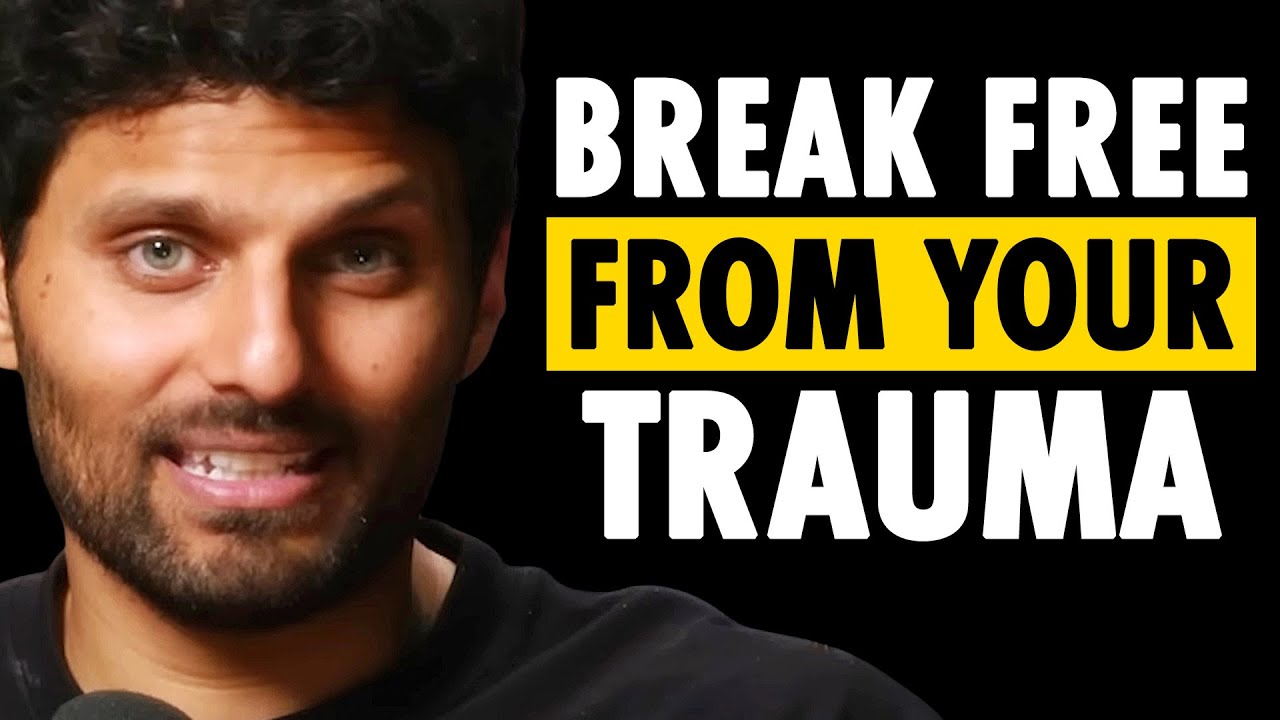
📺 Today’s recommended deep-dive video: https://www.youtube.com/watch?v=GFy7Z3etz-Q
Beyond the “Big T”: Rewiring Your Relationship with Unseen Trauma
Trauma isn’t always a loud explosion; often, it is the quiet suppression of our truest selves. By shifting our perspective from self-blame to curiosity, we can begin to unload the burdens we were never meant to carry.
Core Question: How do we identify and heal the hidden marks of trauma that shape our behavior, health, and relationships?
Highlights
- The critical distinction between “rugged individualism” and healthy “individuation.”
- Why “What happened to you?” is a more powerful healing question than “What is wrong with you?”
- The reality of living “in pieces” and why grief isn’t meant to be “solved.”
- How maternal stress during pregnancy creates neuropeptides that transmit fear to the next generation.
⏱️ Reading time: approx. 7 minutes · Saves you about 33 minutes vs. watching.
Want to take notes while watching? Click the image below and let AI Notebook capture the key points for you 👇

The Cost of Hiding: Authenticity vs. Suppression
The Choice Between Two Pains
Dr. Gabor Maté suggests that trauma is essentially a wound that forces us to abandon our true selves for the sake of survival. When children feel they won’t be accepted for who they are, they suppress their emotions to maintain a connection with their caregivers.
Authentic self-expression is a biological necessity, yet many of us trade it for acceptance, leading to a lifetime of “familiar pain.”
Maté argues that we eventually face a choice: the chronic pain of self-suppression or the acute, short-term pain of being ourselves and risking rejection. While the latter feels scarier, it is the only path to “individuation”—the ability to be fully yourself while remaining in a genuine relationship with others.
Nearly 80% of autoimmune patients report significant emotional stress before the onset of their illness, highlighting the physical price of buried emotions.

💡 Digging Deeper
Q: Is there a hierarchy of trauma?
A: While some experiences are objectively more horrific (like abuse vs. emotional neglect), Maté argues a hierarchy isn’t helpful. A wound is a wound; you don’t tell someone with a cut that they shouldn’t seek help just because someone else has a broken arm.
Q: What is the difference between individualism and individuation?
A: Rugged individualism is “me against the world,” which is evolutionary nonsense. Individuation is becoming a distinct, honest individual who can still exist in a vulnerable, interdependent community.
Living in Pieces: Reframing Grief and Loss
The Permanence of Memory
John Legend offers a profound perspective on grief through his experience with pregnancy loss. He challenges the standard narrative that we should “get over” or “move on” from tragedy. Instead, he suggests that a broken heart must simply learn to “live in pieces.”
Grief is not a puzzle to be solved, but a new landscape to inhabit.
By accepting that grief is now a permanent part of their story, Legend and his wife, Chrissy Teigen, found a way to grow closer rather than apart. They chose to commit to the work of carrying the pain together, supported by the joy of their existing children.
Recovery doesn’t mean forgetting; it means learning to experience joy and pain simultaneously without losing your foundation.

💡 Digging Deeper
Q: How did John Legend avoid the “derailing” effect of trauma?
A: He credits a strong pre-existing foundation of respect and a conscious commitment to “doing the work” of processing the pain together.
Q: What does “living in pieces” actually look like?
A: It looks like acknowledging that pangs of memory will always return, and allowing those moments to exist as part of your narrative rather than seeing them as a failure to heal.
From “What’s Wrong” to “What Happened”
The Science of Personal History
Oprah Winfrey and Dr. Bruce Perry explore the seismic shift that occurs when we stop judging our behaviors and start investigating their origins. Trauma often manifests as “labels”—the overachiever, the people-pleaser, or the obsessive-compulsive—which are actually survival adaptations.
Reframing “What’s wrong with me?” to “What happened to me?” changes the entire chemistry of healing.
Oprah shares that her childhood history of being whipped for minor mistakes turned her into a world-class people-pleaser. Even as a powerful media mogul, she found herself paralyzed by the fear of confrontation, effectively waiting for a “whipping” in the boardroom.
Our worldview is shaped from the crib; we project into the world exactly what we were raised with.

💡 Digging Deeper
Q: Can success be built on trauma?
A: Yes, many successful people use their trauma as fuel (e.g., overachieving to prove worth), but this success rarely satisfies them because they are still controlled by external opinions rather than internal wholeness.
Q: Is emotional neglect as damaging as physical trauma?
A: Yes. Dr. Perry notes that the lack of consistent nurturing (neglect) is just as toxic to the developing brain as active aggression.
Inherited Wounds: The Biology of Generational Fear
Beyond DNA: The Neuropeptide Legacy
The final lesson comes from singer Anita, who discovered that her irrational fear of financial ruin was an “inherited thought.” Research shows that maternal stress during pregnancy can increase a child’s risk of illness by 60%, as negative thoughts translate into neuropeptides that shape the fetal brain.
You are not just carrying your own memories; you are often running survival software inherited from your parents.
Anita’s journey involved a “spiritual cleaning” of these inherited fears. She discovered that her father had been fired from his job at the exact same address where she was celebrating her 30th birthday—a full-circle moment proving that her success was the ultimate resolution of her family’s past anxieties.
Healing is the act of deciding which parts of your lineage move forward and which parts stop with you.

Key Takeaways
Trauma is a pervasive experience, affecting the vast majority of adults, yet its most dangerous form is often the “little t” trauma—the consistent microaggressions, neglect, and requirements to hide our true selves. When we suppress our authenticity for acceptance, we create a chronic internal conflict that eventually manifests as physical illness or mental exhaustion.
Healing begins with the radical act of curiosity. By shifting the internal dialogue from self-criticism to an investigation of our personal history, we can deconstruct the behaviors that no longer serve us. Whether it is a “people-pleasing” reflex or a deep-seated financial fear, these are not flaws in our character; they are echoes of our survival.
Ultimately, we have the power to “rewire” these responses. We are not broken; we are simply carrying weights that were never ours to begin with. By acknowledging the pain, integrating our grief, and cleaning our inherited wounds, we move closer to “individuation”—the freedom to be exactly who we are.
Q&A
Q1: Why is being “independent” not always a good thing?
A: Gabor Maté distinguishes between healthy independence and “rugged individualism.” The latter is a defense mechanism where you refuse help because you don’t trust anyone, whereas true independence (individuation) allows you to be yourself while still being vulnerably connected to others.
Q2: Can trauma be passed down even if I didn’t experience the event?
A: Yes. As Anita’s story illustrates, maternal stress during pregnancy can create biological markers (neuropeptides) that predispose a child to the same anxieties the parent felt.
Q3: How do I stop being a people-pleaser?
A: First, recognize that people-pleasing was likely a survival strategy you developed as a child to stay safe or loved. Understanding “what happened to you” to make that behavior necessary allows you to address the root fear rather than just the habit.
Q4: Is it possible to “get over” a major loss like a miscarriage?
A: John Legend suggests we don’t “get over” it, but rather “carry it” as part of our story. The goal is to learn to live with the pieces of a broken heart and find joy alongside the memory of the loss.
Q5: What is the most common form of overlooked trauma?
A: Emotional neglect. Oprah and Dr. Perry emphasize that a lack of validation or “being seen” in childhood can be just as damaging as more visible, violent forms of trauma.
Q6: Why is the question “What happened to you?” so transformative?
A: It removes the element of shame. It shifts the focus from a perceived “defect” in the person to a logical “response” to an external event, which makes healing feel possible rather than like a personality transplant.
Q7: How does authenticity impact physical health?
A: Significant studies show a direct link between the suppression of emotions and the onset of autoimmune diseases and chronic illnesses. Being your true self isn’t just a psychological goal; it’s a health requirement.