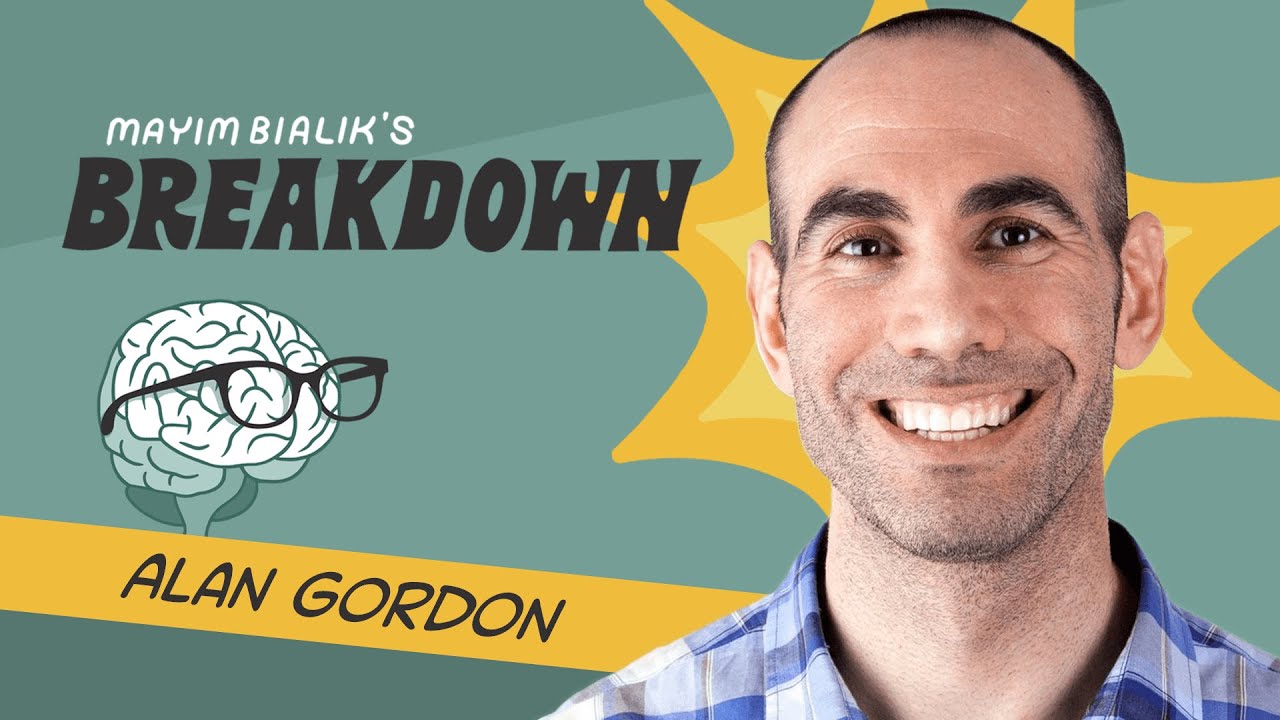
📺 Today’s recommended deep-dive video: https://www.youtube.com/watch?v=2T2gfba88I4
Rethinking the Source of Suffering: Is Your Chronic Pain All in Your Head?
Most chronic pain isn’t caused by structural damage, but by a brain that has learned to be hyper-vigilant. Discover how to rewire your neural pathways and turn down the volume on persistent discomfort by shifting from a model of “injury” to a model of “safety.”
Core Question: Can we eliminate chronic pain by retraining the brain to interpret physical sensations as safe rather than dangerous?
Highlights
- The definition of neuroplastic pain as “learned pain” rather than structural damage.
- Why MRI results like herniated discs are often “normal wrinkles on the inside” and not the cause of pain.
- The technique of Somatic Tracking to reappraise sensations through a lens of safety.
- How slowing down your speech and breath regulates the nervous system and lowers the brain’s “volume knob.”
⏱️ Reading time: approx. 7 minutes · Saves you about 69 minutes vs. watching.
Want to take notes while watching? Click the image below and let AI Notebook capture the key points for you 👇

The Neuroscience of Learned Pain
Beyond the Structural Model
For decades, the medical community viewed chronic pain through a strictly biomedical lens, assuming that if you hurt, something must be physically broken or damaged in the tissue. This model fails to explain why many people with visible disc herniations feel zero pain while others suffer immensely without any injury.
Neuroplastic pain, also known as “learned pain,” occurs when the brain’s danger alarm gets stuck in the “on” position, misinterpreting neutral bodily sensations as threats.
As Alan Gordon explains, pain is essentially a survival mechanism designed to protect us from further harm, much like a hand pulling away from a hot stove. However, when the nervous system becomes hyper-vigilant due to chronic stress or past trauma, it begins to hallucinate danger, creating a loop where fear reinforces the pain and the pain reinforces the fear. This isn’t “imaginary” pain; it is a very real physiological response generated entirely by the brain’s software rather than the body’s hardware.

💡 Digging Deeper
Q: Is neuroplastic pain the same as “psychosomatic” pain?
A: While the terms overlap, “neuroplastic” focuses on the brain’s ability to learn and unlearn pathways, removing the stigma that the pain is “fake” or “made up.”
Q: How common are structural abnormalities in people without pain?
A: Studies show that over 60% of people with no back pain at all have disc herniations, suggesting these findings are often incidental rather than causative.
Q: Can the brain cause actual physical changes like swelling?
A: Yes, the brain can generate physiological responses, such as muscle spasms or hives, as part of its protective danger response.
Breaking the Loop through Somatic Tracking
Reappraising the Danger Signal
The core of Alan Gordon’s Pain Reprocessing Therapy (PRT) is a technique called somatic tracking, which requires observing physical sensations with objective, non-judgmental curiosity.
By paying attention to the ache or tingle without the immediate desire to fix or escape it, you teach the brain that these signals are actually safe. It involves three key pillars: mindfulness to stay present, safety reappraisal to remind yourself there is no structural damage, and positive affect induction—using humor or lightheartedness to break the state of intensity that usually accompanies chronic suffering.
This process is not a “quick fix” but a disciplined rewiring of neural pathways that requires patience and “outcome independence.” If you approach tracking with the secret motive of making the pain disappear, you are still reacting with fear, which keeps the brain’s volume knob turned all the way up.

💡 Digging Deeper
Q: What does “outcome independence” mean?
A: It is the practice of being okay regardless of whether the pain increases or decreases in the moment, which removes the pressure that fuels the danger signal.
Q: Can you do somatic tracking while the pain is at its worst?
A: If the fear is too high, “straight” tracking may be too difficult; in those cases, it is better to focus on calming the system first before attempting to observe the sensation.
The “Slow Down” Method for Nervous System Regulation
Attending to the Internal State
Mayim shares a personal breakthrough where her therapist repeatedly asked her to slow her speech during sessions to mirror a calmer internal state. Rapid speech and high-volume communication are often external manifestations of a nervous system that is trapped in a fight-or-flight cycle, neglecting its own regulation.
Slowing down isn’t just about etiquette; it is a profound act of self-care that prevents the “cyclone” of anxiety from fueling physical tension.
When we gallop through our words or clench our muscles unconsciously, we are essentially abandoning our internal state in favor of external productivity or connection. Alan emphasizes that by practicing deliberate pauses and rhythmic breathing, we provide our brain with the “safety data” it needs to disarm the pain response. This rhythmic adjustment helps shift the body from a state of emergency into a state of flow, eventually lowering the baseline for neuroplastic symptoms across the entire body.
Key Takeaways
The majority of chronic pain is neuroplastic, meaning the brain has learned to interpret safe sensations as dangerous. Even if an MRI shows structural abnormalities like disc degeneration, these are often “normal wrinkles on the inside” and not the actual cause of the debilitating symptoms you are experiencing. Identifying indicators—such as pain that moves around the body or flares during stress—is the first step toward recovery.
Healing requires a radical paradigm shift from “fixing the body” to “reassuring the brain.” Techniques like somatic tracking, mindfulness, and slowing down your cadence help to lower the nervous system’s hyper-vigilance. Success is found in outcome independence—the ability to observe pain without fear or the desperate need for it to vanish immediately, which ironically allows the brain to finally let the sensation go.
Q&A
Q1: How do I know if my pain is neuroplastic or structural?
A1: Indicators include pain that started during a stressful period, symptoms that move to different parts of the body, or pain that is inconsistent (e.g., hurting while sitting but not while distracted).
Q2: What was the result of the Boulder study on Pain Reprocessing Therapy?
A2: In a study of 150 chronic back pain patients, 66% were pain-free or nearly pain-free after just four weeks of treatment, with results lasting a year later.
Q3: Why does Mayim say she “abandoned” herself by speaking fast?
A3: Rapid speech often means focusing entirely on external connection while neglecting the internal state of the nervous system, which keeps the body in a high-anxiety, high-pain loop.
Q4: What is the “Volume Knob” in the brain?
A4: Neuroscientists have identified areas in the brain that act as a volume control for pain signals; when the brain perceives danger, it turns this knob up, making even neutral sensations feel agonizing.
Q5: Is it possible to have structural damage AND neuroplastic pain?
A5: Yes, but the PRT approach argues that even with structural issues, the brain often “over-interprets” the signals, and the majority of the perceived pain is usually the result of the brain’s learned alarm system.
Q6: How does humor help with chronic pain?
A6: Humor is a form of “positive affect induction” that signals safety to the brain, making it harder for the brain to maintain a state of high-alert danger and fear.
Q7: What is the most important thing to do when a pain flare starts?
A7: Rule out acute injury first, then remind yourself that the sensation is a “false alarm” and try to observe it with curiosity rather than fear.