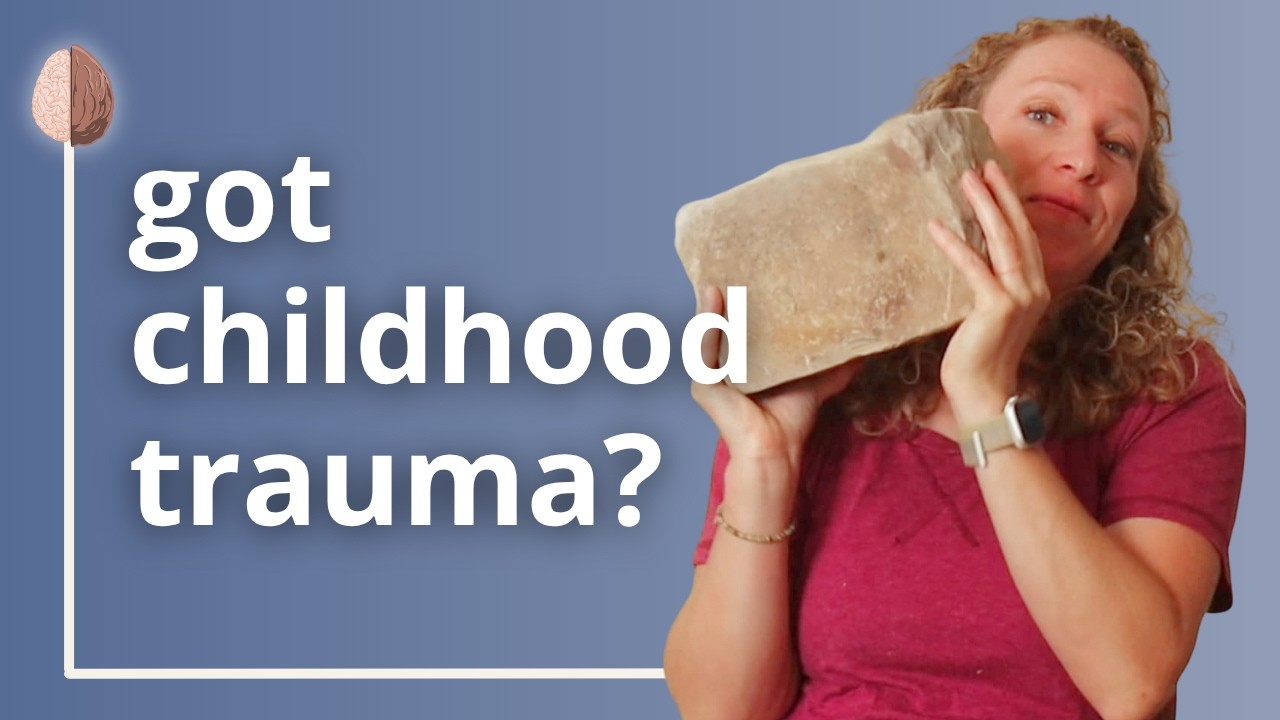
📺 Today’s recommended deep-dive video: https://www.youtube.com/watch?v=JUHMSrJrjss
Beyond the War Zone: Healing the Invisible Wounds of Complex PTSD
For many, trauma was not a single explosive event, but a childhood home that felt like a permanent battlefield. When love is conditional and safety is unpredictable, the developing brain adapts by staying in a constant state of high alert. Understanding Complex PTSD (C-PTSD) is the vital first step in realizing that your adult struggles—from chronic anxiety to people-pleasing—are not character flaws, but survival strategies that can finally be unlearned.
Core Question: How can survivors of chronic childhood trauma transition from survival-based brain patterns to a life of genuine emotional safety and thriving?
Highlights
- C-PTSD is the result of repeated emotional injuries and neglect rather than a single traumatic shock.
- The “Four Fs” (Fight, Flight, Freeze, Fawn) represent the specific ways the nervous system adapts to survive an unsafe environment.
- Emotional flashbacks are “internal time travel” where a survivor feels the terror or shame of the past without visual memories.
- Recovery involves “reparenting” the self, taming the inner critic, and allowing the body to grieve lost safety.
⏱️ Reading time: approx. 6 minutes · Saves you about 17 minutes vs. watching.
Want to take notes while watching? Click the image below and let AI Notebook capture the key points for you 👇

The Anatomy of a Survival Brain
From Chronic Injury to Complex Response
Unlike traditional PTSD, which is often tied to a specific, acute incident like a car accident, Complex PTSD (C-PTSD) stems from prolonged exposure to emotional insecurity. It is the cumulative result of growing up in an environment where your needs were ignored, your emotions were punished, or your caregivers were dangerously unpredictable.
In this environment, your body and mind become stuck in survival mode.
Because these symptoms are so varied—ranging from toxic shame and social anxiety to sudden bursts of rage—they are frequently misdiagnosed as Bipolar Disorder, ADHD, or Borderline Personality Disorder. However, through a trauma-informed lens, these behaviors make perfect sense. They are protective adaptations. A child who becomes hyper-compliant to avoid a parent’s wrath is being brilliant at surviving; that same behavior in an adult office setting, however, becomes a barrier to a healthy life.

💡 Digging Deeper
Q: Why is the amygdala so central to C-PTSD?
A: The amygdala is the brain’s threat detector. In C-PTSD survivors, it becomes hyperactive, causing the body to perceive minor social slights or emotional discomfort as life-threatening emergencies.
Q: How does C-PTSD affect memory?
A: The hippocampus, which integrates memories, may function poorly under chronic stress. This makes it difficult for the brain to distinguish between a past threat and the present moment, leading to emotional flashbacks.
Q: Can the brain actually change after years of trauma?
A: Yes, through neuroplasticity. By practicing new ways of responding and finding safety, survivors can physically reconfigure their brain’s pathways toward connection and calm.
The Four Fs of Trauma Response
Specialized Strategies for Staying Alive
Pete Walker identifies four primary ways the nervous system responds to trauma: Fight, Flight, Freeze, and Fawn. While most people can move between these states depending on the situation, C-PTSD survivors often become “stuck” in one dominant response. The “Fight” type may become controlling or defensive to mask vulnerability, believing that strength is the only shield against further pain.
The “Flight” type, conversely, stays perpetually busy to outrun their internal agony.
They might become workaholics or perfectionists, driven by an unconscious belief that if they keep moving, the “predator” of their past emotions can never catch them. In relationships, these individuals are often the first to withdraw at the slightest hint of conflict, retreating into a shell of productivity or isolation to avoid the terrifying prospect of emotional rejection.
The “Freeze” and “Fawn” types utilize more passive, yet equally intense, survival tactics. Freeze types often dissociate or retreat into fantasy, a habit born from childhoods where escape was physically impossible. Fawn types, perhaps the most common in abusive relational trauma, survive by becoming “people-pleasers.” They abandon their own needs to mirror the needs of others, hoping that by being “good enough” or “helpful enough,” they can prevent the next outburst from a volatile partner or authority figure.
💡 Digging Deeper
Q: How does someone move out of a “Freeze” state?
A: Physical movement is often more effective than talk therapy for Freeze types. Engaging the body through exercise or defense classes helps signal to the nervous system that the threat is over.
Q: Can you be a mix of these types?
A: Absolutely. Many people have a primary and a secondary response, such as a “Fawn-Freeze” hybrid who pleases others until they are overwhelmed, then shuts down completely.
Q: Is the “Fight” response always bad?
A: No. The goal is flexibility. The “Fight” response is healthy when used for self-advocacy; it only becomes a problem when it is a rigid, automatic reaction to non-threatening situations.
The Roadmap to Recovery
Reparenting and Taming the Critic
Healing from C-PTSD requires two major internal shifts: silencing the “Inner Critic” and beginning the process of “reparenting.” The Inner Critic is the internalized voice of your abusers, a harsh judge that perpetuates toxic shame by telling you that you are fundamentally broken or unlovable. Taming this critic involves building an “Inner Defender”—a compassionate voice that challenges these lies with self-kindness.
Reparenting is the act of giving yourself the emotional care you were denied as a child.
This isn’t just a metaphor; it involves practical self-care like eating when hungry, resting when tired, and validating your own feelings rather than shaming them. When you experience an emotional flashback—that sudden wave of feeling small, helpless, or panicked—reparenting means talking to your “inner child” and reassuring them that they are safe in the present. It is a slow, daily practice of proving to your nervous system that you are now your own capable protector.
Grieving is the final, essential stage of the journey. To move forward, you must allow yourself to mourn the childhood you never had and the protection you were never given. Resisting this grief only makes the burden heavier. By acknowledging the pain and saying, “That shouldn’t have happened to me,” you finally release the trauma from your body, making room for joy, purpose, and authentic connection with others.

💡 Digging Deeper
Q: What is the main difference between a standard flashback and an emotional one?
A: Standard flashbacks are usually visual or sensory (seeing or smelling the event). Emotional flashbacks are a sudden, overwhelming intrusion of feelings—like dread or shame—without a clear memory attached.
Q: Why is grieving so important for recovery?
A: Grieving is the way the heart processes loss. Without it, the trauma stays “stuck” in the body. Mourning the loss of a safe childhood allows the survivor to stop looking for that safety in the past.
Q: How do boundaries play a role in healing?
A: Boundaries are the external version of the Inner Defender. Learning to say “no” and limiting contact with toxic people is essential to creating a life where the nervous system can finally relax.
Key Takeaways
Recovery from Complex PTSD is not a linear path, but a deepening spiral of self-discovery and healing. The most important realization is that you are not “broken” or “defective.” Your symptoms are the scars of a battle you survived, and the very strategies that kept you alive as a child are the ones you are now learning to gently set down.
Healing occurs when we move from the isolation of shame into the warmth of self-compassion and safe relationships. By taming the inner critic, grieving the past, and learning to regulate the nervous system, you transition from a life of mere survival to one of thriving. You have already done the hardest part—you survived the war. Now, it is time to enjoy the peace.
Q&A
Q1: Is C-PTSD a permanent condition?
A1: While the history of trauma remains, the symptoms are not a life sentence. Through therapy, reparenting, and consistent practice, the brain can be rewired for safety and connection.
Q2: How can I tell if I’m having an emotional flashback?
A2: If you suddenly feel small, intensely ashamed, or panicked in a way that feels “too big” for the current situation, you are likely experiencing a flashback to a childhood emotional state.
Q3: Why did the speaker mention David Goggins in a video about trauma?
A3: Goggins is used as an example of a “Freeze/Flight” adaptation where he used his ability to numb physical and emotional pain to achieve incredible athletic feats, though the speaker questions if this involves true integration of trauma.
Q4: Can I heal from C-PTSD on my own?
A4: While self-help books and journaling are vital, C-PTSD is a relational trauma. Full healing often requires safe relationships, whether with a therapist, a support group, or trusted friends, to relearn trust.
Q5: What should I do if my “Inner Critic” is too loud to ignore?
A5: Start small by naming the voice as something separate from yourself. Use anger to tell the critic to stop, and then consciously replace the insult with a neutral, self-validating statement like, “I am doing my best.”
Q6: Does healing mean I have to forgive my parents?
A6: Forgiveness is not a requirement for healing. The focus should be on your own safety and grieving your losses. For some, maintaining a distance or “no contact” is the healthiest way to ensure ongoing recovery.
Q7: How do I know if I’m a “Fawn” type?
A7: If you find it nearly impossible to say no, constantly apologize, or feel responsible for everyone else’s emotions while ignoring your own, you likely developed a Fawn response to stay safe.