📺 Today’s recommended deep-dive video: https://www.youtube.com/watch?v=Unzc731iCUY
The Winston Method: Mastering the Art of Public Speaking
Your success in life is determined by your ability to speak, your ability to write, and the quality of your ideas—in that order. While many believe communication is an innate gift, it is actually a mechanical skill that can be mastered through specific techniques and rigorous practice. This guide distills decades of MIT wisdom into a toolkit for ensuring your ideas are never ignored again.
Core Question: How can speakers use structural heuristics, physical tools, and slide design to ensure their ideas are valued and remembered?
Highlights
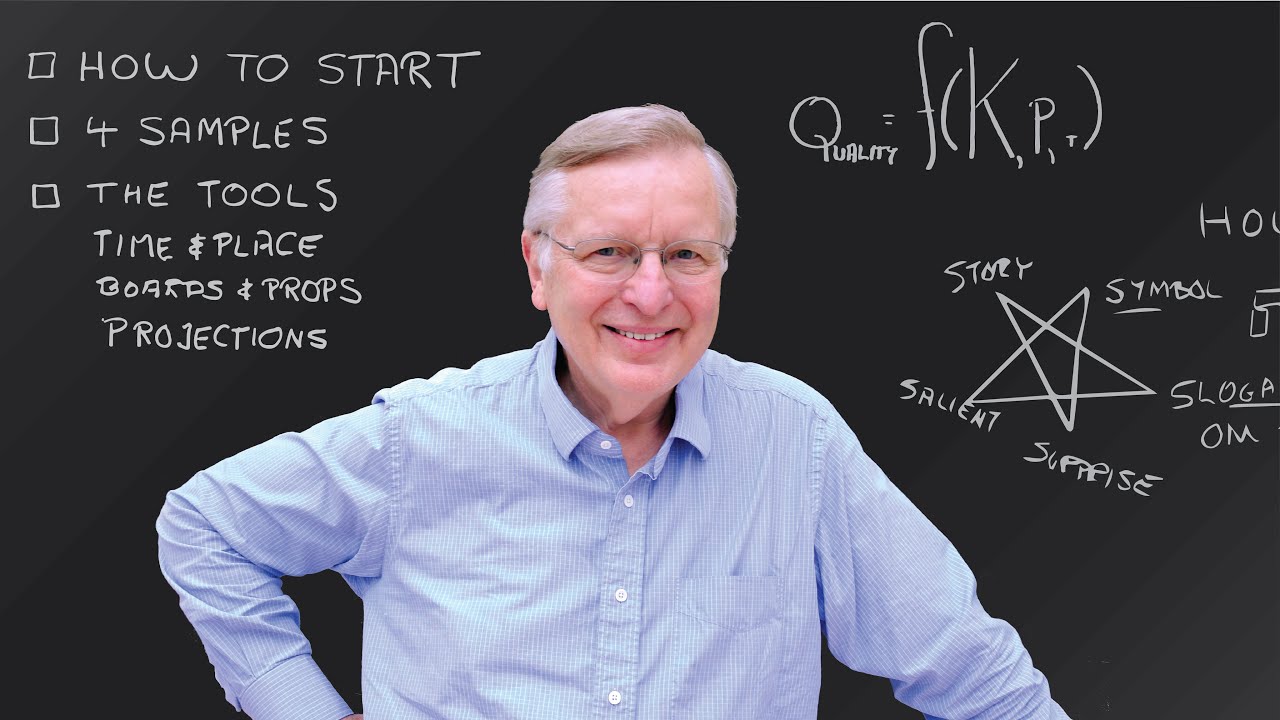
- The Communication Formula: Success = Knowledge × Practice × Talent (where talent is the smallest factor).
- The Empowerment Promise: Why you should never start a talk with a joke.
- The Mirroring Effect: Why blackboards and physical props outperform digital slides for teaching.
- The Winston Star: Five elements (Symbol, Slogan, Surprise, Salient Idea, Story) to make your work famous.
⏱️ Reading time: approx. 8 minutes · Saves you about 55 minutes vs. watching.
Want to take notes while watching? Click the image below and let AI Notebook capture the key points for you 👇

The Foundations of Effective Communication
The Formula for Success
Speaking and writing skills are the primary determinants of professional success.
Many people believe that great speakers are born with a silver tongue, but the reality is much more mechanical. The formula for success is your knowledge multiplied by your practice, with inherent talent playing only a tiny, negligible role. This means that if you study the techniques used by experts and put in the hours to refine them, you can easily outperform those who rely solely on raw charisma.
Take the example of an Olympic gymnast who struggles on a novice ski slope. Despite her immense physical talent, a seasoned amateur with better knowledge and practice will always out-ski her. The same principle applies to public speaking: technical mastery of the craft consistently triumphs over raw ability.

💡 Digging Deeper
Q: Why are laptops and cell phones banned in these sessions?
A: Humans have only one language processor. If you are reading an email or browsing the web, you are not just distracted; you are physically incapable of processing the speaker’s words.
Q: How much talent do I actually need?
A: Very little. If you have the “K” (Knowledge) and the “P” (Practice), you will surpass the naturally talented person who lacks them every single time.
Tactical Heuristics for Audience Engagement
How to Start and Stay Relevant
Starting a talk is not about breaking the ice with a joke, which often falls flat when the audience is still adjusting to your voice. Instead, you should lead with an empowerment promise, telling your listeners exactly what they will gain by the end of your presentation.
To keep your audience engaged, you must cycle through your main points repeatedly to catch those who may have momentarily drifted off.
Building a “fence” around your idea is equally crucial to prevent confusion with existing concepts. By explicitly stating what your idea is not—for instance, noting that your algorithm is linear while a competitor’s is exponential—you create a clear boundary that defines your contribution. This clarity, combined with verbal punctuation like numbering your points, ensures that the audience can always find their way back to your core message if they lose focus.

💡 Digging Deeper
Q: How long should I pause after asking the audience a question?
A: Seven seconds. It feels like an eternity to the speaker, but it is the standard time required for an audience to process a question and formulate a response.
Q: When is the best time to hold a lecture?
A: 11:00 AM. At this time, most people are awake, few have gone back to sleep, and no one is experiencing the post-lunch “food coma.”
The Tools of the Trade: Boards vs. Slides
The Physicality of Information
The blackboard remains the superior tool for teaching because its pace matches the human brain’s natural absorption rate.
Unlike slides, which can feel static and disconnected, the act of writing on a board engages “empathetic mirroring” in the audience. They feel the motion of the chalk in their own minds, creating a physical connection to the information being presented. Furthermore, a board gives your hands a place to go, preventing the awkward “hands in pockets” stance that can appear defensive or insulting.
When it comes to slides, less is always more. The biggest crime in presentation design is the “too many words” trap, which forces the audience to choose between reading your text and listening to your voice. Since humans only have one language processor, your slides should be visual condiments rather than the main course. Eliminate clutter, ditch the corporate logos, and use fonts large enough to ensure you aren’t tempted to cram in too much information.

💡 Digging Deeper
Q: Why are laser pointers discouraged?
A: Using a laser pointer requires you to turn your back to the audience. The moment you lose eye contact, you lose the engagement of the room. Use arrows on the slides instead.
Q: What is a ‘Hapax Legomenon’ in the context of slides?
A: It is a slide so complex it can only be used once. It is intended to show complexity (like a dense network graph of a war zone) rather than to be read in detail.
Persuasion, Vision, and the Final Word
The Architecture of a Job Talk
A job talk is a high-stakes performance where you have exactly five minutes to establish two things: your vision and the fact that you have actually done something. You must articulate a problem that people care about and then demonstrate the concrete steps you have taken to solve it.
To become famous—or at least ensure your ideas aren’t ignored—you need to package your work using the “Winston Star” of symbols and slogans.
Finally, rethink how you end. Ending with “Thank you” is a weak move that suggests the audience was only there out of politeness. Instead, leave your “Contributions” slide visible during the Q&A so your achievements are the last thing the audience sees. You can conclude with a joke, a benediction, or a salute to the audience, but whatever you do, ensure the final moment belongs to the strength of your ideas rather than a plea for social approval.

💡 Digging Deeper
Q: What are the five points of the Winston Star?
A: Symbol (a visual icon), Slogan (a handle like ‘One Shot Learning’), Surprise (a counter-intuitive result), Salient Idea (the one thing that sticks out), and Story (how you did it).
Q: Where should collaborators be listed?
A: On the very first slide. Putting a massive list of names at the end dilutes your personal contribution and acts as a “let down” for the final impact.
Key Takeaways
Success in communication is not a mystery; it is a discipline. By shifting your focus from “what I want to say” to “what the audience needs to hear,” you transform your presentations from mere information dumps into empowering experiences. Start with a promise, use the blackboard for teaching, and keep your slides clean and visual.
Remember the Winston Star when packaging your research. Ideas are like children; you shouldn’t send them into the world in rags. By providing a clear symbol, a catchy slogan, and a salient idea, you ensure that your work is not just understood, but remembered and cited for years to come.
Finally, master the “sandwich” structure for technical talks. Begin with a high-level vision that establishes why the problem matters, and end with a concrete list of your contributions. When you step away from the podium, let your final slide do the work of reminding the audience exactly why your presence made a difference.
Q&A
Q1: Why is starting with a joke a bad idea?
A1: At the start of a talk, the audience is still settling in and calibrating to your voice. Jokes often fall flat because the listeners aren’t yet “in sync” with you. An empowerment promise is a much more reliable hook.
Q2: What is the “7-second rule”?
A2: When you ask a question to the audience, you must wait at least seven seconds for an answer. This gives people enough time to overcome their hesitation and formulate a thought.
Q3: How do I handle my hands while speaking?
A3: Use the board or a prop. Physical objects give your hands a natural “target,” preventing you from putting them in your pockets or behind your back, both of which can be perceived as defensive or untrustworthy.
Q4: What is the biggest mistake people make with PowerPoint?
A4: Including too many words. Because humans have one language processor, they cannot read your slides and listen to you at the same time. The slides should be visual aids, not a transcript.
Q5: How do I ensure I get the job during a faculty interview?
A5: You must establish your vision and your accomplishments within the first five minutes. If you wait longer than that, the committee has already made up their minds.
Q6: Should I ever say “Thank you” at the end?
A6: It is a weak way to finish. It implies the audience was doing you a favor by listening. Instead, finish with your “Contributions” slide and a salute to the audience or a joke.
Q7: What is “Empathetic Mirroring”?
A7: It’s the phenomenon where the audience mentally mimics the actions of the speaker, such as writing on a board. This creates a deeper level of engagement than simply looking at a pre-made slide.