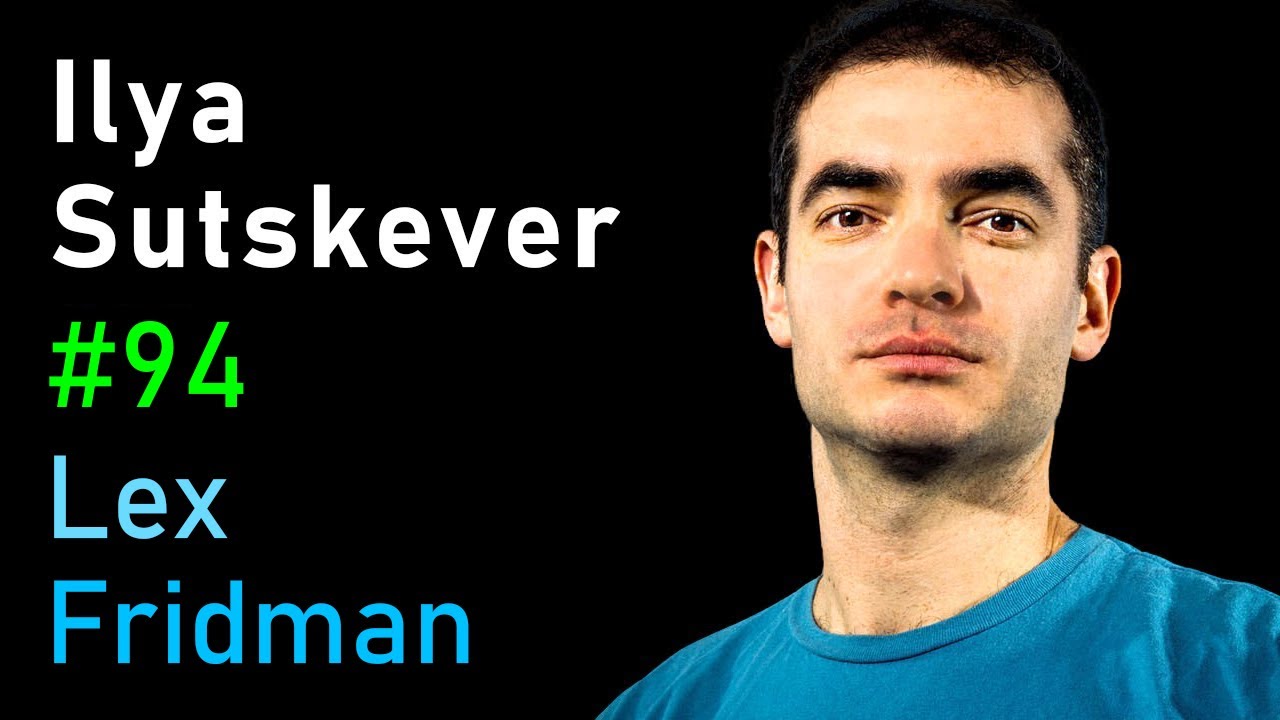
📺 Today’s recommended deep-dive video: https://www.youtube.com/watch?v=13CZPWmke6A
The Hidden Logic of Scaling: A Conversation with Ilya Sutskever
In this profound exploration of artificial intelligence, OpenAI’s Chief Scientist Ilya Sutskever reveals the intuitive leaps that powered the deep learning revolution. He argues that the future of AGI lies not in inventing complex new mathematics, but in the relentless pursuit of scale, conviction, and the “unity” of machine learning principles.
Core Question: Can simple mathematical objectives and massive scale eventually simulate the complexity of human consciousness and general intelligence?
Highlights
- The catalytic role of “conviction” in the success of the 2012 AlexNet breakthrough.
- Why the “Double Descent” phenomenon challenges traditional statistical wisdom about overfitting.
- The transition from seeking small circuits to discovering the “shortest programs” for data.
- OpenAI’s philosophy on the staged release of powerful models and the future of AGI alignment.
⏱️ Reading time: approx. 8 minutes · Saves you about 89 minutes vs. watching.
Want to take notes while watching? Click the image below and let AI Notebook capture the key points for you 👇

The Alchemy of Scale
From Biological Intuition to AlexNet
Deep learning was never a sudden discovery of new math, but rather a shift in collective conviction that old ideas would finally work if given enough fuel.
Back in 2010, the field was mired in debate because there were no “hard” benchmarks to prove which methods actually scaled to real-world complexity. While many researchers saw over-parameterization as a fatal risk, Ilya intuited that if the human brain could recognize an object in 100 milliseconds—equivalent to roughly ten layers of slow-firing neurons—then a sufficiently deep artificial network trained on massive data should logically achieve similar feats. This biological analogy provided the necessary confidence to push through the skepticism of the era.
The missing ingredient wasn’t the theory of backpropagation; it was the availability of CUDA kernels and the sheer volume of ImageNet data. Once Alex Krizhevsky optimized GPU performance, the theoretical possibility became an engineering reality that silenced the skeptics and transformed computer vision forever.

💡 Digging Deeper
Q: Why was the “Hessian-free optimizer” a turning point?
A: It proved we could train 10-layer networks from scratch without pre-training, signaling that depth was finally manageable.
Q: How does the brain inspire current architectures?
A: It serves as a proof of existence; if a slow-firing biological network can reason in milliseconds, a fast silicon one should too.
The Unity of Machine Learning
Transformers and the Death of Specialization
Machine learning is characterized by an incredible degree of unity, where a single breakthrough in optimization usually lifts the performance of vision, language, and robotics simultaneously.
The field has moved away from the fragmentation where every sub-problem required its own specialized architecture and feature engineering. Today, the Transformer has become the dominant architecture across natural language processing because it is uniquely optimized for GPU hardware while avoiding the optimization difficulties inherent in recurrent structures. It is a “shallow” but powerful alternative that processes sequences with high efficiency.
Ilya suggests that we are moving toward a “single black box” model where different modalities—vision, sound, and text—are shoveled into a unified architecture. In this future, the model itself figures out the cross-modal relationships without human-designed constraints or specialized sub-systems.

💡 Digging Deeper
Q: Will recurrent networks make a comeback?
A: Potentially, as they are a natural way to maintain high-dimensional hidden states for long-term knowledge, though Transformers currently dominate.
Q: Is language fundamentally harder than vision?
A: Hardness is relative to our tools, but “perfect” language understanding likely requires the same depth of cognition as “perfect” vision.
Beyond Pattern Matching
Reasoning, Memory, and Double Descent
There is a growing body of evidence that neural networks do not just memorize patterns but actually find “small circuits” that represent the shortest program for the data.
The phenomenon of “Deep Double Descent” explains why massive models don’t overfit in the way classical statistics predicts. When a model has as many parameters as data points, it becomes highly sensitive to noise, causing a spike in error; however, once the model becomes much larger than the data, it finds a solution with the “smallest norm,” allowing it to discard spurious correlations and generalize better. This suggests that bigger is often objectively better for stability.
Reasoning is often dismissed as something neural networks cannot do, yet systems like AlphaZero prove that a network can learn to reason through complex games without explicit search algorithms. If we train a model on tasks that necessitate logic to minimize the cost function, the model will develop reasoning as the “path of least resistance” to solving the problem.

💡 Digging Deeper
Q: What is the “Shortest Program” theory?
A: If you find the shortest program that explains your data, you achieve the best possible prediction; neural nets are our best tool for approximating this.
Q: Can networks have long-term memory?
A: Parameters themselves are a form of long-term memory, but we need better “active learning” to decide what to remember and what to forget.
The Ethics of AGI and Power
Relinquishing Control to the “CEO”
As AI exits its “childhood” and enters maturity, the conversation must shift from simple capability to the heavy responsibility of managing power and alignment.
Ilya proposes a vision where AGI acts as the “CEO” of humanity’s interests, while humans act as the “Board of Directors.” In this framework, different cities or countries could have their own AGI representatives, allowing the democratic process to scale through these intelligent agents. The ultimate goal is to build systems that have an internal, deep-seated drive to help humans flourish, much like the biological drive parents have to care for their children.
Relinquishing the immense power that comes with the first AGI is a moral imperative. By building trust between competitors and using “staged releases” for powerful models like GPT-2, the AI community can avoid a reckless race to the bottom and ensure that the transition to AGI is stable and beneficial for the species.
💡 Digging Deeper
Q: Why was GPT-2 released in stages?
A: To allow the world to analyze the potential for misinformation before the full, most powerful version was made public.
Q: Can we program an AGI to “want” to be controlled?
A: Yes, by making the fulfillment of human desires its base internal reward function, similar to how human drives are internal.
Key Takeaways
The success of deep learning is a testament to the power of simple principles applied at massive scale. By combining backpropagation with high-performance computing and vast datasets, we have discovered that neural networks can transcend simple curve-fitting and begin to exhibit signs of semantic understanding and reasoning.
The path forward requires us to move beyond the “black box” mentality and toward a future where AI is not just a tool, but an aligned partner. Whether through the “unity” of architectures like Transformers or the exploration of self-play and “Double Descent,” the field is consistently proving that we should not bet against the capability of these systems.
Ultimately, the meaning of AI—and perhaps life itself—is to minimize suffering and maximize our ability to flourish. As we stand on the precipice of creating General Intelligence, our focus must remain on the character of those who build it and the internalized values we grant to our creations.
Q&A
Q1: What actually caused the 2012 “deep learning revolution”?
A1: It was the intersection of 10-layer neural networks, backpropagation, the ImageNet dataset, and Alex Krizhevsky’s fast CUDA kernels, all driven by a firm conviction that it would work.
Q2: How is a Transformer different from an RNN?
A2: Transformers use attention and are “shallower” in their sequential processing, making them much easier to optimize and a better fit for the parallel processing of GPUs.
Q3: What is “Double Descent”?
A3: It is a phenomenon where increasing model size first improves performance, then makes it worse (at the point where parameters match data), and then significantly improves it again as the model becomes “over-parameterized.”
Q4: Can a neural network reason?
A4: Yes. If a task requires reasoning to solve—like playing Go at a world-class level—the network will develop reasoning circuits as the most efficient way to reduce its error.
Q5: What is the “Board of Directors” analogy for AGI?
A5: It’s a governance model where humans (the Board) set the goals and have the power to “fire” or reset the AGI (the CEO), which carries out the actual complex management.
Q6: Why is self-play so important?
A6: Self-play allows systems to discover creative, “out-of-the-box” solutions that surprise human creators, moving beyond simple imitation of human data.
Q7: How do we ensure AGI alignment?
A7: By training an internal value function within the AI that mirrors human judgments, so that the AI’s “internal drive” is to see humans succeed.