📺 Today’s recommended deep-dive video: https://www.youtube.com/watch?v=trcpLEqPY-A
Indira Gandhi: The Solitary Architect of Modern India
Born into the heart of India’s independence struggle, Indira Gandhi transformed from a silent, lonely child into a “Goddess of War” who reshaped the geopolitical map of Asia. Her life was a paradoxical blend of absolute political dominance and profound personal tragedy, culminating in a predicted betrayal by those she trusted most.
Core Question: How did a childhood defined by absence and silence forge one of the most powerful, yet isolated, leaders in human history?
Highlights
- The psychological impact of growing up in a home where family members were constantly imprisoned.
- Her strategic transformation from a “silent doll” into the undisputed, iron-willed leader of the Congress Party.
- The controversial declaration of The Emergency and its lasting impact on Indian democracy and civil liberties.
- The recurring “curse” of the Nehru-Gandhi dynasty and the cycle of violent deaths that claimed her and her children.
⏱️ Reading time: approx. 8 minutes · Saves you about 60 minutes vs. watching.
Want to take notes while watching? Click the image below and let AI Notebook capture the key points for you 👇

The Formative Silence
A Childhood of Empty Rooms
Indira Nehru’s birth in 1917 marked the arrival of a child destined for greatness, yet her early years were suffocated by a luxury that could not mask a deep, systemic loneliness. In the vast halls of her family’s mansion in Allahabad, she learned very early that the call of the nation always superseded the needs of the nursery. Her father, Jawaharlal Nehru, was a man consumed by the revolution against British rule, leaving little room for the simple presence a child requires.
Her father and grandfather were frequently imprisoned, leaving Indira to open the doors of their massive home alone to tell authorities that the entire family was already in jail. This repeated trauma of abandonment instilled a bone-deep distrust of the world, teaching her that even the people you love most can vanish in an instant, leaving only silence behind. She grew up in a world where politics was not a career but a religion that demanded the sacrifice of every personal connection.
By the age of twelve, she channeled this isolation into action, organizing the “Vanar Sena” or Monkey Brigade, a network of thousands of children who ran messages for independence fighters. It was her first taste of leadership, proving that she could convert her internal solitude into a formidable external force.

💡 Digging Deeper
Q: Why was her relationship with her mother, Kamala, so pivotal?
A: Kamala was often marginalized by the more westernized Nehru women, and Indira felt her mother’s pain deeply, vowing never to be a woman who could be easily ignored or humiliated.
Q: Did she ever experience a “normal” education?
A: Briefly, at a school founded by poet Rabindranath Tagore, where she flourished in nature, but her mother’s terminal illness quickly pulled her back into a world of hospitals and grief.
Q: How did her time in Switzerland affect her?
A: It was a period of grim maturity where, as a teenager, she acted as a primary nurse for her dying mother, reinforcing the idea that love is inextricably linked to loss.
The Steel Doll
Rising Through the Shadow of Nehru
After her mother’s death, Indira married Feroze Gandhi against a tide of social and religious scandal, seeking the one thing she never truly had: a constant, unwavering presence. However, the demands of her father’s political career as the first Prime Minister of India eventually pulled her back into the role of his official hostess and confidante. This choice effectively sacrificed her marriage on the altar of national duty, leading to a cold distance between her and Feroze that never truly thawed before his early death.
She watched from the corners of power as world leaders debated, absorbing the “grammar of power” that no university could ever teach.
When the “Old Guard” of the Congress Party finally chose her as Prime Minister in 1966, they mistakenly believed she would be a “Ghungi Gudiya” or “dumb doll” they could easily manipulate behind the scenes. They failed to recognize the iron will forged by years of silent observation and the sharp political instincts she had quietly perfected during her father’s tenure. In a series of ruthless maneuvers, she split the party, marginalized her critics, and emerged as the undisputed sun around which Indian politics revolved.
💡 Digging Deeper
Q: Was Feroze Gandhi related to Mahatma Gandhi?
A: No, the surname was a coincidence of birth, though Mahatma Gandhi eventually gave the couple his public blessing to calm religious tensions.
Q: How did she handle the 1971 war?
A: She acted with decisive military force to support the independence of Bangladesh, ignoring threats from the United States and cementing her status as a regional superpower.
Q: What was her “Garibi Hatao” campaign?
A: It was a populist slogan meaning “Abolish Poverty,” which endeared her to millions of rural Indians who saw her as a mother-protector figure.
The Shadow of Power
Emergency, Loss, and the Final Garden
The 1971 war was Indira’s zenith, but the intoxicating nature of absolute power eventually led to the darkest chapter of her career: The Emergency. When a court challenged her election validity, she responded not with resignation, but by suspending democracy, jailing thousands of opponents, and censoring the press. For twenty-one months, she and her younger son, Sanjay, ruled with an iron fist, alienating the very people who had once worshipped her.
The sudden loss of Sanjay in a 1980 plane crash shattered the remaining fragments of her heart, leaving her a hollowed-out version of the woman she once was.
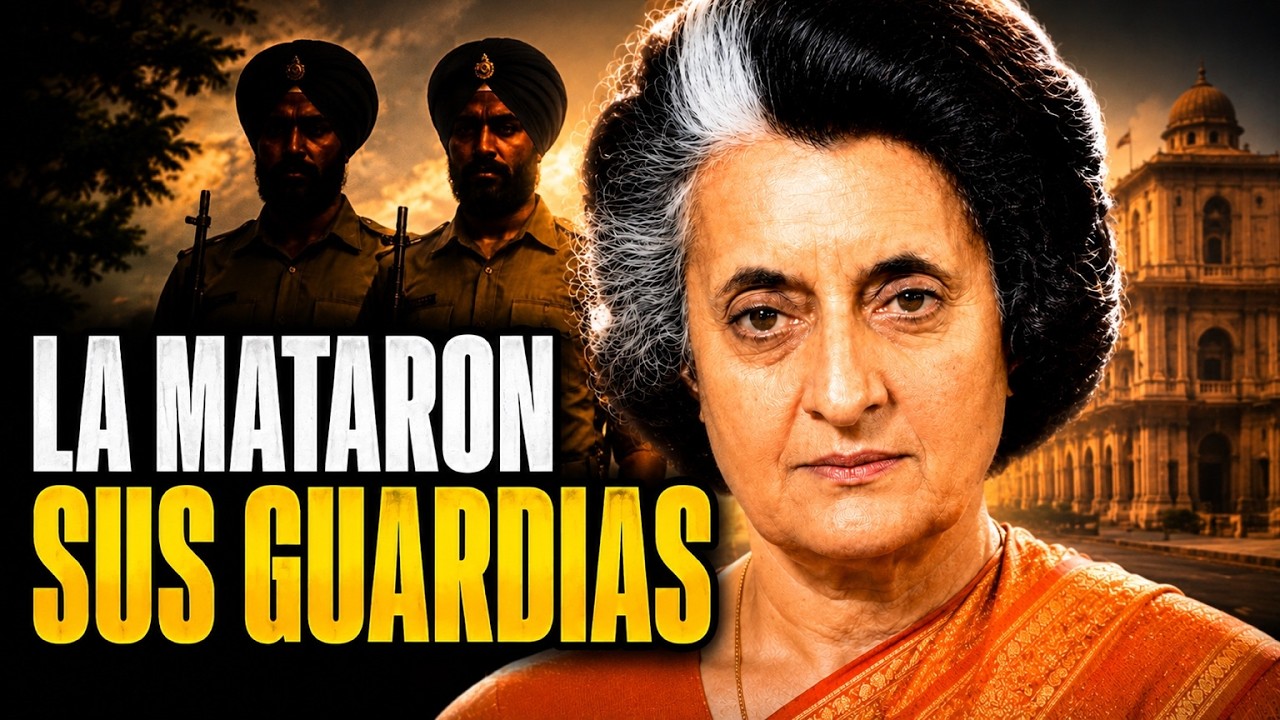
Her final years were haunted by the escalating conflict in Punjab and the fateful decision to order Operation Blue Star, the military storming of the Golden Temple. She knew the spiritual wound this would inflict would likely mark her own death warrant. Even as security experts begged her to remove her Sikh bodyguards, she refused to discriminate based on religion, choosing a principle of secularism that led directly to her assassination in her own garden on October 31, 1984.

💡 Digging Deeper
Q: Why did she support her son Sanjay despite his controversial actions?
A: Sanjay was her emotional blind spot; she trusted him because he was “hers” in a world where she felt no one else truly was.
Q: Did she anticipate her own death?
A: Yes, in her final speech the day before her death, she famously said that every drop of her blood would contribute to the nation’s strength.
Q: What happened to her son Rajiv?
A: A reluctant politician, Rajiv took over as PM after her death but was also assassinated by a suicide bomber in 1991, continuing the family’s tragic cycle.
Key Takeaways
Indira Gandhi’s legacy is a complex tapestry of brilliant statesmanship and authoritarian excess. She took a young, fragile nation and transformed it into a regional power capable of standing up to global superpowers, yet she also proved how easily democratic institutions could be dismantled by a single, determined leader. Her life story suggests that the very traits that made her a successful leader—her self-reliance, her secrecy, and her distrust—were the same traits that led to her greatest political and personal failures.
Ultimately, she remains a figure of tragic solitude. Despite being surrounded by millions of adoring followers and wielding the power of a modern empress, she lived and died within the same psychological vacuum that haunted her childhood. Her story serves as a reminder that power can change the map of a continent, but it can rarely heal the wounds of a lonely heart.
Q&A
Q1: Why was Indira Gandhi called the “only man in her cabinet”?
A1: This was a common saying during her time, reflecting both her dominant, decisive leadership style and the casual sexism of her male colleagues who couldn’t reconcile her power with her gender.
Q2: What was the main reason for “The Emergency”?
A2: Officially, it was to manage internal unrest and economic crisis, but most historians agree it was a move to retain power after a court ruled her 1971 election victory was invalid due to minor irregularities.
Q3: How did her relationship with her father shape her politics?
A3: Nehru provided her “political apprenticeship,” but while he was a romantic and a democrat, Indira was a realist and a pragmatist who prioritized order and stability over ideological purity.
Q4: Did she actually have a “children’s army”?
A4: Yes, the Vanar Sena consisted of thousands of children who performed tasks like printing leaflets and intelligence gathering, which the British police often ignored because they were “just kids.”
Q5: Why is the Nehru-Gandhi family compared to the Kennedys?
A5: Both are powerful political dynasties that experienced multiple generations of leadership followed by sudden, violent assassinations (JFK/Bobby vs. Indira/Rajiv).
Q6: What was her stance on the Cold War?
A6: She maintained a policy of “Non-Alignment” but leaned heavily toward the Soviet Union, especially after the U.S. backed Pakistan during the 1971 conflict.
Q7: What is her reputation in India today?
A7: She remains deeply polarizing; she is revered by many for her strength and pro-poor policies, but criticized by others for the human rights abuses committed during the Emergency.