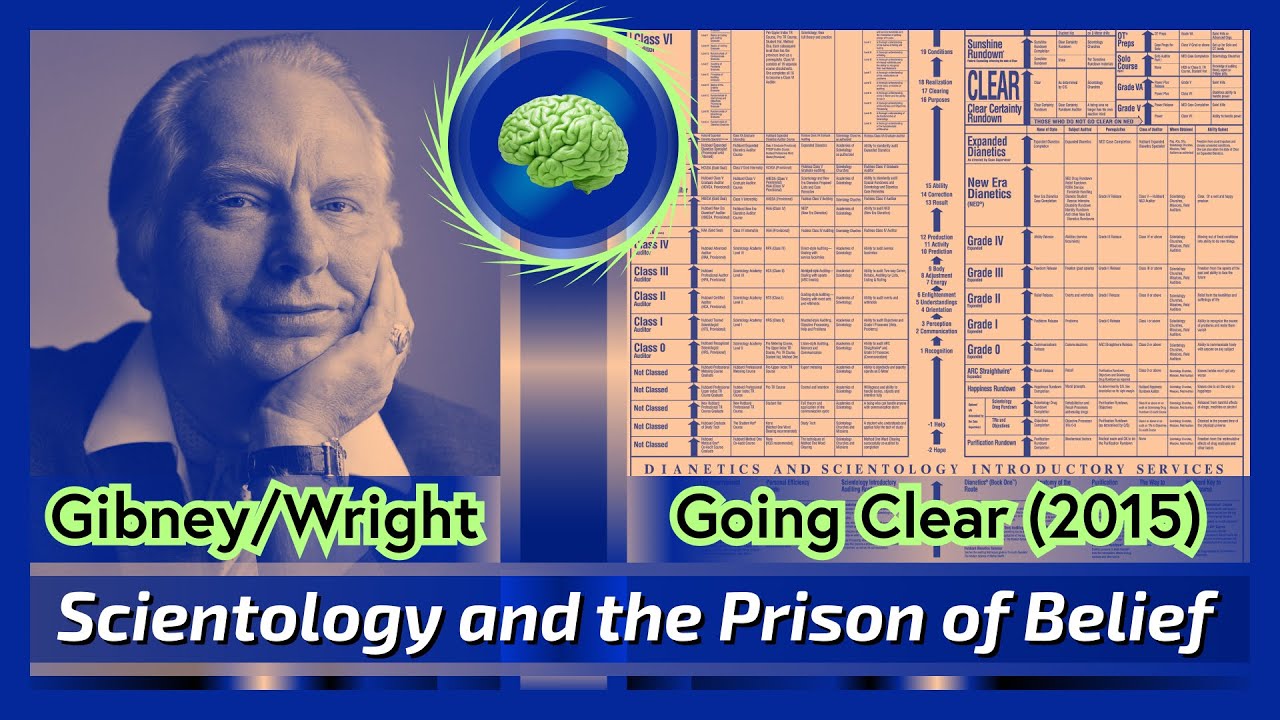
📺 Today’s recommended deep-dive video: https://www.youtube.com/watch?v=nCmV2_OyOUw
The Billion-Year Audit: Inside the Architecture of Scientology
Explore the controversial history of the Church of Scientology, from its origins in pulp fiction to its hard-fought battle for tax-exempt status. This article deconstructs the mechanisms of control, the secret space-opera theology of the upper levels, and the high-stakes world of celebrity recruitment.
Core Question: How did a self-help philosophy created by a science fiction writer evolve into a multi-billion dollar global organization that exerts absolute control over its adherents?
Highlights
- The transition from Dianetics as a mental health practice to Scientology as a protected religion.
- The “Space Opera” theology of Operating Thetan Level III involving the galactic overlord Xenu.
- David Miscavige’s rise to power and the aggressive legal “war” against the IRS.
- The “Fair Game” policy and the practice of Disconnection used to silence critics and former members.
⏱️ Reading time: approx. 12 minutes · Saves you about 108 minutes vs. watching.
Want to take notes while watching? Click the image below and let AI Notebook capture the key points for you 👇

The Architect and the Avalanche
From Pulp Fiction to “Clear”
L. Ron Hubbard began his career as a prolific pulp fiction writer during the Great Depression, hammering out thousands of words at a penny per word on long rolls of butcher paper. This background in speculative storytelling provided the fertile soil from which his later theological frameworks would eventually sprout, blending intergalactic adventure with psychological self-help.
His breakthrough came not with a novel, but with a self-help book titled Dianetics, which promised to heal the human mind through a process called auditing.
The core theory suggested that humans possess two minds: an analytical side that functions like a perfect computer, and a reactive side where traumas, or “engrams,” are stored. By revisiting these traumatic incidents with an auditor and an E-meter, a person could theoretically erase these negative imprints and reach a state called “Clear.” This concept resonated so deeply with a post-war public that the book became an immediate best-seller, sparking an avalanche of followers across America.
Hubbard soon realized that the most sustainable way to protect his burgeoning income and avoid the encroaching reach of government taxes was to rebrand his psychological practice as a formal religion.

💡 Digging Deeper
Q: What exactly is an E-meter?
A: It is a device that measures skin galvanism (electrical resistance). In Scientology, it is believed to detect the “mass” of a person’s thoughts as they revisit past traumas.
Q: Why did Hubbard want to call it a religion?
A: According to his former wife and associates, Hubbard believed a religion would provide a steady income and legal protection from the IRS, as seen in his early 1950s writings.
Q: What was the state of “Clear” supposed to achieve?
A: A “Clear” was said to have a perfect memory, a higher IQ, and freedom from common illnesses and neuroses.
The Secret of Xenu and the Sea Org
The Intergalactic Backstory
As followers progressed up the “Bridge to Total Freedom,” they eventually reached the secret Operating Thetan (OT) levels, where the doctrine takes a sharp turn into science fiction. Members paid hundreds of thousands of dollars before being allowed to read the OT III materials, which describe a galactic catastrophe occurring 75 million years ago involving a tyrant named Xenu.
Xenu supposedly brought billions of people to Earth (then called Teegeeack), placed them in volcanoes, and detonated hydrogen bombs, leaving behind “body thetans” that now cling to humans.
To manage the most dedicated followers, Hubbard created the Sea Org, a paramilitary order where members sign a billion-year contract to serve the church.
The Sea Org was initially run from a fleet of ships in the Mediterranean, where Hubbard—acting as “Commodore”—instituted harsh discipline, including throwing members overboard for minor mistakes. This group became the clerical core of the church, working for pennies an hour under a system of “Ethics” that prioritized the organization’s survival above all else.

💡 Digging Deeper
Q: Do all Scientologists know about Xenu?
A: No. Most members are only aware of the self-improvement aspects; the Xenu story is a “confidential” revelation reserved for those who have spent years and significant money reaching the upper levels.
Q: What is the significance of the billion-year contract?
A: It symbolizes the belief that Scientologists are immortal spiritual beings (thetans) who will return to serve the church in lifetime after lifetime.
Q: What was the “Hole”?
A: A pair of double-wide trailers at the church’s Gold Base where high-ranking executives were allegedly confined and forced to confess “crimes” against leadership.
The Rise of Miscavige and the IRS War
A Coup of Certainty
Following L. Ron Hubbard’s death in 1986, the young and ambitious David Miscavige took control of the organization, outmaneuvering other veterans to become the undisputed leader. Miscavige inherited a church that was under siege by the IRS, facing a tax bill of over $1 billion that threatened to bankrupt the entire operation.
Miscavige initiated an unprecedented legal onslaught, directing thousands of individual scientologists to file personal lawsuits against the IRS and its employees.
The strategy was simple: bury the government agency in a “litigation nightmare” until they surrendered. By 1993, the IRS buckled, granting Scientology tax-exempt status in a move that forgiven the billion-dollar debt and essentially declared its sci-fi novels as religious texts. This victory transformed Scientology from a struggling group into a multi-billion dollar real estate Juggernaut, as they began purchasing prominent buildings in major cities worldwide.
Power became concentrated entirely in Miscavige’s hands, with no internal checks or balances to his authority.

💡 Digging Deeper
Q: How did the IRS victory change the church?
A: It provided a massive financial windfall, as all donations became tax-deductible and the church no longer had to pay taxes on its vast real estate holdings.
Q: What is “Fair Game”?
A: A policy established by Hubbard stating that anyone who suppresses the church can be “tricked, sued, lied to, or destroyed” without being penalized by the organization.
Q: How many people are actually in the church today?
A: While the church claims millions, independent estimates and former executives suggest the active membership has dropped to fewer than 50,000 worldwide.
The Celebrity Trap and the Price of Exit
Stars, Secrets, and Disconnection
Celebrities like Tom Cruise and John Travolta became the public faces of the religion, receiving “red carpet” treatment and specialized auditing to keep them committed. The church allegedly went to extreme lengths to protect these assets, including managing their personal lives and intimidating potential critics who might influence them.
The most feared tool in the Scientology arsenal is “Disconnection,” a policy that forces members to sever all ties with friends or family who are critical of the church.
For those inside, the pressure to conform is absolute, as leaving often means losing one’s entire social network and family structure overnight.
Former high-ranking officials now describe the experience as a form of “mental prison,” where members are taught to self-censor their own thoughts to avoid being labeled a “Suppressive Person.”

Key Takeaways
The story of Scientology is a complex study in the power of “crushing certainty” and the human desire for self-improvement. What begins as a logical-sounding system of mental exercises often evolves into a deep-seated commitment to a hidden, fantastical cosmology that is only revealed after years of financial and emotional investment.
The organization’s survival is rooted in its ability to navigate the legal protections of the First Amendment, using its status as a religion to shield itself from investigations into labor practices and psychological abuse.
Ultimately, the testimony of former members suggests that the church’s greatest strength—its absolute control over its followers—is also its greatest weakness, as more individuals find the courage to speak out and “disconnect” from the organization itself.
Q&A
Q1: Why is auditing so addictive for members?
A1: It functions like a secular confession, providing a sense of euphoria and relief. However, because everything is recorded, these sessions also create a “file” of a member’s most intimate secrets that can be used as leverage.
Q2: Did L. Ron Hubbard believe his own stories?
A2: Former associates are divided; some believe he was a con man who “took the money and ran,” while others think he became a victim of his own delusions, auditing himself until his death.
Q3: What happens to the children of Sea Org members?
A3: Historically, they were often placed in the “Cadet Org,” separated from their parents to minimize distractions from the church’s mission.
Q4: How does the church respond to negative press?
A4: They typically employ “Black PR,” creating smear websites and hiring private investigators to find “criminal” pasts of any critics or journalists.
Q5: Can you just leave Scientology?
A5: You can physically leave, but the social cost of being “declared” usually means your family within the church must never speak to you again.
Q6: What is the current financial state of the church?
A6: Despite declining membership, the church is incredibly wealthy, with over $1.5 billion in liquid assets and billions more in global real estate.
Q7: Why do celebrities stay?
A7: They are often shielded from the darker aspects of the church (like the RPF) and are provided with a dedicated support staff and a “shoulder to cry on.”