📺 Today’s recommended deep-dive video: https://www.youtube.com/watch?v=B4AAhIeD-QQ
The Iran Paradox: Why Missiles Fail Where Technology Could Win
As tensions between the United States, Israel, and Iran reach a fragile ceasefire, the underlying strategy remains as opaque as ever. Jason Rezaian, who spent 544 days in an Iranian prison, argues that Western powers are fundamentally misreading the regime’s resilience while ignoring the most potent weapon at their disposal: the internet.
Core Question: How can the West move beyond ineffective military strikes to provide meaningful support for the 93 million Iranians caught between a brutal regime and isolationist sanctions?
Highlights
- Decapitating leadership does not trigger regime collapse because the power structure is built on deep-seated “horse trading” and succession planning.
- The “meme war” has shifted; Iranian propaganda is now more sophisticated, using “cultural trolling” to radicalize Western youth.
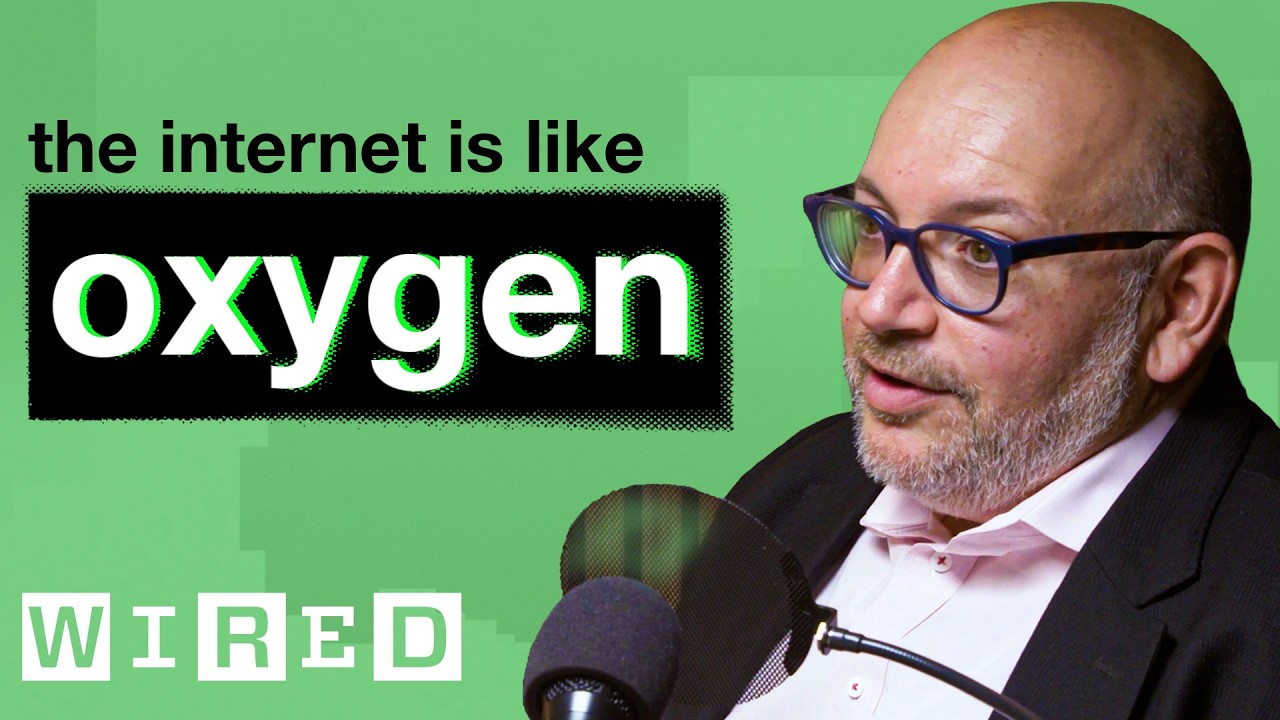
- Internet access is “oxygen” for civil society, yet the U.S. has failed to deploy available satellite technology to bypass regime blackouts.
- Press freedom is being eroded globally as authoritarian states weaponize post-9/11 national security protocols against journalists.
⏱️ Reading time: approx. 7 minutes · Saves you about 38 minutes vs. watching.
Want to take notes while watching? Click the image below and let AI Notebook capture the key points for you 👇

The Myth of the Totalitarian Collapse
Resilience Beyond the Supreme Leader
We have been in a state of constant, low-level conflict with the Islamic Republic of Iran since the 1979 embassy takeover, making this animosity a structural feature of global politics rather than a passing phase.
While Western analysts often predict that killing a “totalitarian” leader will cause a theocracy to crumble like a house of cards, the reality is far more complex. The Iranian power structure is an intricate web of competing interests, horse-trading, and institutionalized redundancy that allows the regime to function even after losing its top-tier leadership. Aerial campaigns, while tactically successful in destroying hardware, have historically failed to create the “opening” for a popular uprising that Washington policymakers frequently fantasize about.
It is a mistake to underestimate the sheer ingenuity of the Iranian system’s survival mechanisms. The regime is ready to absorb levels of pain and force its public to suffer in ways that Western democracies, often preoccupied with domestic gas prices and election cycles, find difficult to comprehend or sustain.

💡 Digging Deeper
Q: Why is Netanyahu considered the “wild card” in the current ceasefire?
A: Unlike the U.S. administration, which faces domestic economic pressure to avoid war, the Israeli leadership may feel a greater existential urgency to continue military operations.
Q: Did the U.S. and Israel “miss something” regarding succession planning?
A: Yes. Washington often treats Iran as a one-man show, ignoring the “layers upon layers” of bureaucratic and military succession that keep the state running.
The Digital Frontline and Meme Warfare
Internet as Oxygen for Democracy
For the 93 million people living in Iran, the internet is not a luxury for scrolling social media; it is the essential oxygen required for civil society to breathe and organize.
The Iranian regime understands this perfectly, which is why they have mastered the “kill switch” to isolate their population during periods of unrest. Despite the United States promising “never again” after the 2009 Green Movement blackouts, the technical tools to keep Iranians online—such as Starlink or direct-to-cell satellite access—remain largely undeployed. These technological solutions are objectively cheaper than the missiles and bombs currently being subsidized by taxpayers, yet they lack a dedicated “champion” in the halls of Congress.
Propaganda has also evolved from clunky state broadcasts into a sophisticated “trolling” machine. By outsourcing content to creators who understand Western cultural fractures, the regime now produces high-quality “Lego” videos and viral memes designed to radicalize young people abroad. This new wave of disinformation is far more effective than the “bizarre movie-clip propaganda” produced by recent U.S. administrations, as it leverages existing internal divisions within American society.

💡 Digging Deeper
Q: What are “white SIM cards” in the context of an internet blackout?
A: These are SIM cards with state-approved access, meaning anyone posting from Iran during a blackout is likely doing so with the regime’s implicit permission.
Q: How has Iranian propaganda changed since 2014?
A: It has moved away from purely ideological Islamic messaging toward “cultural trolling” that focuses on Western issues like gun violence and the Epstein files.
The Human Cost of Geopolitical Pride
Journalists in the Crosshairs
The decline of press freedom in democratic societies has provided a blueprint for authoritarian regimes to weaponize national security laws against truth-tellers.
When a journalist is arrested on “national security” grounds today, regimes often point to precedents like Guantanamo Bay to justify denying access to lawyers or due process. This creates a terrifying environment where journalists are not just silenced, but dehumanized to deter others from entering the profession. For those who manage to escape, the “journalist in exile” faces a new gauntlet of bureaucratic hurdles in the West, from work authorization delays to the inability to open simple bank accounts.
Within the United States, the stability of major news institutions like the Washington Post is under scrutiny as they transition into for-profit models that may prioritize layoffs over expensive international coverage. If we are to continue covering regions where we can no longer safely send reporters, we must build a hybrid model that supports exiled journalists and independent creators. Without these “eyes on the ground,” the world loses its ability to verify facts in an era of deep fakes and state-sponsored misinformation.

💡 Digging Deeper
Q: Why is it difficult for exiled journalists to contribute to U.S. newsrooms?
A: Rigid immigration laws prevent them from legally working for months, and they often lack the technical “tooling” to fit into traditional media frameworks.
Q: How does the Iranian regime view Western-educated Iranians?
A: Often with suspicion; they frequently use travel bans and hostage-taking as a way to keep civil society isolated from Western influence.
Key Takeaways
The conflict with Iran is often presented as a choice between military intervention and passive sanctions, but this binary ignores the people who live there. Jason Rezaian makes it clear that the Iranian public has consistently voted for reformers and “opening up” whenever given the chance, only to see those aspirations crushed by both domestic repression and Western policies that inadvertently strengthen the regime’s grip. By focusing on kinetic warfare, the U.S. misses the opportunity to use its soft power—cultural, technological, and educational—to support the very people who could change the country from within.
Furthermore, the “information war” is being lost because the West is playing an old game while the regime has embraced modern trolling. To counter this, we need a consistent national policy toward Iran that doesn’t flip every four years with the U.S. election cycle. Providing internet access and supporting the free press are not just “nice ideas”; they are strategic imperatives that are significantly more cost-effective than the current cycle of missile strikes and “fragile” ceasefires.
Q&A
Q1: Why does the regime take hostages if it wants foreign investment?
A: It is a contradiction of survival; the regime courts investment to stay afloat but takes hostages to use as leverage and to ensure that no “soft power” or independent influence takes root.
Q2: Is the Iranian regime a “paper tiger”?
A: Not exactly. While it cannot win a conventional war against the U.S., it excels at asymmetric warfare and is highly capable of maintaining domestic control through violence.
Q3: Can the U.S. actually “turn the internet back on” in Iran?
A: Technically, yes. Through executive orders and contracts with satellite providers, the U.S. could provide connectivity that bypasses ground-based infrastructure.
Q4: What was the “Michael Hashemian” television series?
A: It was a 30-episode Iranian state-propaganda show designed to smear Jason Rezaian as a spy after his release, using a character clearly modeled after him.
Q5: How many Iran experts does the U.S. government actually have?
A: Shockingly few. Rezaian notes that there are likely more people working on strategic communications for Belgium than there are Persian-speaking experts focused on Iran.
Q6: What is the biggest mistake the U.S. makes in its Iran policy?
A: Treating it as a “political football” that changes every election cycle rather than maintaining a long-term, consistent national strategy.
Q7: Why are weather forecasts being “deleted” in the closing game?
A: Rezaian jokes that they have become so inaccurate that they are essentially useless, and we might as well “go with God” and hope for the best.