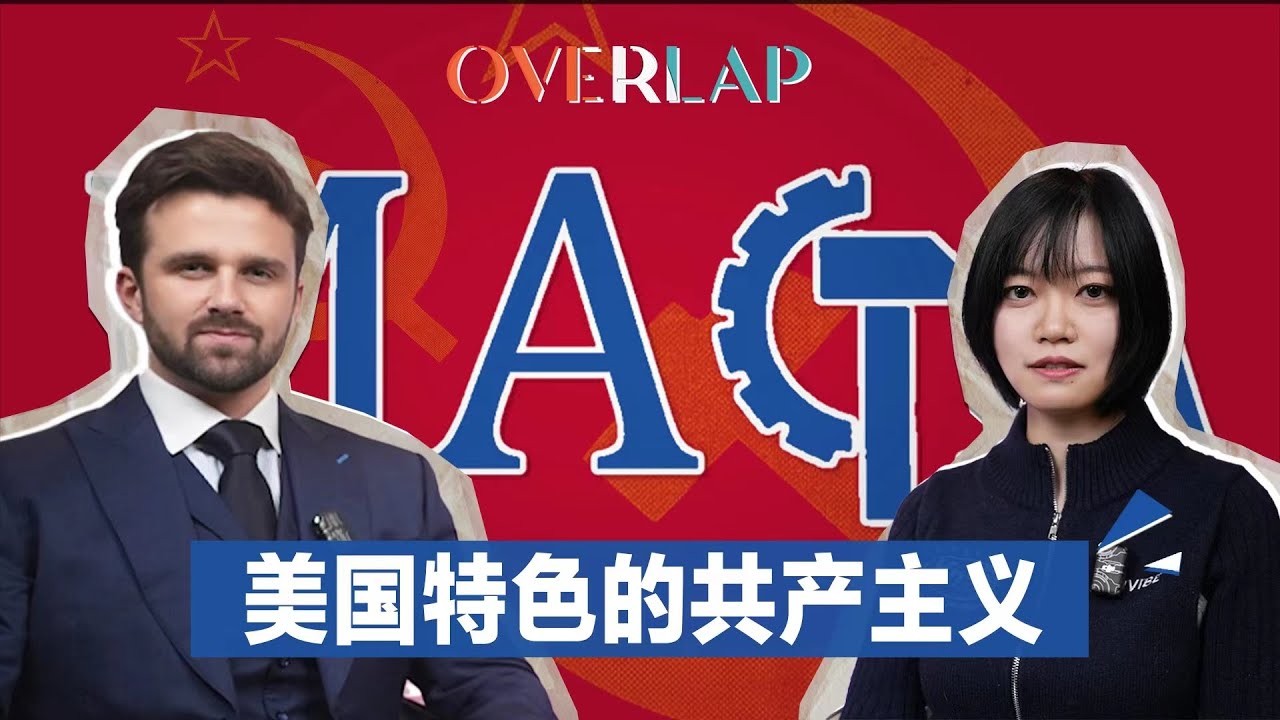
📺 Today’s recommended deep-dive video: https://www.youtube.com/watch?v=9NttH8IdhyU
The Populist Fusion: Jackson Hinkle on MAGA Communism and the Multi-Polar World
As the American political landscape fractures, a new generation of activists is rejecting the traditional left-right divide in favor of a radical synthesis that challenges the core tenets of Western foreign policy. Jackson Hinkle discusses his journey from being deplatformed to finding a common vision between American populist movements and the rapid developmental success of China.
Core Question: Can “MAGA Communism” provide a viable alternative to the American “permanent war state” by prioritizing domestic production and international cooperation?
Highlights
- The systematic deplatforming of independent voices that challenge U.S. foreign policy “orthodoxy.”
- The definition of MAGA Communism as a working-class movement focused on development over financialization.
- Gen Z’s growing rejection of the “permanent war state” and the $900 billion military budget.
- The stark contrast between American debt-driven living and China’s state-led infrastructure and social stability.
⏱️ Reading time: approx. 7 minutes · Saves you about 26 minutes vs. watching.
Want to take notes while watching? Click the image below and let AI Notebook capture the key points for you 👇

The Information War and the Rise of MAGA Communism
Escaping the Digital “Matrix”
Jackson Hinkle’s expulsion from mainstream digital platforms highlights a growing fracture in the Western information landscape.
After building a massive following on YouTube by covering the Russia-Ukraine conflict and the rise of the BRICS nations, Hinkle was permanently banned from nearly every major American financial and social platform, including PayPal and WhatsApp. He argues that this systematic cancellation occurs because his reporting challenges the “war orthodoxy” of the U.S. government, particularly regarding the resilience of the Russian economy under sanctions and the reality of Chinese development.
Now operating primarily on Elon Musk’s X, Hinkle has become a leading voice for “MAGA Communism.” This movement seeks to redirect the energy of the American populist right toward a developmentalist, anti-imperialist framework that prioritizes domestic production over the interests of global finance capital.

💡 Digging Deeper
Q: Why was Jackson Hinkle banned from YouTube?
A: He attributes the ban to his “Pro-Russia” stance and his reporting that suggested Western sanctions were failing to harm the Russian economy.
Q: What is the core goal of MAGA Communism?
A: It is an attempt to introduce class consciousness to Trump’s voter base, focusing on manufacturing and development rather than the “hyper-financialization” of the U.S. economy.
Gen Z: Debt, War, and Disillusionment
Living in the “Belly of the Beast”
Generation Z in America faces a unique predicament, having grown up in a state of “permanent warfare” while simultaneously drowning in historic levels of personal debt.
For a 24-year-old like Hinkle, the contrast between $900 billion in military spending and the lack of basic social safety nets is no longer just a political debate; it is a lived crisis. The youth are witnessing the erosion of the “middle-class dream” their grandparents enjoyed, replaced by a “gig economy” where multiple jobs are required just to service healthcare and student loan interest.
Young Americans are increasingly disillusioned with both major political parties, viewing them as two sides of the same corporate coin that favors military expansion over affordable housing. This frustration has manifested in overwhelming support for Gaza among the youth, where up to 85% of young voters oppose the current administration’s foreign policy, driving a wedge between the electorate and the institutional ruling class.

💡 Digging Deeper
Q: How does Gen Z view the conflict in Gaza compared to older generations?
A: Hinkle notes that while older Americans are more likely to support government policy, roughly 85% of young people oppose the U.S. stance on Gaza.
Q: Is education a primary factor in these political views?
A: Hinkle argues that elite universities have become “liberal bubbles” of propaganda, and that being “uneducated” by that system actually allows working-class people to see the truth more clearly.
The Reality of the Multi-Polar World
Development vs. Financialization
Hinkle’s first visit to China has reinforced his belief that the American public is being systematically lied to regarding Chinese society and its economic achievements.
He points to the discrepancy between Western media narratives of “genocide” in Xinjiang and the visible economic invigoration he observed, suggesting that the U.S. uses these stories to distract from its own internal failures. To Hinkle, the “Social Credit System” and other talking points are merely tools of a propaganda machine designed to prevent Americans from demanding similar levels of infrastructure and state-led efficiency.
The American economy, by contrast, has devolved into a “Byzantine labyrinth” of speculation and debt hedging where the working class is forced to juggle multiple roles like Uber or delivery services just to survive.
While Chinese youth may joke about “lying flat,” Hinkle sees a society that is still fundamentally geared toward collective progress and tangible manufacturing success.

💡 Digging Deeper
Q: What was Hinkle’s impression of Chinese infrastructure compared to the West?
A: He was highly impressed by development zones like Lingang, stating they blow even high-profile projects in the UAE or Saudi Arabia “out of the water.”
Q: How does he define “Communism with American characteristics”?
A: He sees it as a movement based on American history and culture, focusing on the specific problems of the U.S. working class rather than Soviet or Chinese models.
Key Takeaways
MAGA Communism represents a radical shift in American populism, moving away from “cultural liberalism” and toward a focus on national development and anti-imperialism. It seeks to bridge the gap between the traditional American right and Marxist principles by focusing on the material needs of the working class—specifically the demand for jobs, housing, and an end to foreign wars.
The intense distrust of mainstream media among Gen Z is fueling a migration to alternative platforms, creating a “Matrix”-like divide between institutional narratives and public perception. As young people struggle with the cost of education and the absence of a social safety net, they are increasingly looking toward the multi-polar world—led by the growth of BRICS and the production power of China—as a model for what a functional state could achieve.
Ultimately, the dialogue suggests that the “American Dream” is no longer attainable under the current financialized system. For the youth, the choice is between continuing the path of permanent war and debt or embracing a new developmentalist framework that puts the needs of the average citizen above the interests of the global ruling class.
Q&A
Q1: What platforms has Jackson Hinkle been banned from?
A: He has been permanently banned from YouTube, Twitch, PayPal, Venmo, and WhatsApp, which he describes as a “badge of honor” for challenging U.S. foreign policy.
Q2: How does he describe the difference between Western and Eastern communism?
A: In the West, he argues communism has become associated with “cultural liberalism” and “degeneracy,” whereas in China and Russia, it is understood as a tool for uplifting the common people and national prosperity.
Q3: What is the main economic concern for Young Americans today?
A: The youth are primarily concerned with inflation, the lack of a social welfare state, and the fact that basic goods and housing have become unaffordable while the government spends billions on the military.
Q4: Does Hinkle believe the American media is honest about China?
A: No, he believes the mainstream media tells “complete and utter lies” about issues like Xinjiang and the social credit system to prevent Americans from seeing China’s success.
Q5: What is the “Matrix” Hinkle refers to?
A: It is a term used by influencers like Andrew Tate to describe the web of mainstream media narratives and government propaganda that hides the truth from the public.
Q6: Why does Hinkle think American universities are failing?
A: He views them as expensive “propaganda” centers where students are taught to support the permanent war state and where dissenting professors are quickly fired.
Q7: What does he mean by “hyper-financialization”?
A: He refers to an economy that produces nothing tangible and instead relies on speculation, debt, and stock market hedging, which he believes is destroying the American working class.