📺 Today’s recommended deep-dive video: https://www.youtube.com/watch?v=I753-8PIjd0
Voyage to the Brink: A 13.5 Billion Year Odyssey through the Cosmos
Our world feels vast and permanent, but beyond the thin veil of our atmosphere lies an ocean of fire, ice, and absolute darkness. This is the story of leaving the comfort of home to witness the birth of stars, the violent collisions of planets, and the final limits of human understanding.
Core Question: How does the journey from our familiar solar system to the echoes of the Big Bang redefine humanity’s place in an immense, often hostile universe?
Highlights
- The Moon was forged from a violent planetary collision with Earth 4.5 billion years ago.
- Venus serves as a grim warning of global warming gone wild, with acid rain and crushing pressures.
- Jupiter’s moon Europa and Saturn’s Titan represent our best hopes for finding alien life or future colonies.
- All life on Earth is composed of “stellar nuclear waste,” forged in the hearts of dying stars.
⏱️ Reading time: approx. 8 minutes · Saves you about 83 minutes vs. watching.
Want to take notes while watching? Click the image below and let AI Notebook capture the key points for you 👇

The Inner Sanctum: From the Moon to the Solar Furnace
Our Scorched Neighbors
The Moon is not just a distant satellite; it is a ghost of Earth’s own violent past, born from a planetary collision. Analysis of lunar rocks proves they were once part of our world, blasted into orbit by a stray planet billions of years ago.
Beyond this familiar companion, the inner solar system presents a series of hellish environments that defy human survival. Venus, once perhaps a twin to Earth, is now a suffocating furnace where carbon dioxide traps heat to reach 500 degrees Celsius. Its sister, Mercury, is a scarred ball of iron, stripped of its outer layers by the Sun’s proximity and ancient impacts. These worlds prove that habitability is a fragile miracle, easily lost to the whims of orbital mechanics and atmospheric chemistry.
The Sun is the undisputed master of this domain, a turbulent sea of incandescent gas so massive it could swallow a million Earths. Within its core, nuclear fusion transforms matter into energy at a scale that powers all biological life on our planet, yet its surface is a battlefield of magnetic loops and solar flares. A single prominence can dwarf our world, releasing energy equivalent to ten million volcanoes, reminding us that the light giving us life is also a source of deadly radiation.

💡 Digging Deeper
Q: Why are Neil Armstrong’s footprints still visible?
A: Because the Moon has no atmosphere or wind to erode them, they could theoretically last for millions of years.
Q: Is Mercury just a dead rock?
A: Not entirely; it has a surprisingly powerful gravitational pull for its size, suggesting it is mostly a heavy iron core covered in a thin rocky veneer.
Q: What are sunspots?
A: They are cooler regions of the Sun’s surface caused by magnetic activity, appearing black only in contrast to the much hotter surrounding gas.
The Search for Life in the Outer Dark
Water, Ice, and Gas Giants
Mars remains the primary focus of our extraterrestrial curiosity, serving as a giant red fossil that may still harbor secrets of ancient life. While its surface is a frozen desert blasted by ultraviolet rays, the presence of dried riverbeds and massive extinct volcanoes like Olympus Mons suggests a wet, geologically active past. If volcanic heat still exists underground, it could melt permafrost, creating sub-surface sanctuaries where microbes might still thrive today.
Jupiter and Saturn act as the heavyweights of our system, their gravity shaping the orbits of everything around them. Jupiter’s immense mass prevented the asteroid belt from ever forming a planet, while its moon Europa hides a liquid ocean beneath a thick crust of ice.
Saturn is the solar system’s jewel, famous for rings made of billions of icy shards that act as a snapshot of the early solar system’s debris. Its largest moon, Titan, is a strange mirror of Earth, featuring clouds, rain, and lakes, though the liquid is natural gas rather than water. These moons represent the “Goldilocks” possibility—places where life might exist far beyond the traditional habitable zone of the Sun.
💡 Digging Deeper
Q: Could humans live on Titan?
A: It is extremely cold (-180°C), but it has a thick atmosphere and vast reserves of fuel, making it a candidate for future colonization if we can handle the temperature.
Q: What is the Great Red Spot?
A: It is a massive, high-pressure storm on Jupiter, three times the size of Earth, that has been raging for at least 300 years.
Q: Why are asteroids called “birth certificates”?
A: Because they are the leftover rubble from the formation of the solar system, and dating them tells us exactly how old our planets are.
The Life and Death of Stars
From Nebulas to Black Holes
Stars are not eternal; they are born in massive “factories” like the Orion Nebula, where gravity pulls dust and gas into spheres of nuclear fire. We are fundamentally connected to this process because the very atoms in our bodies were forged inside these celestial furnaces. When a star dies, it ejects oxygen, nitrogen, and carbon—the essential building blocks of life—into the void to be recycled into new worlds.
The death of a star is rarely quiet, ranging from the graceful collapse of a White Dwarf to the violent eruption of a Supernova. A Supernova is so powerful it can forge heavy elements like gold and silver, scattering them across light years. In the most extreme cases, the core of a massive star collapses into a Pulsar—a spinning city-sized ball so dense a pinhead would weigh millions of tons—or even a Black Hole.
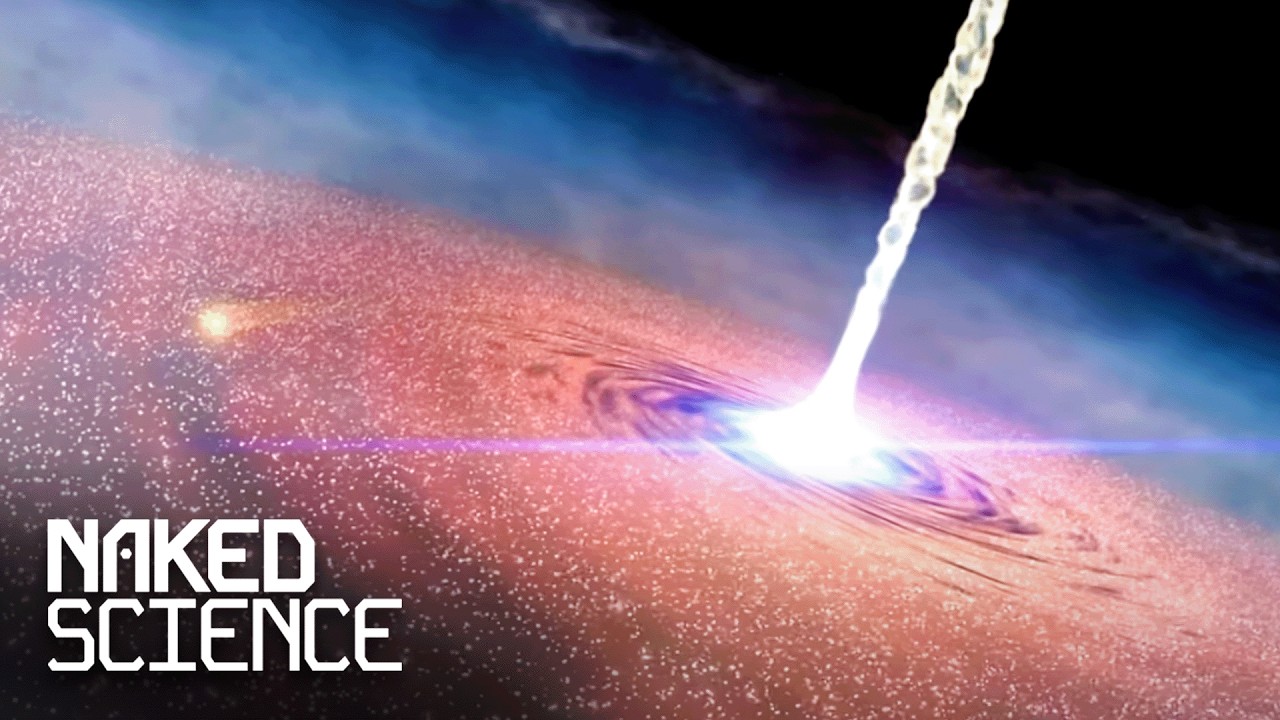
A Black Hole represents the absolute limit of our physical laws, a point where gravity is so intense that not even light can escape. These gravitational sinks can devour entire star systems, dragging matter into a singularity where time and space as we know them cease to exist. They are the ultimate predators of the galaxy, invisible until they begin to tear apart nearby stars, creating a swirling cauldron of superheated gas.

The Final Frontier: The Edge of Time
Galaxies and the Big Bang
Leaving the Milky Way reveals a universe populated by billions of galaxies, each a distinct island of stars moving through the vastness of intergalactic space. We also encounter the mystery of Dark Matter, an invisible substance that provides the gravitational glue holding galaxies together. Without this unseen force, the fast-spinning clusters of stars would simply fly apart into the vacuum.
As we look further into space, we are actually looking further back in time. The most distant objects we can see are Quasars, incredibly bright beacons powered by supermassive black holes in the centers of young galaxies. These light sources reached us from billions of years ago, showing us the universe in its chaotic, energetic infancy before the Earth even existed.
The journey ends at the Big Bang, the singular moment 13.5 billion years ago when all space, time, and matter erupted from a point smaller than an atom. The Afterglow of this explosion is still detectable today as cosmic background radiation, a faint hiss of static that fills the universe. Everything we have seen—the stars, the planets, and our own lives—are merely the cooling sparks of that original, creative fire.

Key Takeaways
The journey to the edge of the universe reveals a startling paradox: we are both utterly insignificant and incredibly unique. Our home planet is a “cooling cinder” in a vast, violent landscape dominated by insatiable black holes and scorched planets. Yet, it is the only place we have found where the conditions for life are perfectly balanced.
We are literally made of stardust. The iron in our blood and the calcium in our bones were forged in the deaths of ancient stars, meaning the universe is not just something we observe—it is part of us. Understanding this connection gives us a profound responsibility to cherish our “remote little outpost” in the dark.
Q&A
Q1: How far is the Moon from Earth in travel time?
A: It is roughly 400,000 kilometers away, which takes about three days to reach in a standard spacecraft.
Q2: What is the theory regarding Mars and the origin of life on Earth?
A: Some scientists theorize that an asteroid impact on Mars could have blasted microbes into space, which eventually landed on a young Earth and seeded life here.
Q3: How much natural gas is on Saturn’s moon Titan?
A: Titan contains hundreds of times more liquid natural gas and oil reserves than all the known reserves on Earth.
Q4: What is the “demon star” Algol?
A: Algol is a binary star system where one star is actually being sucked into and devoured by the other due to gravitational proximity.
Q5: How fast does the Andromeda galaxy move?
A: It is traveling through space at nearly a million kilometers per hour and is currently on a trajectory toward our own galaxy.
Q6: What is a Quasar?
A: A Quasar is the extremely bright and energetic center of a young galaxy, powered by a supermassive black hole devouring surrounding matter.
Q7: How can we still “see” the Big Bang?
A: The light and energy from the Big Bang have stretched into microwaves that can be detected as static on old, untuned television sets.