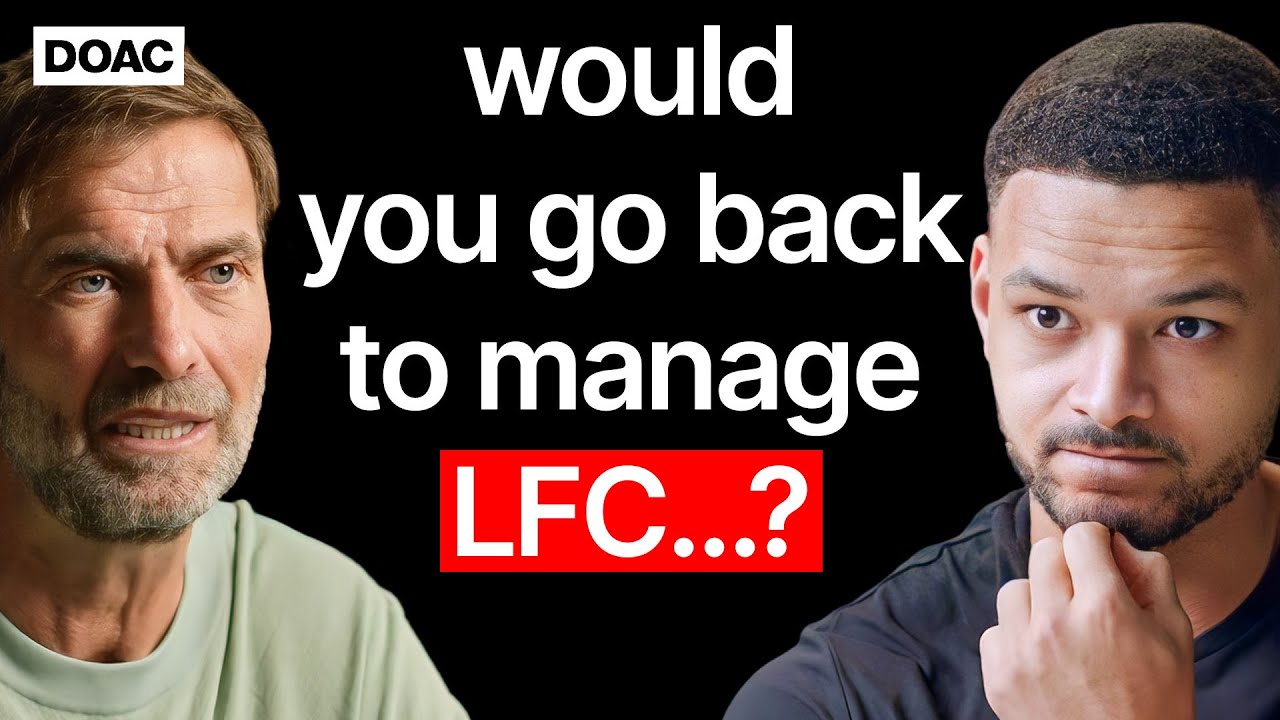
📺 Today’s recommended deep-dive video: https://www.youtube.com/watch?v=UMy6GESNkDc
The Heavy Metal Human: Jürgen Klopp on Leadership, Loss, and the Anatomy of Success
From the high-intensity sidelines of Anfield to the quiet discipline of a father working three jobs at twenty, Jürgen Klopp’s journey is a masterclass in the intersection of professional excellence and radical empathy. This article dissects how he transformed dysfunctional clubs into global powerhouses by prioritizing human connection over commercial metrics.
Core Question: How does a leader maintain world-class competitive intensity while treating every individual with bespoke, person-centered empathy?
Highlights
- The Fatherhood Catalyst: How becoming a dad at 20 forced Klopp into a premature but vital maturity that defined his disciplined coaching style.
- Bespoke Leadership: Why the corporate “consistency” model fails in sports, and why treating everyone differently is the only way to be fair.
- Football Over Brand: The real reason Klopp turned down Manchester United in favor of a “football project” at Liverpool.
- The Energy Tank: A candid look at the exhaustion that forced his departure and the specific cultural “spirit” he left behind.
⏱️ Reading time: approx. 12 minutes · Saves you about 136 minutes vs. watching.
Want to take notes while watching? Click the image below and let AI Notebook capture the key points for you 👇

The Foundation of a Warrior
Childhood Duality and the 20-Year-Old Adult
Jürgen Klopp’s leadership style is a direct product of the environment in which he was raised, characterized by a sharp dichotomy between his parents. His father, a competitive salesman, never let a young Jürgen win a race or a ski descent, instilling a relentless “warrior” spirit and a public-speaking confidence that would later define his media presence. Conversely, his mother provided an unconditional “love of people” and empathy that allowed him to see players as humans rather than just assets on a balance sheet.
The defining moment of his life was not a trophy win, but the night of December 13, 1988, when his son was born.
At just 20 years old, while his peers were partying at university, Klopp was playing semi-professional football in the German third division while juggling two other jobs to provide for his family. This period of “premature adulthood” taught him a level of discipline he hadn’t learned at home, molding him into the “energy giver” who would eventually command the respect of the world’s most elite athletes.

💡 Digging Deeper
Q: Did your father’s refusal to let you win create resentment?
A: No, I loved him to bits; he was a good guy who was simply afraid I wouldn’t be ambitious enough, so he pushed me to find my own competitive edge.
Q: How did having three jobs while playing football help you later?
A: It made me an adult earlier than everyone else, teaching me the value of time and the necessity of giving my absolute all to every minute of the ninety.
The Philosophy of Bespoke Leadership
Treating Everyone Differently to Be Fair
Klopp rejects the standard business advice that a leader must be “consistent” by treating everyone the same. He argues that if you have a player from Munich who grew up with everything and a player from a village in Senegal who grew up with nothing, treating them identically is actually a form of injustice. To lead effectively, he insists you must pick the individual up from where they actually stand, not from where you wish they were.
He views the job of a leader as making the target “clear like the sun” so that players move toward it automatically.
This requires deep, private conversations that have nothing to do with tactics. Klopp’s approach involves asking if a player slept well or if there are problems at home, understanding that confidence is a “fragile flower” that is constantly being stepped on by the public and the media. By shielding his players from external ruthlessness and building internal bonds, he creates an environment where they feel safe enough to fly.
💡 Digging Deeper
Q: How do you handle a player who posts something controversial on social media?
A: I don’t shout at them privately; I ask them to explain what they meant in front of the whole team, which usually ensures it never happens again.
Q: Is it okay to lie to the media to protect a player?
A: We protect players from the ruthless public, but I prefer to handle the truth of their struggles internally rather than lying outright.
The “Football Project” and the Liverpool Way
Choosing the Project over the Brand
When Klopp moved to Liverpool, he famously dubbed himself “The Normal One,” but his impact was anything but ordinary. He revealed that he had earlier turned down Manchester United because their pitch felt too commercial—focused on signing “Galacticos” and big names rather than building a cohesive football identity. Liverpool, despite its then-dysfunctional state and small dressing rooms, felt like a “pure football project” where he could build something from the ground up.
The “Heavy Metal” label was actually a byproduct of a comparison to Arsène Wenger’s “orchestra-like” football.
Klopp wanted his team to play with a “spark and fire” that made opponents anxious just watching them. For him, the infrastructure was just as important as the starting XI; during his tenure, he prioritized building new stands and a world-class training ground to ensure the club benefited long after his departure. He focused on signing players with the right “culture fit” rather than just the most Instagram followers.

💡 Digging Deeper
Q: Why is “Heavy Metal” football so effective?
A: Because it demands you don’t waste a second; if you’re going to be there for 90 minutes, you might as well give your absolute all to ensure you have no regrets.
Q: What is the “Liverpool Way”?
A: It’s understanding that the club means more to the community than just football; you have a responsibility to the city to be more than just a sports team.
The Energy Giver’s Departure
Why the “Normal One” Had to Leave
Klopp’s departure from Liverpool was not due to a lack of love for the club, but a realization regarding his own energy levels. As the “energy giver” for the entire organization, he realized he could no longer provide the 100% intensity that the club deserved. During the COVID-19 era, he had taken on the roles of sporting director and leader of the pack when structures around him shifted, which added significantly to his mental load.
He didn’t want to stay until he “barely could move” or became a figurehead who wasn’t truly present.
Now at 58, he is focused on his role with Red Bull and enjoying time with his family, including his grandkids. While he hasn’t ruled out a return to coaching in the distant future, he is firm that he will never coach another English team. He remains a “number one supporter” of his former players, even those who might not “love back” with the same intensity.

💡 Digging Deeper
Q: Will you ever go back to Liverpool?
A: Theoretically, it’s possible, but right now I don’t miss the rain or the three press conferences a week; I’m enjoying a different kind of focus.
Q: What do you miss most about the job?
A: I miss the people and hearing the players laugh in the restaurant, but I don’t miss the pressure of being in the “chair” before a big match.
Key Takeaways
Jürgen Klopp’s legacy is defined by a refusal to separate the professional from the personal. He proved that high-level success does not require a cold, detached leadership style; in fact, he argues that deep emotional bonds and mutual respect for everyone—from the gardeners to the star strikers—are the “tactical” secrets that allow a team to walk through fire together.
Success, in Klopp’s view, is a byproduct of togetherness. By building a “football project” that prioritized character over commercial appeal, he created a self-sustaining culture at Liverpool. He leaves the game (for now) not just with trophies, but with a blueprint for how to lead with a “heavy metal” heart in a world that often demands a cold, machine-like consistency.
Q&A
Q1: Why did you choose Liverpool over Manchester United in 2013?
A: United felt like they were focused on signing the biggest names and being a commercial giant, whereas Liverpool felt like a “football project” where I could build a specific identity and culture.
Q2: How do you handle a team after a devastating loss?
A: I treat it as information. If you don’t learn from it, it’s a defeat; if you learn from it, it’s a vital lesson. I’ve even forced players to go to post-match parties after losses to remind them that the journey itself is the achievement.
Q3: What is your secret to managing big personalities like Salah or Mané?
A: You have to accept that you can’t always have “flowers and harmony.” It’s a competitive environment. You treat them with respect, but you also have to be the one who tells them when something isn’t right.
Q4: How important was the “gardener” in your coaching philosophy?
A: Critically important. If you don’t respect the staff, you can’t truly respect your teammates. Total togetherness means everyone in the building feels like they are part of the win.
Q5: Will you ever coach in the Premier League again?
A: No. I have said I will never coach another English team besides Liverpool, and right now, I am very happy with my life away from the touchline.
Q6: What is “Heavy Metal” football really about?
A: It’s about not holding back. We earn our money because people are interested in the game, and the only way to repay that is to give 100% intensity from the first to the last minute.