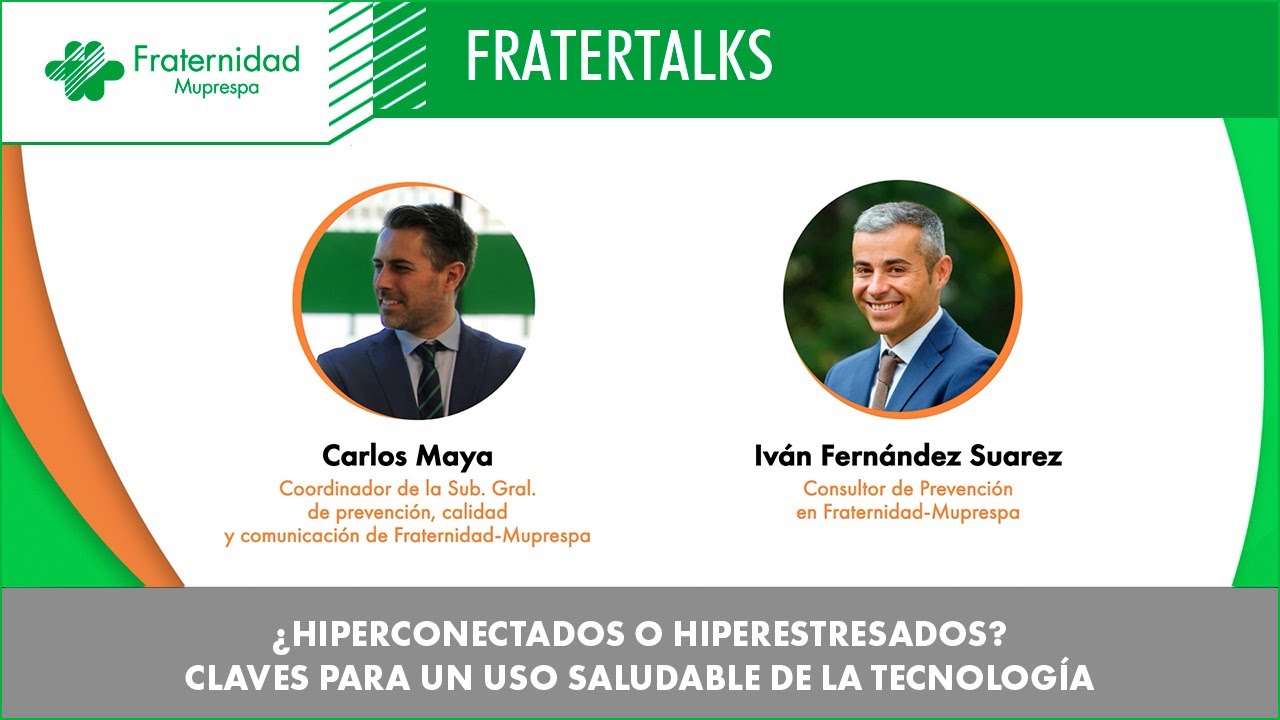
📺 Today’s recommended deep-dive video: https://www.youtube.com/watch?v=IOSGHH3ipRI
Hyperconnected or Hyperstressed? Finding Your Digital Balance
In an era where notifications never rest, the boundary between professional demands and personal peace has practically vanished. This article explores the biological and psychological toll of being “always on” and provides a roadmap for reclaiming your mental health from the digital void.
Core Question: How can we transition from a state of constant digital dependency to a healthy, sustainable relationship with technology?
Highlights
- The average Spaniard spends 4.5 hours daily on their phone, contributing to a staggering 10-14 hours of total screen time.
- Prolonged stress acts like a “torn ligament” in the mind; unlike a simple strain, it requires professional intervention rather than just a weekend off.
- Organizations often treat machinery with more care than their human talent, neglecting the “mental maintenance” required for high-performing employees.
- Reclaiming digital wellbeing requires “planned boredom” and individualized activities that cause the perception of time to disappear.
⏱️ Reading time: approx. 7 minutes · Saves you about 49 minutes vs. watching.
Want to take notes while watching? Click the image below and let AI Notebook capture the key points for you 👇

The Invisible Weight of the Screen
A Generational Leap in Exposure
We have transitioned from a world where our parents might have watched an hour of television a day to a reality where we are tethered to screens for nearly every waking hour. This isn’t just a lifestyle change; it is a massive biological experiment in exposure. Iván Fernández highlights that we now spend between 10 to 14 hours a day looking at computers, tablets, and smartphones.
When we discuss risk prevention, we look at “exposure time” and “consequences.”
In just one generation, our exposure to digital stimuli has increased by nearly 1,000%. This shift has happened so rapidly that our brains haven’t had time to evolve the necessary defense mechanisms to handle the constant barrage of information.

The Death of Boredom
We have lost the ability to simply “be.” In the past, waiting for a bus or sitting in a park involved a degree of mental wandering or “divagation.” Today, we view the slightest hint of boredom as a void that must be immediately filled with a smartphone.
This constant stimulation keeps our brains at maximum revolutions all day long.
When you finally hit the pillow and tell your brain to sleep, it refuses. You have spent 16 hours bombarding it with reels, emails, and notifications; you cannot expect it to switch off instantly just because the lights are out.
💡 Digging Deeper
Q: Is our relationship with the phone an addiction or a dependency?
A: While some suffer from clinical addiction (especially regarding gaming or gambling), most of us suffer from a deep dependency. The phone has become an external organ containing our bank, our work, and our social lives.
Q: What is a “Smombie”?
A: It is a “smartphone zombie”—someone so distracted by their screen that they lose situational awareness, leading to a massive spike in pedestrian accidents and workplace errors.
The Biological Price: Stress vs. Burnout
The Athlete Metaphor
To understand mental health, we should look at the physical body. If an Olympic athlete overexerts themselves during a single session, they might suffer a muscle contracture. This is like acute stress; it is uncomfortable, but a few days of rest will fix the fiber.
However, if that athlete trains above their capacity for months without rest, they will tear a ligament.
A torn ligament does not heal with a week at the beach. It requires surgery. The human mind is identical; if you are “burned out” (Burnout), your mental resources are so depleted that simple rest is no longer the cure. You require psychological or psychiatric intervention to “suture” the damage.

The Silent Pandemic of ECNTs
Hyperconnectivity is a primary driver of Non-Communicable Chronic Diseases (ECNTs). These are the real killers of the developed world: obesity, hypertension, sedentary lifestyle issues, and digestive problems.
The “Always On” culture keeps cortisol levels high, which directly affects our metabolic health.
Stress even changes our palate. When we are emotionally exhausted, our brain doesn’t crave a salad; it demands “Camer-spec” (German for “grief bacon”)—sugary, fatty foods that provide a temporary dopamine hit but degrade our long-term health.
Human-Centric Management
Maintenance for the “Ferraris”
Organizations are excellent at performing preventive maintenance on a €100,000 machine. They schedule oil changes, monitor temperatures, and ensure the machine is never pushed past its limit. Yet, those same companies often ignore the maintenance of the person operating the machine.
We must treat human talent with at least the same analytical rigor as our hardware.
In many cases, the most efficient workers—the “Ferraris” of the office—are the ones at the highest risk of burning out. Because they are helpful and effective, they are given more tasks until their “engine” eventually seizes.

💡 Digging Deeper
Q: Why do “good” employees burn out faster?
A: Because managers tend to give favors and urgent tasks to the person who says “yes” and performs well, unintentionally overloading their best assets.
Q: What is “Boreout”?
A: It is the stress caused by being over-qualified for a boring job. Like a Ferrari driving at 20km/h, the lack of stimulation eventually causes the “engine” to break.
Q: Is the “Right to Disconnect” law enough?
A: Legislation is a starting point, but culture is the solution. If a company has a law but the boss still sends “urgent” WhatsApps on Sunday, the law is effectively useless.
Strategies for Digital Redemption
Individual “Reset” Buttons
There is no magic pill for digital wellbeing because our triggers are subjective. What stresses one person might relax another. The key is to find an activity where “time disappears.”
For Iván, this is soccer or playing the piano. For others, it might be singing, gardening, or walking.
The activity must be conscious. Mechanical exercises like running or swimming sometimes allow the brain to continue “working” on problems. Find something that demands enough focus to force your work-brain to go offline.
Practicing Radical Self-Awareness
We are often our own harshest critics, a “Jiminy Cricket” in our heads that highlights every failure but ignores every success.
To counter this, try keeping a monthly “success log.”
Note down things you are proud of—not just professional wins, but personal goals like learning a new skill or setting a boundary. When you look back at your month, you will see a much more balanced picture than the one your stressed brain is currently painting.

Key Takeaways
The transition from a healthy digital tool to a harmful digital tether happens silently. We often don’t realize we are in the “tunnel” until we feel the physical symptoms of burnout or technostress. While technology has brought us incredible progress, we must remember that the most complex and valuable piece of technology in any room is the human brain.
Prevention is not about “correcting” a worker after they have collapsed; it is about evaluating the mental “scaffolding” before they ever climb up. Organizations must shift their focus toward psychosocial health, recognizing that a happy, balanced worker is far more productive than a hyperconnected one who is running on empty.
Ultimately, digital wellbeing is a personal responsibility backed by organizational support. We must reclaim our right to be bored, our right to disconnect, and our right to treat our minds with the same care we give our machines.
Q&A
Q1: What is the first sign that my relationship with technology is unhealthy?
A: When you feel physical or mental “unease” when separated from your phone, or when your first and last act of the day is checking notifications without a specific purpose.
Q2: How does the “Always On” culture affect my physical health?
A: It leads to “technostress,” which manifests as sedentary behavior, poor “emotional” eating habits, and sleep deprivation (often called “vamping”).
Q3: Can a weekend off cure Burnout?
A: No. Burnout is a structural mental injury. While a weekend helps with acute stress, true burnout requires clinical support and a fundamental change in the work environment.
Q4: What can companies do to prevent digital fatigue?
A: Perform proactive psychosocial evaluations, respect the right to disconnect by programming emails, and ensure the “Ferraris” (high performers) aren’t being overloaded.
Q5: What is “Fabing” or “Phubbing”?
A: It is the act of snubbing someone in a social setting by looking at your phone instead of engaging with the person in front of you.
Q6: Why is boredom actually good for us?
A: Boredom allows the “Default Mode Network” of the brain to activate, which is essential for creativity, problem-solving, and mental recovery.
Q7: How do I find an activity that “resets” my brain?
A: Look for hobbies that provide a “flow state”—where the challenge matches your skill level and you lose track of time. It must be something you do for yourself, not for likes or external validation.