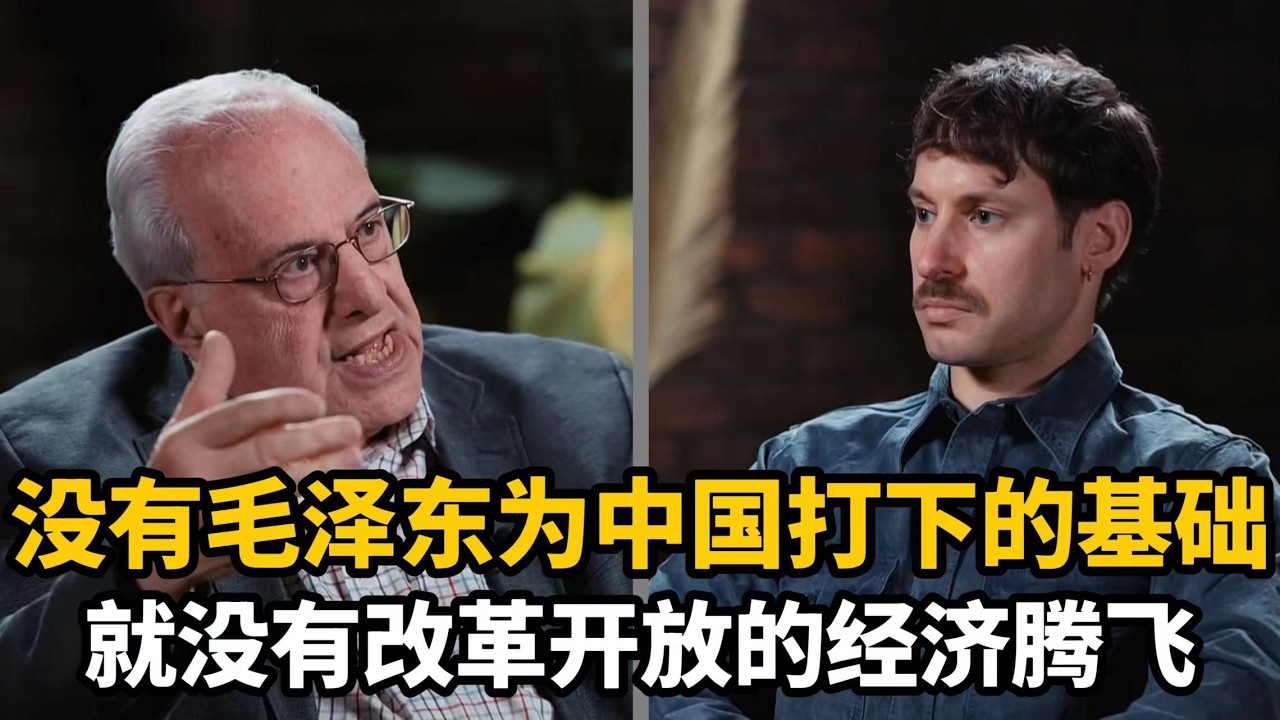
📺 Today’s recommended deep-dive video: https://www.youtube.com/watch?v=RjxQ3gjW-g4
Mao’s Rural Revolution: How a Peasant Focus Rewrote Global History
For decades, the West viewed Marxism through a strictly industrial lens, focusing on the factory worker while ignoring the vast potential of the rural peasant. Mao Zedong shattered this tradition, creating a revolutionary blueprint that transformed China from a semi-colony into a global superpower. By moving the struggle from the city to the field, he redefined the trajectory of the 20th century.
Core Question: How did Mao Zedong’s pivot from urban industrialism to rural agriculture redefine Marxism and establish the foundation for China’s modern rise?
Highlights
- Mao’s radical innovation was identifying the rural peasantry as a revolutionary force, breaking with Western Marxist orthodoxy.
- The Long March served as the ultimate crucible, allowing the CCP to build an alternative social and military base in the interior.
- China’s “Century of Humiliation” and its history of semi-colonialism provided the emotional fuel for the anti-capitalist movement.
- The current Taiwan dispute is rooted in the unresolved conclusion of the Chinese Civil War, where the defeated Nationalist side fled to the island.
⏱️ Reading time: approx. 5 minutes · Saves you about 13 minutes vs. watching.
Want to take notes while watching? Click the image below and let AI Notebook capture the key points for you 👇

The Rural Pivot: Mao’s Great Marxist Innovation
Shifting the Revolutionary Lens
While Western Marxists fixated on factory chimneys and urban sprawl, Mao Zedong looked at the fields and saw the future of global revolution.
In Europe, the birthplace of Marxism, the rural peasantry was often viewed as a reactionary, illiterate mass incapable of progress. Revolutionaries focused almost exclusively on the urban industrial worker because they understood that environment. Mao, however, took the incredible risk of arguing that the agricultural peasant could be an equivalently powerful revolutionary force. This decision essentially “opened up” Marxism to the global south and the majority of the world’s population, who were—and in many places still are—agricultural workers rather than factory laborers.
This wasn’t just a theoretical tweak; it was a fundamental remapping of who controls history. By centering the rural worker, Mao provided a foundation for economic development that allowed China to eventually challenge the United States as a global superpower, a feat few Western intellectuals predicted.

💡 Digging Deeper
Q: Why was the peasantry originally ignored by Marxists?
A: In Western Europe, rural populations were often religious, uneducated, and deeply tied to traditional hierarchies, making them seem “unreachable” for urban, secular revolutionaries.
Q: How did this change the geopolitical map?
A: It allowed communism to spread to agrarian societies like Vietnam and India, where the industrial base was too small to support a classic Western-style worker’s revolution.
Q: What is the “Century of Humiliation”?
A: It is the period starting in the mid-19th century when China was subjected to internal unrest and foreign intervention by imperial powers, including Britain, France, and Japan.
Survival and the Long March
From Shanghai to the Wilderness
The early days of the Chinese Communist Party weren’t spent in the mountains, but in the bustling ports of Shanghai.
Under the shadow of European semi-colonialism, these young radicals initially followed the Soviet model, targeting urban laborers until the Nationalist government under Chiang Kai-shek began a brutal purge. The Nationalists represented the emerging capitalist class and entrepreneurs who viewed the communists as a direct threat to their power. Following a series of massacres in the cities, the surviving communists realized that their urban focus had left them vulnerable.
Forced to flee for their lives, the remnants of the party began a grueling thousands-mile trek deep into the Chinese interior, famously known as the Long March.
This retreat to the province of Yan’an was more than a flight; it was a period of intense social experimentation. Settling among the peasants of northern China, the communists organized against local landlords and built a functioning alternative society. This wasn’t just a military base; it was the birth of the “Red Army,” where Mao’s principles of rural mobilization were finally put into practice away from the reach of the Nationalist military.

💡 Digging Deeper
Q: Who was Chiang Kai-shek?
A: He was the leader of the Kuomintang (Nationalist Party) and the chief rival to Mao, representing the urban capitalist and military elite.
Q: What was the significance of the “Eighth Route Army”?
A: It was a key military unit under communist control that gained fame for its discipline and its ability to mobilize peasants during the war against Japan.
Q: How did Mao’s background influence his leadership?
A: Born to a middle-income family, Mao understood both the urban intellectual world and the rural reality, allowing him to bridge the gap between Marxist theory and peasant life.
From Civil War to the Taiwan Standoff
The Impact of the Japanese Invasion
The trajectory of Chinese history was interrupted by the 1931 Japanese invasion, forcing a temporary and uneasy alliance between the communists and the Nationalists.
While they fought a common enemy, the ideological rift never truly closed. The communists used this time to strengthen their ties with the rural population, presenting themselves as the true defenders of the Chinese people against foreign aggression. Once the Japanese were defeated in 1945, the country immediately spiraled into a final, decisive civil war. Mao’s forces, bolstered by their rural support and superior organization, eventually forced the Nationalists off the mainland entirely.
The defeated Nationalist government retreated to the island of Taiwan, setting the stage for a geopolitical conflict that persists to this very day.
To the Chinese government today, Taiwan is a remaining piece of a civil war they already won. From their perspective, American interference in Taiwan is an affront to their sovereignty, akin to a foreign power supporting a defeated faction from the American Civil War that fled to a small island to set up a rival government. Understanding this history is crucial to understanding why the Taiwan issue remains the most sensitive “red line” in modern international relations.

💡 Digging Deeper
Q: Why did the communists win the Civil War?
A: They had stronger support among the rural majority and were perceived as less corrupt than the Nationalist government.
Q: How does the West generally view Mao?
A: In the US, Mao is often simplified into a “bad person” caricature, ignoring the “stupifyingly important” historical and theoretical contributions he made to global politics.
Q: What is the analogy used for Taiwan?
A: It is compared to Jefferson Davis (the Confederate leader) fleeing to Staten Island and the US government being told by a foreign power that they cannot reclaim it.
Key Takeaways
Mao Zedong remains a world-historical figure not just because of his political power, but because of his intellectual courage to redefine Marxism for the Eastern world. By identifying the rural peasantry as a revolutionary force, he created a path for China to escape its “century of humiliation” and develop into a superpower. This shift fundamentally altered the global balance of power, moving the center of gravity away from the Western industrial model.
The legacy of this period is still visible in the current tensions between the United States and China. Much of the American misunderstanding of China stems from an ignorance of this history—the Long March, the struggle against semi-colonialism, and the specific conclusion of the Civil War. Without grasping these roots, Western observers will continue to be surprised by China’s actions on the global stage.
Q&A
Q1: How did Mao’s Marxism differ from the Soviet version?
A1: While the Soviets focused on the urban proletariat (factory workers), Mao argued that the rural peasantry was the primary engine of revolution in developing nations.
Q2: What role did European education play for early Chinese communists?
A2: Many early leaders were educated in Germany and France, bringing Western philosophical ideas back to China before adapting them to local conditions.
Q3: Why is the Long March considered a “crucible”?
A3: It was a period of extreme hardship that weeded out the weak and forced the party to develop deep, survival-based ties with the rural population.
Q4: How does the speaker describe the American awareness of Mao?
A4: He describes it as “stupifyingly” low, noting that even educated people at Ivy League schools often lack a basic understanding of Mao’s historical role.
Q5: What was the “Boxer Rebellion”?
A5: An anti-foreign, anti-colonial uprising at the start of the 20th century that led to a coalition of Western powers and Japan defeating the Chinese government.
Q6: Why did the Nationalists lose despite having initial military superiority?
A6: The Nationalists were often viewed as the party of the urban elite and were plagued by corruption, whereas the communists built a massive grassroots base in the countryside.
Q7: What is the significance of the anecdote about the speaker’s mother?
A7: It illustrates how high-ranking officials in Mao’s government had deep, personal ties to the West and were part of a sophisticated, globally-connected intellectual class.