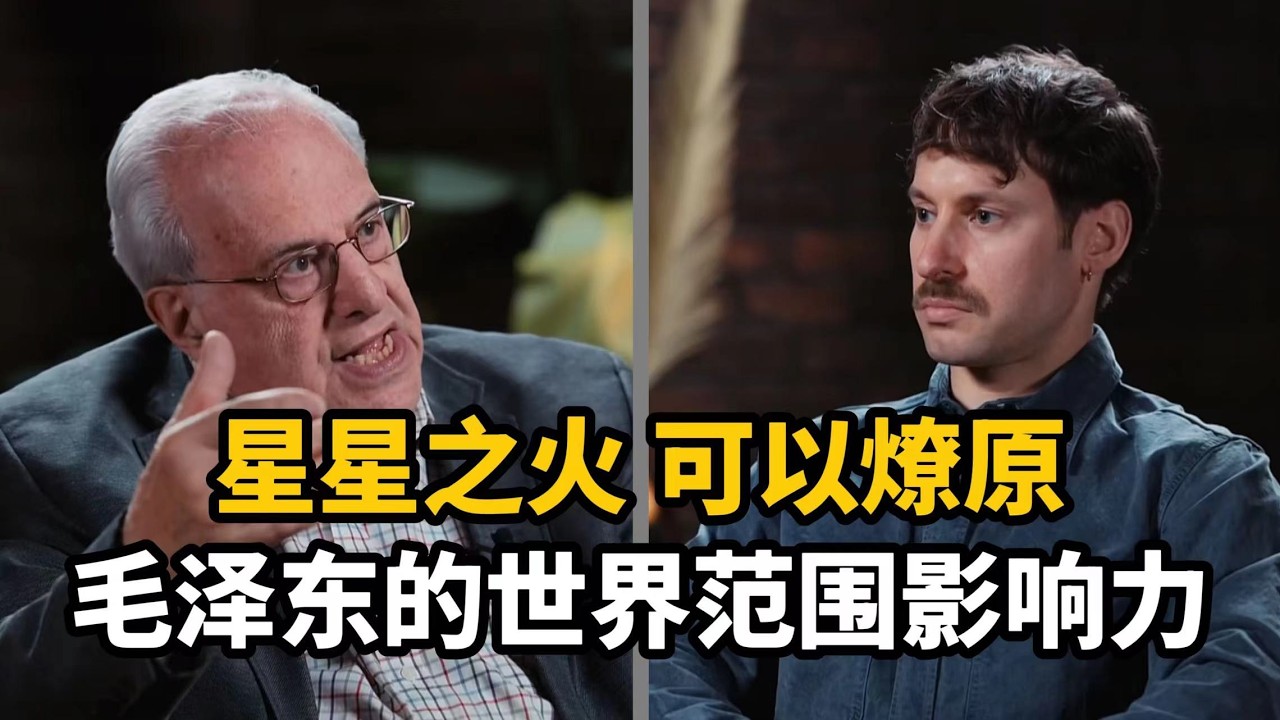
📺 Today’s recommended deep-dive video: https://www.youtube.com/watch?v=bGFefljMNlE
Beyond the Iron Curtain: How Maoism Redefined Global Revolution and Economics
The narrative of 20th-century communism is often told as a monolithic clash between East and West, yet the most significant shifts occurred within the fractures of the movement itself. Maoism emerged not merely as a Chinese variant of Marxism, but as a radical departure that captivated French intellectuals and provided a blueprint for the Global South to escape colonial poverty.
Core Question: How did Mao Zedong’s ideological break from the Soviet Union create a unique hybrid economic model and a lasting intellectual legacy across both Europe and the developing world?
Highlights
- The Sino-Soviet split was a foundational “divorce” that allowed China to experiment with communal structures and 50/50 hybrid economics.
- French intellectuals like Sartre, Foucault, and Althusser were profoundly reshaped by Maoist thought during the 1968 student-worker uprisings.
- China’s current success stems from a unique economic blend: 50% state-owned and 50% private, a model distinct from both Soviet and Scandinavian systems.
- The “Little Red Book” became a practical theoretical weapon for peasant-led revolutions across Latin America, Southeast Asia, and Africa.
⏱️ Reading time: approx. 7 minutes · Saves you about 20 minutes vs. watching.
Want to take notes while watching? Click the image below and let AI Notebook capture the key points for you 👇

The Great Divorce: The Sino-Soviet Split
Breaking from the Shadow of Stalin
Mao’s rise was never a carbon copy of the Bolshevik revolution, despite his early reliance on Soviet military and financial support during the grueling Chinese Civil War.
The global communist movement suffered its first massive fissure during the struggle between Stalin and Trotsky. While Stalin eventually triumphed—sending an assassin to silence Trotsky in Mexico—the seeds of ideological fragmentation were planted deep within the international left, eventually leading to the monumental Sino-Soviet split of the 1960s.
This “Spaltung” or splitting, as described through a Freudian lens, was more than just a diplomatic spat; it was a violent ideological divorce that led to literal border skirmishes. Mao felt the Soviets had become too bureaucratic and hierarchical, leading him to experiment with communal living and decentralized agricultural models that horrified Moscow. This break allowed China to chart a course independent of Russian dictates, setting the stage for a unique national identity that avoided the total state-dependency that eventually collapsed the USSR.

💡 Digging Deeper
Q: Why was Trotsky’s stay in Mexico significant to the movement?
A: It connected Russian revolutionary thought with the Mexican muralist movement, including figures like Diego Rivera and Frida Kahlo, creating a bridge between European theory and Latin American art.
Q: How did the U.S. react to Mao’s victory in 1949?
A: It triggered a political crisis known as “Who Lost China?”, leading to McCarthyism and the purging of State Department officials like Harry Dexter White.
The French Connection: Maoism in the West
Philosophy in the Streets of Paris
In the revolutionary upsurge of May 1968, French students and workers nearly toppled the government of Charles de Gaulle, fueled largely by a new, “Maoist” consciousness.
Leading intellectuals like Jean-Paul Sartre and Michel Foucault were never the same after witnessing the energy of this movement. They saw in Maoism a way to bypass the “conventional” Communist parties, which many felt had become too stagnant and afraid of real change.
Louis Althusser, a titan of Marxist philosophy, utilized Mao’s theories on contradiction to reconstruct the very foundations of Western Marxist thought. This wasn’t just ivory-tower posturing; it was a bridge that allowed Western technology and strategy to flow into a “Third World” context, while simultaneously injecting revolutionary vigor back into the aging salons of European philosophy. By the 1970s, Sartre was publicly declaring Mao the greatest revolutionary of the era, signaling a total shift in the Western intellectual gene pool.

The Hybrid Engine: 50/50 Economics
Beyond the Scandinavian and Soviet Models
The Chinese model is neither the total state ownership of the former Soviet Union nor the high-tax regulatory capitalism found in Scandinavia.
It represents a deliberate, calculated hybrid that maintains a rigid 50/50 split between state-operated enterprises and the private sector, all under the firm guidance of the Party. This structure allowed China to invite private investment and foster billionaires like Jack Ma, while ensuring the government retained control over the strategic pillars of the economy.
While Bernie Sanders might point to Denmark as a socialist ideal—a system where the private sector remains largely untouched but pays for massive public services—the Chinese realized they needed something more aggressive to combat a century of colonial humiliation. By keeping half the economy directly under the state’s thumb, they ensured they could escape the “poverty trap” that plagues most of the Global South. This hybridity is China’s “secret sauce,” allowing it to outpace nations that chose either pure state control or unregulated market entry.

Key Takeaways
China’s trajectory is a testament to the power of ideological divergence. By breaking away from the Soviet Union’s rigid hierarchy and experimenting with communal and hybrid structures, the Chinese Communist Party managed to address the primary concern of its people: the elimination of poverty. This was not a move toward Western capitalism, but rather the creation of a new, third path that utilized market forces as a tool for national development rather than an end in themselves.
The legacy of Maoism continues to vibrate through the Global South and Western academia. In countries across Asia, Africa, and Latin America, the Chinese experience remains the most practical theoretical weapon for resisting colonial structures. The challenge for the future, however, remains the same as it was during the French uprisings: how to move past the hierarchical master-slave relationship in production and create a truly democratic way of organizing human labor.
Q&A
Q1: How does the Chinese economic model differ from the Soviet one?
A1: The Soviet Union attempted to own and operate nearly the entire industrial and agricultural apparatus, whereas China maintains a 50/50 split between state-owned and private enterprises.
Q2: Who were the “three great muralists” mentioned in relation to the communist movement?
A2: Diego Rivera, David Siqueiros, and José Clemente Orozco, all of whom were deeply tied to communist and Trotskyist circles in Mexico.
Q3: What was the “Little Red Book’s” impact on the Global South?
A3: It served as a guiding principle for peasant issues and revolutionary development, igniting movements in Nepal, India, the Philippines, and Peru.
Q4: What did the French police tell the government during the 1968 protests?
A4: The chief of police warned that if the government cracked down on the alliance of students and workers, the police might not remain on the government’s side.
Q5: Does Russia still have private property today?
A5: The transcript notes that Russia never completely abolished private property, even during its most communist phases, though the state remained a much larger player than in the West.
Q6: What is the “next stage” of economic development mentioned?
A6: The author suggests the next stage involves rethinking the master-slave hierarchy in production, moving toward a system where the mass of people are no longer submissive to a few at the top.
Q7: How did Maoism impact French philosophy?
A7: It influenced a whole generation, leading thinkers like Althusser to use Mao’s “theory of contradiction” to reconstruct Marxist philosophy for the modern era.