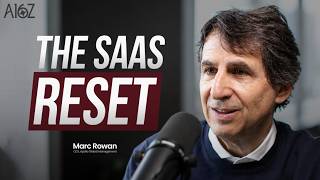
📺 Today’s recommended deep-dive video: https://www.youtube.com/watch?v=oYK_MmZW9XI
Beyond Private Equity: Mark Rowan on the Trillion-Dollar Future of Finance
Apollo CEO Mark Rowan shares the blueprints of a firm that has evolved from a 1990s “deal shop” into a trillion-dollar financial institution. He explores the intersection of retirement services, industrial renaissance, and why the public market’s concentration in ten stocks creates a massive opportunity for private credit.
Core Question: How can private markets solve the looming retirement income gap while financing the massive capital requirements of the AI-driven industrial revolution?
Highlights
- The transition of Apollo from a private equity firm to an 80% credit-focused retirement services powerhouse.
- Why the extreme concentration of the S&P 500 makes private market diversification a necessity for institutional and individual investors.
- The “Software Apocalypse”: why AI will decimate traditional enterprise software returns while creating massive infrastructure opportunities.
- Apollo’s cultural pivot toward “intellectual insubordination” and moral leadership in an era of corporate conformity.
⏱️ Reading time: approx. 12 minutes · Saves you about 43 minutes vs. watching.
Want to take notes while watching? Click the image below and let AI Notebook capture the key points for you 👇

The Drexel Diaspora and the Birth of Apollo
Clean Sheet Thinking in a Crisis
Mark Rowan’s career began in the ashes of the 1990 financial crisis, a period defined by banking collapses and real estate failures that mirrored the 2008 Lehman moment.
Transitioning from the high-pressure environment of Drexel Burnham Lambert to founding Apollo required a total shift in perspective regarding risk and funding. While Drexel eventually succumbed to funding risk—what Rowan calls a “heart attack”—the lessons learned about business-first thinking and clean-sheet problem solving became the bedrock of Apollo’s eventual trillion-dollar ascent and institutional stability.
The firm’s origin story is rooted in a cold call from the French government, leading to a massive $6 billion deployment during a time when no one else had liquidity. This opportunistic start eventually matured into a structured financial powerhouse that prioritized fundamental business health over the nuances of complex financial engineering.

💡 Digging Deeper
Q: What was the most important lesson Rowan learned from Michael Milken?
A: The immediacy of problem-solving and the necessity of “connecting the dots” between geopolitics, technology, and financial markets to form a coherent world view.
Q: Why did Rowan choose Drexel over Goldman Sachs in 1984?
A: He was more interested in the fundamentals of how businesses operate than in the technical nuances of public offerings and traditional finance.
Q: How does Apollo avoid “Heart Attack” risk today?
A: By ensuring they never lend long while borrowing short, maintaining a stable, permanent capital base that is not susceptible to sudden runs on the firm.
The Great Diversification: Private Markets as a Necessity
The Myth of Public Market Safety
Investors often view public markets as safe and liquid, but Rowan argues that the S&P 500 has become dangerously concentrated in just ten stocks levered to the same trends.
If these ten stocks falter, the entire retirement system of the United States—which is heavily indexed to them—faces catastrophic systemic risk. Consequently, the only place to find true diversification is in private markets, which represent 80% of global economic activity but remain inaccessible to the average investor.
Apollo is currently leading the charge to democratize these assets by introducing daily mark-to-market pricing and standardized reporting for private credit. This move aims to bring transparency to the “private investment grade” space, allowing 401k holders and individual retirees to access the same high-quality yields previously reserved for massive institutions.

💡 Digging Deeper
Q: Is Apollo still a private equity firm?
A: Technically no; 80% of their assets are in credit, and they view themselves primarily as a retirement services and investment-grade credit institution.
Q: What is “Hybrid Equity”?
A: It is a mid-tier asset class that is safer than traditional private equity but offers higher returns than public fixed income, serving as a “partner-like” capital source.
Q: Why is daily pricing coming to private markets?
A: To conform to the needs of the 401k and retail wealth ecosystems, which require liquidity and transparency rather than the traditional 10-year drawdown fund model.
Financing the AI Industrial Renaissance
Beyond Venture Capital
The next wave of technological advancement—data centers, chips, and robotics—is too capital-intensive to be financed solely by venture equity.
We are entering a period where every dollar since the invention of fire is being deployed into physical infrastructure to support AI. This requires a sophisticated partitioning of risk: venture capital for the business model, and massive amounts of private credit to fund the hard assets like energy transmission and hardware.
Rowan warns that the “SAS Apocalypse” is real; the private equity industry’s heavy over-exposure to enterprise software faces disastrous returns as AI makes traditional software coding nearly free. The winners will be those who pivot away from overpriced software multiples and toward the hard infrastructure that makes the digital world possible.

💡 Digging Deeper
Q: How will AI affect white-collar vs. blue-collar jobs?
A: Rowan predicts a “blue-collar ascendancy” where physical skills gain value, while white-collar roles that can be automated by LLMs will see a decline in relative wages.
Q: What is the risk in direct lending today?
A: Many lenders are over-exposed to enterprise software companies whose business models are being disrupted by the rapid velocity of AI-driven coding.
Q: Why is Apollo opening a second headquarters in the West?
A: To gain access to a different talent pool focused on “challenger business models” and the growth ecosystem of Silicon Valley.
Culture, Merit, and Moral Leadership
The “Right Over Easy” Philosophy
Apollo’s culture is built on “intellectual insubordination,” where the best idea wins regardless of hierarchy, provided it is backed by rigorous logic.
Rowan has been a vocal critic of the shift toward social engineering in universities and corporations, arguing that institutions should return to a focus on academic excellence and merit. He defines merit as “achievement adjusted for distance traveled,” emphasizing the need to back individuals who have overcome significant obstacles rather than focusing on immutable characteristics.
This philosophy extends to their investment approach: Apollo chose to continue financing hydrocarbons while promising to “make it better, not worse,” rather than taking the easy path of total divestment. Leading with significance, rather than just seeking another success, has become the firm’s ultimate goal as it scales toward a trillion and a half dollars.

💡 Digging Deeper
Q: What does “distance traveled” mean in Apollo’s hiring?
A: It is an assessment of an individual’s achievements relative to the obstacles they had to overcome, focusing on individual grit rather than group identity.
Q: How does Rowan view his role at UPenn?
A: He sees it as a fight for moral clarity, demanding that universities prioritize academic research and excellence over social change agendas.
Q: Can you be fired for a bad decision at Apollo?
A: Not for the decision itself, but for failing to own it, recognize it quickly, and fix the mistake before it becomes a “cancer” for the firm.
Key Takeaways
The landscape of global finance is shifting from a bank-led model to one dominated by large-scale private capital providers who can manage complexity. Apollo has successfully positioned itself at the intersection of two massive trends: the aging population’s need for stable retirement income and the industrial sector’s need for astronomical amounts of infrastructure capital. By leveraging the permanent capital of Athene, the firm has moved away from the volatile “draw-down” fund model and toward a stable, institutional framework that looks more like a modern bank than a traditional private equity shop.
Investment strategies must now account for the rapid obsolescence of software-heavy business models. As AI continues to verticalize the rate of change in coding and data processing, the value of hard assets—energy, chips, and physical robotics—will only increase. Rowan’s advice to investors is clear: seek diversification outside the crowded public markets and be prepared for a world where “clean sheet thinking” is the only way to survive the coming wave of industrial and technological transformation.
Ultimately, the future of finance belongs to those who can bridge the gap between innovation and stability. Whether it is through daily pricing of private assets or taking a stand on merit-based hiring, Apollo’s trajectory suggests that “significance” is the new benchmark for success. The firm’s evolution serves as a blueprint for how legacy financial players can adapt to a world that is becoming older, more capital-intensive, and increasingly driven by the raw power of artificial intelligence.
Q&A
Q1: Why is there such a massive focus on retirement services at Apollo?
A1: The world is facing a global retirement income gap; people haven’t saved enough. Apollo uses low-cost retirement liabilities to fund safe, long-term yield assets, serving as a fundamental societal good.
Q2: How does Rowan distinguish between “Heart Attack” and “Cancer” risks?
A2: A “Heart Attack” is funding risk (borrowing short/lending long), while “Cancer” is the slow accumulation of bad assets. Apollo manages both through principal alignment and stable capital structures.
Q3: What is the primary concern with the current S&P 500?
A3: Concentration. Ten stocks make up nearly 50% of the index, meaning most American retirees have zero diversification and are fully exposed to a single thematic trend.
Q4: How will AI change the way Apollo operates internally?
A4: Rowan expects AI to replace tasks with “right answers” like accounting and trade operations, while augmenting judgment-based roles. The firm remains “paranoid” about replacement risk.
Q5: What is the “Wall of Shame” at Apollo?
A5: It is a cultural mechanism where senior professionals admit to losing money. It normalizes failure as a necessary byproduct of taking enough risk to win.
Q6: Why is the bank market no longer sufficient for long-term industrial projects?
A6: Banks are designed for short-term lending because they borrow from deposits. Long-term, complex projects like data centers require the patient, brain-heavy capital found in private markets.
Q7: What does Rowan mean by “intellectual insubordination”?
A7: It is a cultural norm where junior employees are encouraged to challenge the ideas of senior leaders to ensure the firm reaches the “right” answer rather than the “hierarchical” one.