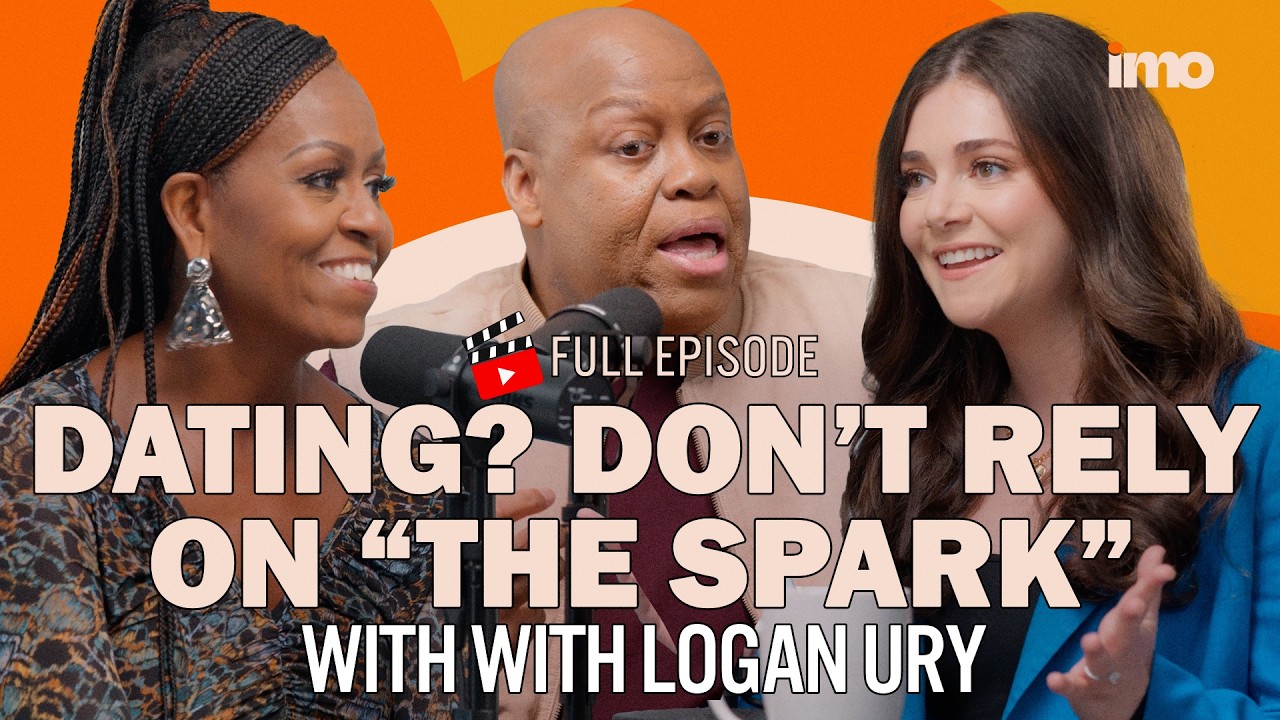
📺 Today’s recommended deep-dive video: https://www.youtube.com/watch?v=4zs81Igi-jY
Beyond the Spark: Why the “Slow Burn” is the Secret to Lasting Love
Michelle Obama and dating expert Logan Ury dissect the modern dating landscape, challenging the cultural obsession with instant fireworks. They explore how “boring” reliability often outshines charismatic “spark plugs” when building a partnership designed to last fifty years.
Core Question: How can we move past the myth of instant chemistry to find a life partner through intentional building and the “slow burn”?
Highlights
- Michelle Obama’s “Les Mis” escape and why she initially tried to set Barack up with other people.
- The three myths of the spark: why butterflies are often actually “alarm bells” of anxiety.
- Understanding the three dating types: Romanticizers, Maximizers, and Hesitators.
- The “Post-Date Eight”: A functional framework for evaluating a partner beyond surface-level attraction.
⏱️ Reading time: approx. 6 minutes · Saves you about 57 minutes vs. watching.
Want to take notes while watching? Click the image below and let AI Notebook capture the key points for you 👇

The Myth of the Romantic Spark
From Skepticism to a Slow Burn
Michelle Obama didn’t fall for Barack at first sight; in fact, she was actively skeptical of the “hotshot” Harvard nerd from Hawaii.
Having already decided he would be weird based on his background, their first phone call—dominated by that famous, self-assured “Barack Obama voice”—cracked the door open just enough for a vibration of interest to pass through her initial skepticism and professional armor.
Even then, the relationship wasn’t a whirlwind of destiny, as Michelle describes their early days at the law firm as a “buddy” dynamic where they laughed at the same jokes and bonded over their shared hatred of the play Les Misérables. It was the act of sneaking out at intermission, leaving two empty seats in the firm’s box, that revealed his radical, rule-breaking streak, finally turning a professional friendship into a slow-burning attraction that would last a lifetime.

💡 Digging Deeper
Q: Why did Michelle initially rule Barack out?
A: She was his professional advisor and felt dating a summer associate would be “tacky” and inappropriate for her career.
Q: What was the “Les Mis” incident?
A: During a firm outing, Barack convinced Michelle to ditch the boring play at intermission, showing her he wasn’t just a “rule follower.”
Q: Is a “slow burn” better than a spark?
A: Yes, because it allows the relationship to be built on friendship and shared values rather than just fleeting chemistry.
The Science of Decision-Making in Love
The Three Dating Mindsets
Behavioral scientist Logan Ury identifies three specific psychological traps that keep people single: the Romanticizer, the Maximizer, and the Hesitator.
Maximizers treat dating like a high-stakes shopping trip, armed with spreadsheets and impossible standards for height or ambition, constantly wondering if there is a better version of their partner just one more swipe away. This prevents them from ever fully investing in the building phase of a relationship.
The Romanticizer waits for a soulmate story that feels like a movie, often missing the great person standing right in front of them because they aren’t feeling instant fireworks. These individuals prioritize the “how we met” story over the actual quality of the daily connection, leading to a cycle of disappointment when real life doesn’t match the cinematic expectations they have curated in their minds for years.

💡 Digging Deeper
Q: What is a “Hesitator”?
A: Someone who avoids dating entirely because they feel they aren’t “ready” yet, waiting for a better job or weight loss.
Q: Why are modern daters more like Maximizers?
A: Dating apps provide a sense of infinite choice, making people feel they can “Frankenstein” a perfect partner.
Q: How do mindsets affect long-term success?
A: People with a “work-it-out” mindset have more successful relationships than those with a “soulmate” mindset.
The Danger of “Spark Plugs” and Anxiety
Butterflies vs. Alarm Bells
We often mistake the high-octane feeling of uncertainty and the thrill of the “chase” for genuine, sustainable romantic chemistry.
Logan Ury argues that those famous butterflies are frequently just alarm bells of anxiety triggered by someone who is inconsistent or hard to read, which feels exciting but signals instability. When a partner is secure and clear about their intentions, it can feel “boring” to someone used to these volatile highs and lows, yet that security is exactly what forms the foundation of a successful fifty-year marriage.
True chemistry isn’t just about the initial hit; it’s about the “mere exposure effect,” where familiarity breeds deeper affection, trust, and comfort over time rather than instant, volatile passion that usually burns out.

💡 Digging Deeper
Q: What is a “Spark Plug”?
A: A person who is charismatic and “sparky” with everyone, making you feel special when it’s actually just their personality.
Q: Can the spark grow over time?
A: Yes, research shows that many couples who didn’t have “love at first sight” grew into deep attraction through shared experiences.
Q: Why does security feel boring?
A: If you are used to the “hot and cold” game, a reliable partner lacks the dopamine spikes caused by anxiety.
Building a Relentless Relationship
The Work-It-Out Mindset
The goal isn’t to find a perfect person, but to find someone you can work with to build a perfect relationship.
Michelle Obama emphasizes that even the best marriages involve long periods—sometimes years—where you might not particularly like your partner, requiring a resilient “work-it-out” mindset rather than a fragile “soulmate” fantasy that breaks at the first sign of conflict.
This requires moving past the “prom date” mindset and looking for a life partner through tools like the “Post-Date Eight” questions, which focus on how you felt in your body and whether you felt heard. By shifting focus from surface-level aesthetics to emotional safety, daters can identify the traits that actually sustain a partnership through the inevitable challenges of raising children and navigating a long life together.

💡 Digging Deeper
Q: What was Craig Robinson’s “list of 30”?
A: After his divorce, Craig had 30 “non-starters” to protect himself, which Logan Ury identifies as a way of putting up a wall.
Q: How should you talk about marriage and kids?
A: Early on. Being bold and weeding out the wrong people makes the process more efficient.
Q: Is marriage for everyone?
A: Michelle notes it isn’t, but if you want it, you must accept the compromise and hard work it requires.
Key Takeaways
Modern dating has become an exercise in “maximizing,” where people search for a perfect checklist rather than a partner to build with. By debunking the myth of the “spark” and understanding that butterflies are often just anxiety, singles can open themselves up to the “slow burn”—a relationship that grows in value and attraction over time. Michelle Obama’s own marriage serves as a prime example that friendship and shared values are far more predictive of long-term success than a flashy “how we met” story.
The transition from a “soulmate” mindset to a “work-it-out” mindset is essential for long-term happiness. Relationships are not found; they are built through years of compromise, recalibration, and persistence. Whether you are using dating apps or meeting in the wild, the key is to be bold about your needs, willing to be rejected, and skeptical of instant chemistry that lacks a foundation of reliability.
Q&A
Q1: How do dating apps change the way we meet?
A1: They have become the #1 way couples meet, especially for “thin markets” like those over 55 or in rural areas, but they also create a “choice paradox” that leads to pickiness.
Q2: What are the “Post-Date Eight” questions?
A2: A set of questions to ask yourself after a date, such as “How did I feel in my body?” and “Did they make me laugh?”, to focus on internal feelings rather than external checklists.
Q3: Why shouldn’t I worry about “settling”?
A3: It’s not about settling; it’s about distinguishing “must-haves” (values, kids, honesty) from “nice-to-haves” (height, specific hobbies).
Q4: What if I don’t feel a spark on the first date?
A4: Give it a second or third chance. The “mere exposure effect” suggests that attraction often grows as someone becomes more familiar.
Q5: How do I handle the “recalibration period” in a relationship?
A5: Recognize that life events like having children change the dynamic, and it’s normal to feel disconnected; the key is having a long-term view rather than quitting.
Q6: Is being a “Romanticizer” bad?
A6: It can be, if it leads you to reject great partners because the “story” isn’t perfect. Real love is found in the building, not just the beginning.
Q7: How can I be more efficient in dating?
A7: Be bold about your goals, like wanting marriage, on the first few dates. This weeds out people who aren’t on the same page.