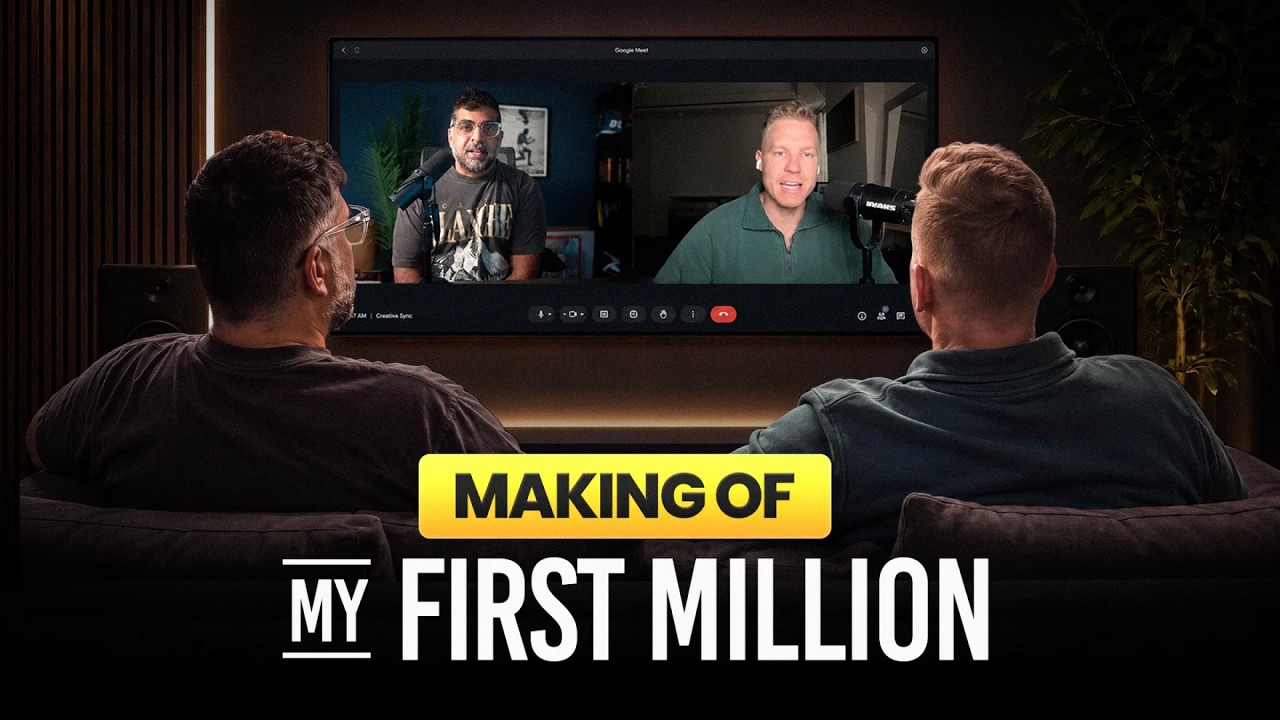
📺 Today’s recommended deep-dive video: https://www.youtube.com/watch?v=D8pkn3dRO34
Hacking Growth by Ignoring the Audience: The MFM Strategy Pivot
Sean Puri and Sam Parr pull back the curtain on a private strategy session to reveal how they plan to scale their 100-million-download podcast. By leaning into “selfish” curiosity and decentralized content armies, they aim to bridge the gap between niche business insights and viral fame.
Core Question: How can a top-tier media brand scale its reach while maintaining the authentic, raw curiosity that built its loyal following?
Highlights
- Launching a “Clipper Army” to dominate social media through incentivized community editing and cash bounties.
- Shifting from generic live shows to highly curated “1%er” retreats and “Tiny Desk” business workshops.
- Introducing a value-first newsletter to rescue tactical insights from the 850+ episode archive.
- Broadening content to include “The Human Condition” topics like parenting and happiness for high-performers.
⏱️ Reading time: approx. 7 minutes · Saves you about 39 minutes vs. watching.
Want to take notes while watching? Click the image below and let AI Notebook capture the key points for you 👇

The “Selfish” Content Filter
Why Authenticity Trumps Headlines
Sam Parr argues that the best way to serve an audience is to ignore their demands for viral headlines and instead follow one’s own intense, selfish curiosity.
When content is driven purely by YouTube click-through rates and public metrics, the creators often find themselves suffering from “Sunday Scaries” on a Tuesday night, dreading the recording session because it feels like inauthentic work. Contrast this with episodes that explore a specific curiosity or a niche guest like Graham Weaver; these sessions leave the hosts energized because they aren’t performing for an algorithm, but rather sharing a genuine discovery with a friend.
This philosophy draws heavily from Rick Rubin’s creative ethos, suggesting that the most successful products are those that the creator would actually use or enjoy themselves, rather than a Frankenstein creation built to please everyone at once.

💡 Digging Deeper
Q: Why does Sam dislike data-driven episodes?
A: They lead to burnout and “Sunday Scaries” because the focus shifts from genuine interest to performing for headlines.
Q: What is the “Rick Rubin quote” mentioned?
A: The best way to serve your audience is to ignore them completely, focusing instead on personal artistic truth.
Q: How does this affect guest selection?
A: The hosts prefer guests they are personally excited to talk to, even if they aren’t “big names” guaranteed to go viral.
Building the Clipper Army
Decentralizing Social Media Growth
The “Clipper Army” is the single most effective lever for decentralized growth, turning the podcast’s massive library into a thousand bite-sized entry points for new listeners.
Sean Puri admits the team has been “cartoonishly bad” at social media, often forgetting passwords to major accounts, yet they previously stumbled into a viral goldmine by offering a $5,000 bounty to the best community-created clips.
For the next 90 days, the team is going “stupidly aggressive” to raise an army of 16-to-22-year-old editors who will be incentivized with bounties or CPM-based payouts to flood platforms like X, TikTok, and Instagram with high-signal snippets. This strategy bypasses the need for a traditional social media manager, instead leveraging the competitive nature and creative talent of the show’s own fan base to find the most viral moments that a corporate team might overlook.

💡 Digging Deeper
Q: What was the result of the first bounty program?
A: It generated 20 million impressions in one month and launched a successful short-form content business for one of the participants.
Q: How will the new bounty system work?
A: The team plans to offer either a flat prize for top clips or a CPM-based payout (e.g., $1 per 1,000 views) to incentivize scale.
Q: Why focus on X and LinkedIn?
A: Because that is where the core entrepreneurial community already spends its time, making it easier to reach “samplers.”
Reimagining Community and Connection
Beyond the Traditional Live Tour
Forget the ego-driven arena tour; the new vision for MFM events focuses on curation and tactical “magic tricks” rather than mass-market entertainment.
Sean is interested in a “1% event,” a curated retreat for the most interesting and successful listeners who can provide mutual value to one another, while Sam leans toward a “Tiny Desk” style workshop format. In these intimate settings, the hosts can perform a “magic trick” by taking a founder’s biggest problem and solving it live on the spot, creating high-value content that can be chopped into even more instructional clips for the broader audience.
To scale this without logistical burnout, the team is exploring decentralized “dinner clubs” where fans organize their own local meetups, using the podcast as the social glue to help business-minded “dorks” find their tribe.

💡 Digging Deeper
Q: What is a “Tiny Desk” style workshop?
A: A small, high-vibe setting where the hosts help 20 entrepreneurs get “unstuck” through live Q&A.
Q: Why decentralized dinners?
A: It allows the community to grow organically without the hosts needing to manage every logistical detail or assume all liability.
Q: What is the risk of these meetups?
A: If the experience is poor, fans may still attribute the failure to the MFM brand, even if the hosts weren’t there.
New Formats and Tactical Artifacts
Mining for Productivity Alpha
New guest segments will move away from generic interviews toward “artifact exploration,” requiring guests to share screenshots of their home screens, calendars, or even their Chrome plugins.
By looking at the “two hard pile” on a desk or a specific productivity plugin, the hosts can uncover the idiosyncratic habits and “alpha” that high-performers usually keep hidden behind polished talking points.
Furthermore, the show is expanding its scope to include the “human condition,” inviting experts on parenting, happiness, and even world leaders to discuss the non-obvious ways to live a full life. This barbell approach—featuring either mega-popular icons or completely unknown but brilliant individuals—aims to keep the format fresh while diving into deep-dive brand stories, code-named “Make It” episodes, that deconstruct the history of everyday products like the Stanley mug.

💡 Digging Deeper
Q: What are “Artifact Episodes”?
A: Segments where guests show their calendars, desktop organization, or phone home screens to reveal their actual workflows.
Q: What is the “Make It” style episode?
A: A focused deep dive into the backstory and success of a recognizable brand, like Bitchin’ Sauce or Stanley.
Q: Why include parenting and happiness?
A: The hosts are entering new life stages (fatherhood) and want to learn non-obvious, high-performance tactics for the “human condition.”
Key Takeaways
The future of “My First Million” is defined by a shift from being a simple podcast to a multi-channel media engine powered by its community. By launching a decentralized “Clipper Army,” the team intends to flood social media with high-value snippets that act as entry points for new listeners. This removes the burden of social media management from the hosts while incentivizing fans to share the most impactful moments of the show.
Simultaneously, the content is evolving to become more tactical and personal. Through “artifact exploration” and deep dives into the human condition, Sean and Sam aim to extract “alpha” that other interviewers miss. Whether it’s analyzing a guest’s Chrome plugins or hosting exclusive 1%er retreats, the goal remains the same: staying authentically curious and helping their audience of “business dorks” find their tribe and their edge.
Q&A
Q1: How does the team plan to handle guests with a “checkered past”?
A1: Ari is tasked with flagging potential issues in advance so the hosts can address them directly during the interview, ensuring the show remains transparent without becoming a confrontational “gotcha” program.
Q2: Who will write the new MFM newsletter?
A2: Diego, the former lead writer for Milk Road, will lead the effort to summarize episodes and provide tactical bullet points for listeners who don’t have time for the full hour.
Q3: What is the goal of the “1% event”?
A3: It’s a selfishly motivated event for Sean to meet the most interesting people in his audience and allow them to network with each other in a high-value retreat setting.
Q4: Will the hosts do more solo episodes?
A4: Generally no. Both Sean and Sam prefer the “brotherly” dynamic of the duo format, though they remain open to solo in-person interviews if the guest is exceptional.
Q5: What is the “bounty” for clippers?
A5: The team is considering a $5,000 prize pool or a per-view CPM model to reward the most successful community editors.
Q6: What specific parenting advice sparked interest?
A6: The concept of taking “one-on-one trips” with each child once they reach a certain age to build sacred core memories outside of the family group dynamic.
Q7: Why focus on “old people” (70+) as guests?
A7: The hosts have found that guests in this age bracket provide a level of wisdom and long-term perspective that is often missing from younger founders.